Brexit: Triggering Article 50 on March 29, 2017
2017 · London, United Kingdom
The United Kingdom formally triggers Article 50 of the Treaty on European Union, beginning the process of Brexit, the UK's withdrawal from the European Union.
June 7, 1849
The Government of Ireland Bill, also known as the First Irish Home Rule Bill, was rejected by the UK House of Commons.
London, United Kingdom | UK House of Commons
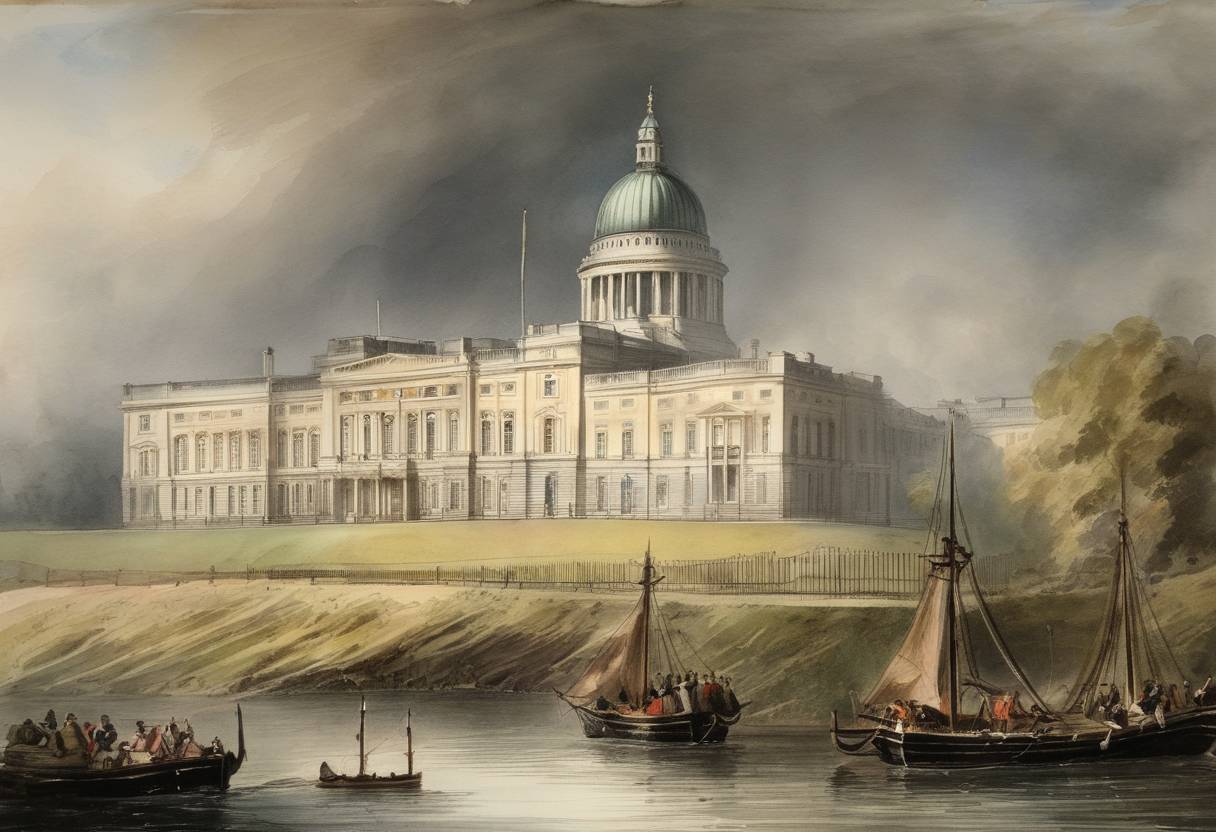
On June 7, 1886, the United Kingdom House of Commons rejected the First Irish Home Rule Bill, marking a significant moment in the struggle for Irish self-governance. Officially known as the Government of Ireland Bill, this was the first attempt to establish a devolved legislature in Ireland within the United Kingdom framework.
The bill was introduced by the British Prime Minister William Ewart Gladstone, a member of the Liberal Party. It was a culmination of increasing demands for Irish autonomy that had been growing throughout the 19th century. The Irish Parliamentary Party, led by Charles Stewart Parnell, had been advocating for self-government, motivated by the desire to address Irish grievances and achieve legislative independence.
The First Irish Home Rule Bill proposed the establishment of a separate Irish legislature responsible for domestic affairs, such as education, agriculture, and local taxation. However, foreign policy and defense matters would remain under the control of the British Parliament. Additionally, Ireland would continue to send members to the British Parliament, though their numbers would be reduced.
The bill was fiercely debated and led to significant political division. Supporters saw it as a necessary step towards addressing Irish national aspirations and reducing tensions. However, opponents feared it would lead to the disintegration of the United Kingdom and loss of imperial power. There were also concerns about the potential for discrimination against the Protestant minority in Ireland.
The vote took place after heated debates, resulting in the rejection of the bill by a narrow margin of 30 votes (341 against and 311 in favor). This defeat split the Liberal Party, leading to the departure of several members who formed the Liberal Unionist Party, which opposed Irish Home Rule.
The rejection delayed the establishment of a separate Irish parliament, yet the issue of Home Rule persisted. It influenced subsequent political developments in both Britain and Ireland, eventually leading to further attempts at Irish autonomy. It wouldn’t be until 1914 that another Home Rule Bill would pass, though its implementation was postponed due to World War I.
The First Irish Home Rule Bill of 1886 is a pivotal event in Irish and British history, illustrating the complexities of governance, the challenges of political reform, and the enduring nature of the Irish quest for self-determination.
Source: www.britannica.com