The Opening of the London Underground: January 10, 1863
1863 · London, England
The London Underground, the world's oldest underground railway, opens between Paddington and Farringdon.
February 10, 1863
The world's first underground railway, the Metropolitan Railway (part of the London Underground), had begun operations on January 10, 1863, but February 10 marked the official visit and inspection by notable dignitaries, further cementing its place in public transport history.
London, United Kingdom | Metropolitan Railway
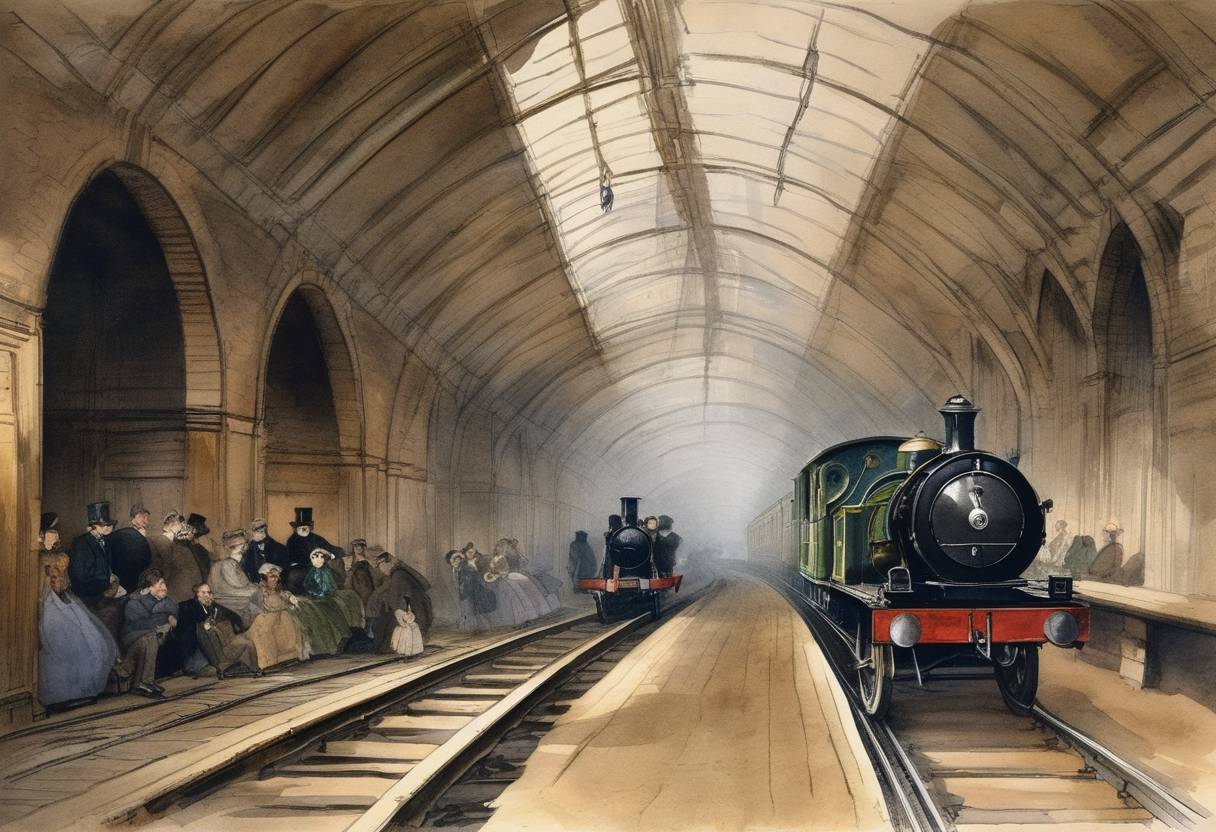
On February 10, 1863, the world’s first underground railway, the Metropolitan Railway, known today as part of the London Underground, underwent an official inspection by prominent dignitaries. This event marked a significant milestone in public transportation history, reinforcing the revolutionary impact of the subterranean railway system introduced just a month prior, on January 10, 1863.
The Metropolitan Railway was conceived to alleviate traffic congestion on London’s crowded streets. It was constructed using the ‘cut and cover’ method, where a trench was dug and covered over after laying the tracks. Running initially between Paddington and Farringdon Street, this pioneering line stretched approximately four miles, featuring stations that included Edgware Road, Baker Street, and King’s Cross.
On this date, transport officials, political figures, and engineering experts embarked on a dedicated journey to evaluate the railway’s construction and functionality. Their inspection aimed to ensure the safety and efficiency of the service, and to assess the technological innovations introduced by the railway’s development.
The dignitaries’ presence was a clear endorsement of the Metropolitan Railway’s significance in transforming urban transportation. Their inspection effectively showcased the viability of underground travel, paving the way for the network’s expansion that would facilitate the city’s rapid growth during the Industrial Revolution.
The successful inspection helped to instill public confidence in the use of underground trains, heralding a new era in public transportation. This also prompted other cities worldwide to consider similar underground systems as a solution to urban traffic problems.
The groundbreaking nature of the Metropolitan Railway not only changed urban landscapes but also had lasting impacts on social and economic dynamics by making daily commutes more efficient.
Today, the London Underground stands as an iconic symbol of the city, with an extensive network that continues to influence urban transit systems globally. The events of February 10, 1863, strengthened the foundation upon which the evolution of urban underground transportation has been built.
Source: www.ltmuseum.co.uk