Louis XIV Becomes King of France
1643 · Paris, France
Louis XIV became King of France at the age of four after the death of his father, Louis XIII.
May 14, 1610
King Henry IV of France was assassinated by François Ravaillac, a fanatical Catholic, in Paris.
Paris, France | French monarchy
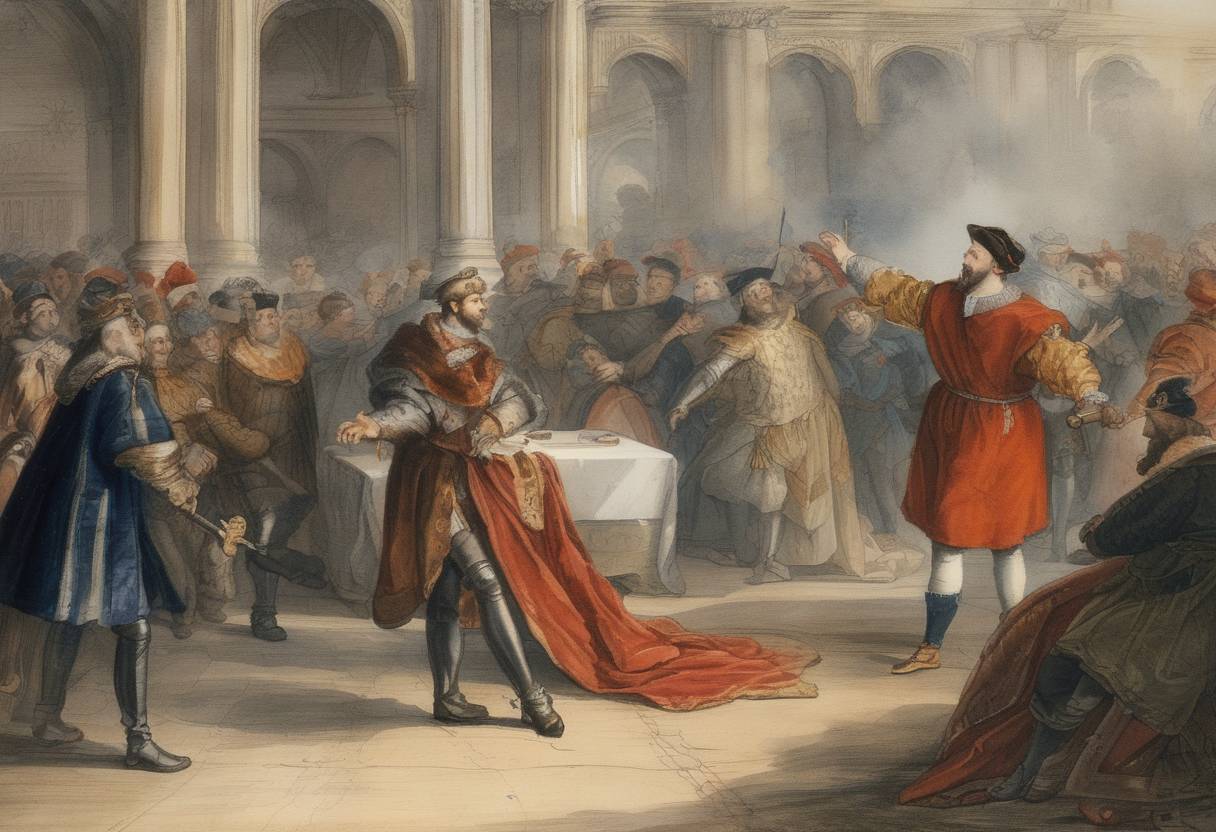
On May 14, 1610, King Henry IV of France was assassinated in Paris by François Ravaillac, a devout Catholic fanatic. This event played a pivotal role in French and European history, marking the sudden end of the reign of a monarch who had significantly influenced the course of his country.
Henry IV, also known as “Good King Henry,” ascended to the French throne in 1589 as the first monarch of the Bourbon branch of the Capetian dynasty. Born a Protestant, Henry was initially a Huguenot but converted to Catholicism to secure his reign over a predominantly Catholic France, famously stating, “Paris is well worth a mass.” His conversion appeased Catholic factions and facilitated the end of the French Wars of Religion, a series of protracted civil wars primarily fought between Catholics and Huguenots.
During his time as king, Henry IV was known for efforts to stabilize and rejuvenate France after decades of religious conflicts. He enacted the Edict of Nantes in 1598, granting substantial rights to the Huguenots while restoring Catholicism as the state religion, aimed at fostering national unity. His reign saw significant infrastructural improvements and attempts to boost the economy through agricultural reforms.
François Ravaillac, a fervent Catholic who believed Henry intended to wage war against the Pope, assassinated the king. On the day of his death, Henry IV was traveling through the streets of Paris in his royal carriage when Ravaillac approached and stabbed the king to death with a knife. The attack occurred near Rue de la Ferronnerie, and despite immediate medical attention, Henry succumbed to his wounds.
The assassination had profound repercussions. It propelled Henry’s young son, Louis XIII, to the throne, with Marie de’ Medici, Henry’s widow, assuming the role of regent due to Louis’s minor status. This abrupt transition of power altered France’s political landscape, causing shifts in foreign and domestic policies.
The assassination also underscored the deep sectarian divisions within France and the volatility surrounding religious tensions. Henry IV’s death fueled fears of civil unrest and highlighted the precarious balance of power between religious factions in Europe at the time.
Ravaillac was captured immediately after the assassination. In a swift trial, he was found guilty of regicide and was executed by drawing and quartering — a common punishment for treason — on May 27, 1610.
Henry IV is remembered as a pragmatic and popular ruler who pursued policies of tolerance and economic revival, and his legacy continued to influence his successors and the broader narrative of French history.
Source: en.wikipedia.org