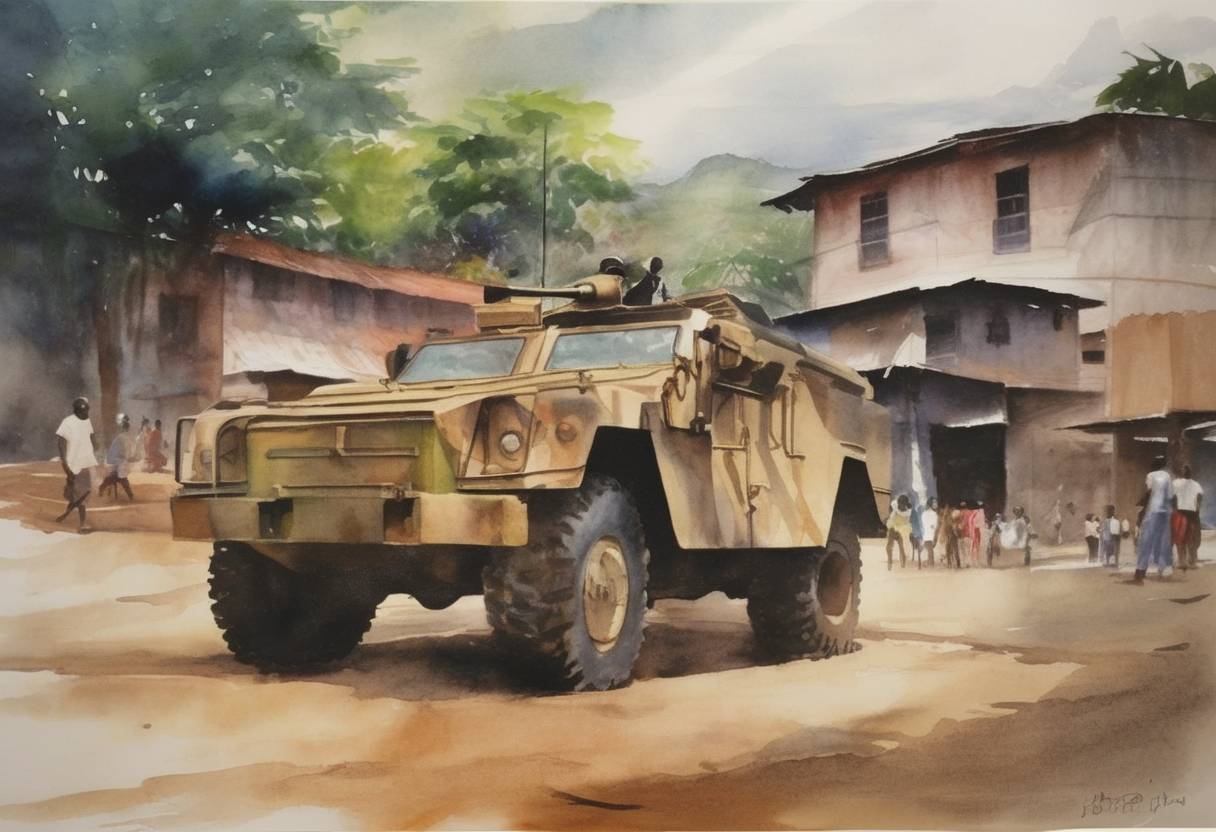
Coup in Sierra Leone on May 19, 1997
On May 19, 1997, a significant political upheaval occurred in Sierra Leone when President Ahmad Tejan Kabbah was ousted in a coup d’état by the Armed Forces Revolutionary Council (AFRC). This military group seized power under the leadership of Major Johnny Paul Koromah, marking a devastating turn in Sierra Leone’s tumultuous history.
Background
Ahmad Tejan Kabbah was elected President of Sierra Leone in 1996, assuming office with the hope of bringing stability to a nation embroiled in a brutal civil war since 1991. The conflict, primarily fueled by the Revolutionary United Front (RUF), had already caused widespread devastation. Kabbah’s administration, though democratically elected, struggled with ongoing violence and the challenge of disarming rebel forces.
The Coup
Discontent within the military ranks, exacerbated by poor conditions and low morale, set the stage for the AFRC coup. On May 25, 1997, they marched into the capital, Freetown, with minimal resistance. Major Johnny Paul Koromah was declared the head of state, and they established a military junta that overthrew President Kabbah’s government.
Following the coup, Kabbah fled to neighboring Guinea, seeking asylum and support to regain power. The AFRC quickly formed an alliance with the RUF, which bolstered its strength but also intensified the chaos and violence across the country. The capital, Freetown, became embroiled in violence, looting, and lawlessness under the junta’s rule.
International Response
The international community, including the United Nations and the Economic Community of West African States (ECOWAS), condemned the coup. ECOWAS, along with its military arm ECOMOG, imposed sanctions and eventually intervened with military force to restore order and reinstate the democratically elected government.
Aftermath
The coup plunged Sierra Leone into deeper turmoil, prolonging the civil war and complicating peace efforts. It took nearly a year before Kabbah was reinstated through international military intervention backed by ECOMOG in 1998. The civil war continued, however, until 2002, leaving a long-lasting impact on the nation’s social and economic fabric.
The 1997 coup is remembered as a critical period in Sierra Leone’s history, highlighting the fragility of democratic institutions in the face of military power and internal conflict.