The First Multi-Racial Elections in South Africa: April 26, 1994
1994 · , South Africa
The first multi-racial elections began in South Africa, marking the end of apartheid and leading to Nelson Mandela's election as president.
February 2, 1990
South African President F.W. de Klerk announces the unbanning of the African National Congress and promises the release of Nelson Mandela, paving the way for the end of apartheid.
Cape Town, South Africa | Government of South Africa
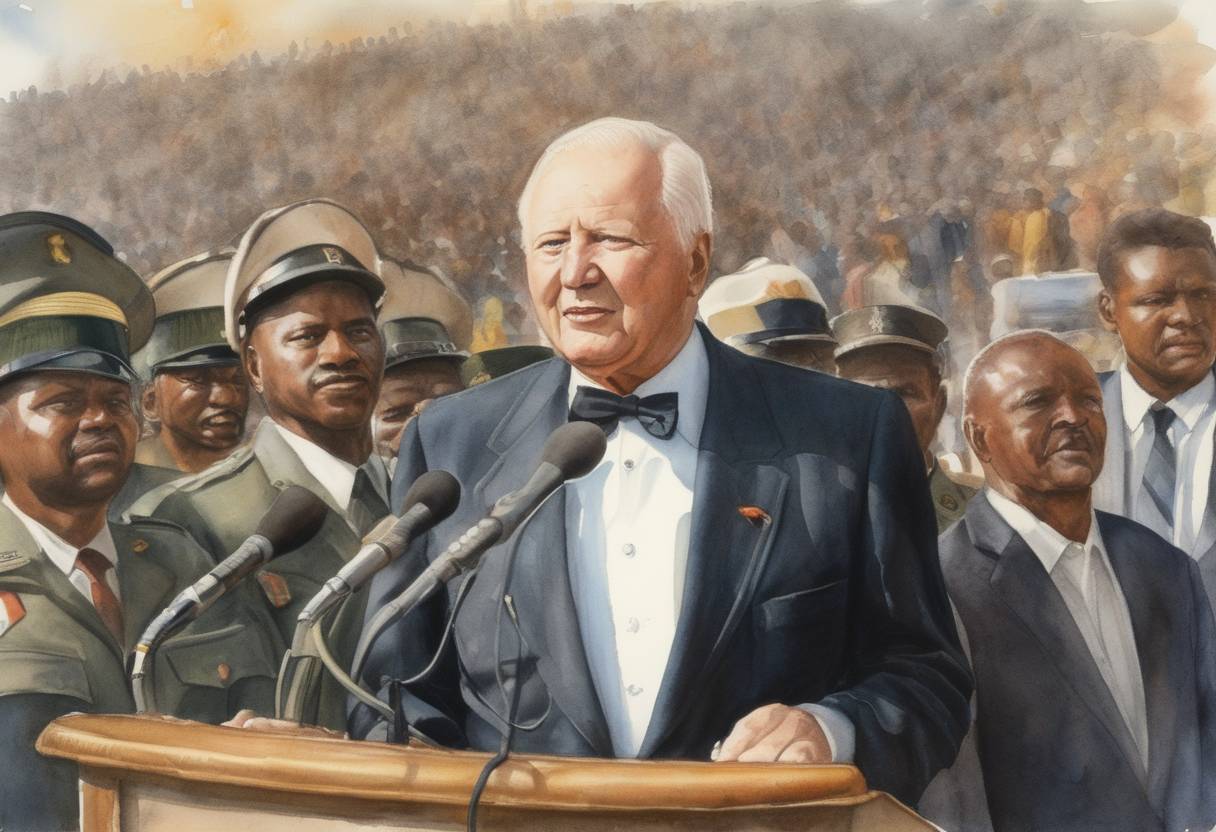
On February 2, 1990, a pivotal moment in South African history unfolded when President Frederik Willem de Klerk announced the unbanning of key liberation movements, most notably the African National Congress (ANC), and declared the impending release of Nelson Mandela. This significant announcement was a decisive step towards dismantling the entrenched system of apartheid that had governed the nation for decades.
Apartheid, the system of institutionalized racial segregation and discrimination, had been officially implemented in 1948 by the National Party. Under its rule, South African society was deeply divided along racial lines, with laws favoring the white minority and oppressing the non-white majority. Despite international condemnation, economic sanctions, and internal resistance, apartheid policies persisted for decades, severely restricting the freedoms of black South Africans.
The late 1980s saw escalating internal unrest and mounting international pressure, compelling the South African government to reconsider its stance. F.W. de Klerk, who became president in September 1989, recognized the unsustainability of the apartheid regime and the need for transformative change.
In a historic speech at the opening of the South African parliament on February 2, 1990, President F.W. de Klerk stunned the world by announcing several groundbreaking measures:
De Klerk’s pronouncements marked the beginning of the end for apartheid policies and set the stage for negotiations that would lead to a democratic transition in South Africa.
The unbanning of the ANC and the release of Nelson Mandela, who walked free on February 11, 1990, after 27 years in prison, catalyzed a series of negotiations between the apartheid government and anti-apartheid groups. These discussions ultimately led to the dismantling of apartheid laws and the establishment of a multiracial democracy.
Nelson Mandela became the first black president of South Africa in 1994, symbolizing a new era of reconciliation and equality. De Klerk and Mandela jointly received the Nobel Peace Prize in 1993 for their respective roles in the peaceful transition from apartheid to democracy.
The developments of February 2, 1990, remain a key milestone in South Africa’s journey towards liberty and equality, showcasing the profound impact of political courage and dialogue in overcoming deeply entrenched systemic injustices.
Source: www.britannica.com