The Siege of San Antonio Begins: October 3, 1835
1835 · San Antonio, Mexico
The Siege of San Antonio begins as part of the Texas Revolution, where Texan settlers start a campaign against Mexican forces.
April 8, 1832
Several hundred Mexican troops depart San Antonio to suppress uprisings during the Texas Revolution.
San Antonio, Mexico | Mexican Army
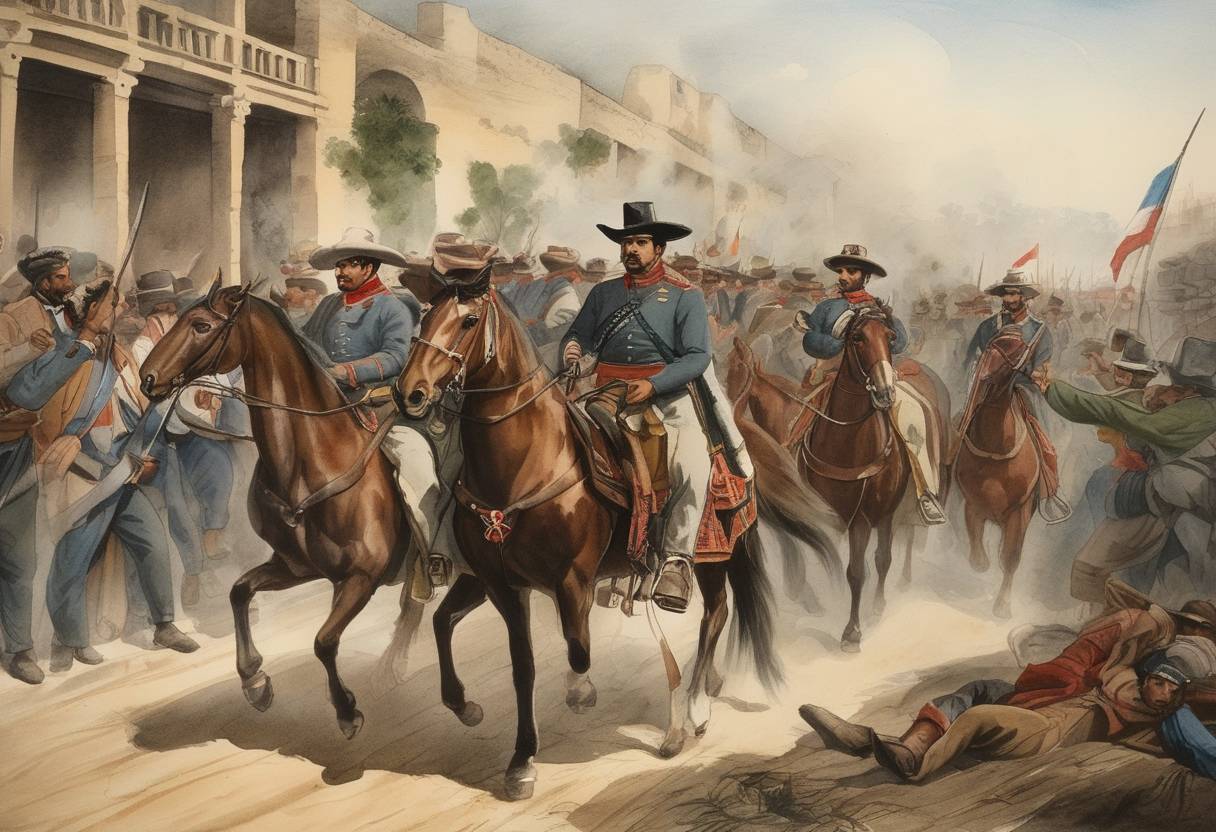
On April 8, 1832, several hundred Mexican troops departed from San Antonio de Béxar, a key outpost in Mexican Texas, to address and suppress uprisings that signaled growing discontent among Texian settlers. This event occurred during the period leading up to the Texas Revolution, a time of escalating tensions between the Mexican government and settlers of Anglo-American descent in Texas.
In the early 1830s, the political climate in Mexico was marked by instability and changes in government, which affected the Mexican territories, including Texas. The Mexican government under President Anastasio Bustamante sought to assert control over Texas through policies that restricted immigration, trade, and the settlement efforts of Anglo-Americans. Many Texian settlers, feeling the Mexican government’s regulations eroded their freedoms and rights, began to express opposition.
The Fredonian Rebellion (1826–1827): Previous rebellions such as the Fredonian Rebellion had already indicated unrest among the settlers, although this early revolt was quickly quelled by both Mexican forces and collaborating settlers loyal to the Mexican government.
Law of April 6, 1830: Seeking to stem the influx of settlers from the United States, this decree restricted immigration, suspended unfulfilled empresario contracts, imposed customs duties, and aimed to modify the landholding patterns to favor Mexican nationals.
Growing Discontent: Many Anglo-American settlers felt marginalized and disenfranchised, leading to sporadic outbreaks of unrest and further exacerbated tensions.
The departure from San Antonio was a response to the accumulation of grievances among settlers, part of whose resentment coalesced into more coordinated opposition actions. This movement of troops was part of broader military measures implemented by Mexico, intending to maintain authority and support the implementation of controversial laws.
Prelude to Revolution: While this troop movement aimed to preserve order, it was representative of the deepening misunderstandings and administrative challenges Mexico faced governing distant territories. These actions inadvertently contributed to heightened resistance among settlers.
Escalation to Conflict: The suppression tactics fueled a cycle of resistance and repression that ultimately contributed to the Texas Revolution (1835-1836), where Texian forces sought independence from Mexico.
Long-Term Implications: The challenge in enforcing control over Texas foreshadowed future struggles Mexico would have with other territories, as internal dissolution and foreign pressure continued to affect its northern expanses.
The departure of Mexican troops from San Antonio on April 8, 1832, thus marks a significant moment in the tensions preluding the full-scale Texas Revolution, encapsulating both military strategy and the broader sociopolitical struggles of the era.
Source: www.tshaonline.org