The Arrest of Mary, Queen of Scots on May 19, 1568
1568 · London, England
Queen Elizabeth I of England ordered the arrest of Mary, Queen of Scots.
May 18, 1593
Playwright Thomas Kyd is arrested in London. His lodgings had been searched, and papers belonging to his former roommate, Christopher Marlowe, were found that brought Kyd under suspicion of heresy.
London, England | English authorities
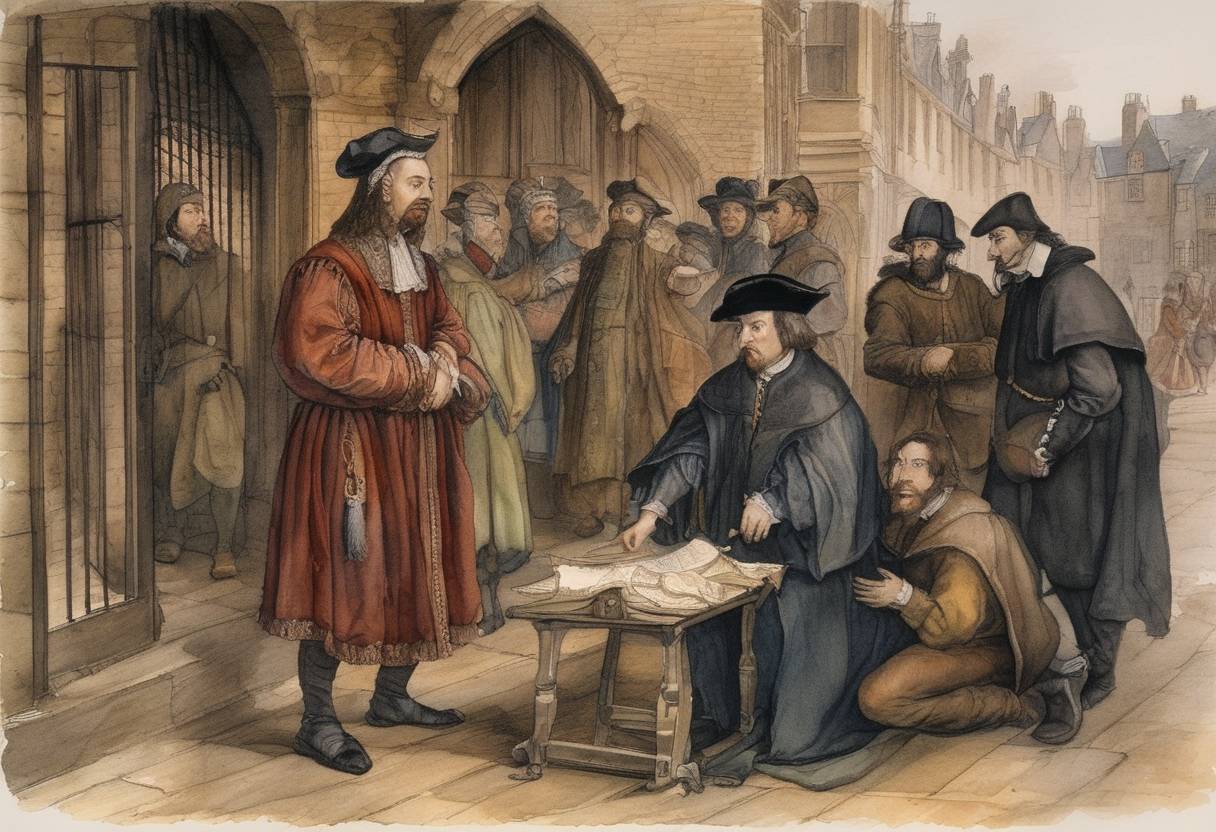
On May 18, 1593, prominent English playwright Thomas Kyd was arrested in London under the suspicion of heresy. The arrest marked a significant moment in the turbulent times of the Elizabethan era, characterized by religious strife and political intrigue.
Thomas Kyd, best known for his play “The Spanish Tragedy,” was a leading figure in Elizabethan drama. His works laid the groundwork for the revenge tragedy genre, influencing later playwrights such as William Shakespeare. However, during this period, Catholics and dissenters faced severe persecution in Protestant England, making personal and religious associations potentially dangerous.
The backdrop of Kyd’s arrest involves his association with Christopher Marlowe, another influential playwright and controversial figure of the time. Known for his brilliant but provocative works, Marlowe was reputed to hold atheistic views, which were scandalous and often perilous to express openly during the era governed by strict religious conformity.
Kyd’s arrest followed a search of his lodgings where papers were found that contained inflammatory and allegedly heretical content. These documents, considered to contradict the tenets of the Church of England, were attributed not to Kyd himself but to his former roommate, Christopher Marlowe.
Despite Kyd’s claims that the papers were not his, the mere presence of such incriminating documents in his possession was enough to subject him to severe questioning and imprisonment. The authorities were particularly vigilant in rooting out heretical thought, and any association with known radicals like Marlowe could lead to severe repercussions.
The fallout from the arrest was significant for Kyd. Although he was eventually released, the accusation of heresy tainted his reputation and career, and he struggled in the subsequent years. The stress and pressure from the ordeal may have contributed to his early death in 1594, which occurred only a year after his release.
This event also highlighted the perilous environment for intellectual and artistic expression during Elizabeth I’s reign. The intertwining of Kyd’s fate with Marlowe’s notorious end—Marlowe would be killed under mysterious circumstances just days later on May 30, 1593—further underscored the fatal consequences of religious and political dissent in the period.
The arrest of Thomas Kyd serves as a stark reminder of the volatile intersection of art, religion, and politics in the late 16th century. It illustrates the risks faced by intellectuals who navigated a landscape where religious intolerance and censorship were rife. Both a reflection of its time and an admonition of the risks of stifling academic and creative freedom, Kyd’s ordeal remains a cautionary tale of the potential perils of guilt by association.
Source: en.wikipedia.org