The Netherlands Declares Independence from Spain: The Beginning of the Eighty Years' War
1568 · Dordrecht, Netherlands
The Netherlands declared independence from Spain, starting the Eighty Years' War.
September 29, 1567
The Duke of Alba, Fernando Álvarez de Toledo, established the Council of Troubles in the Netherlands, which became known as the 'Council of Blood' due to its harsh repression of Protestant dissenters.
Brussels, Netherlands | Council of Troubles
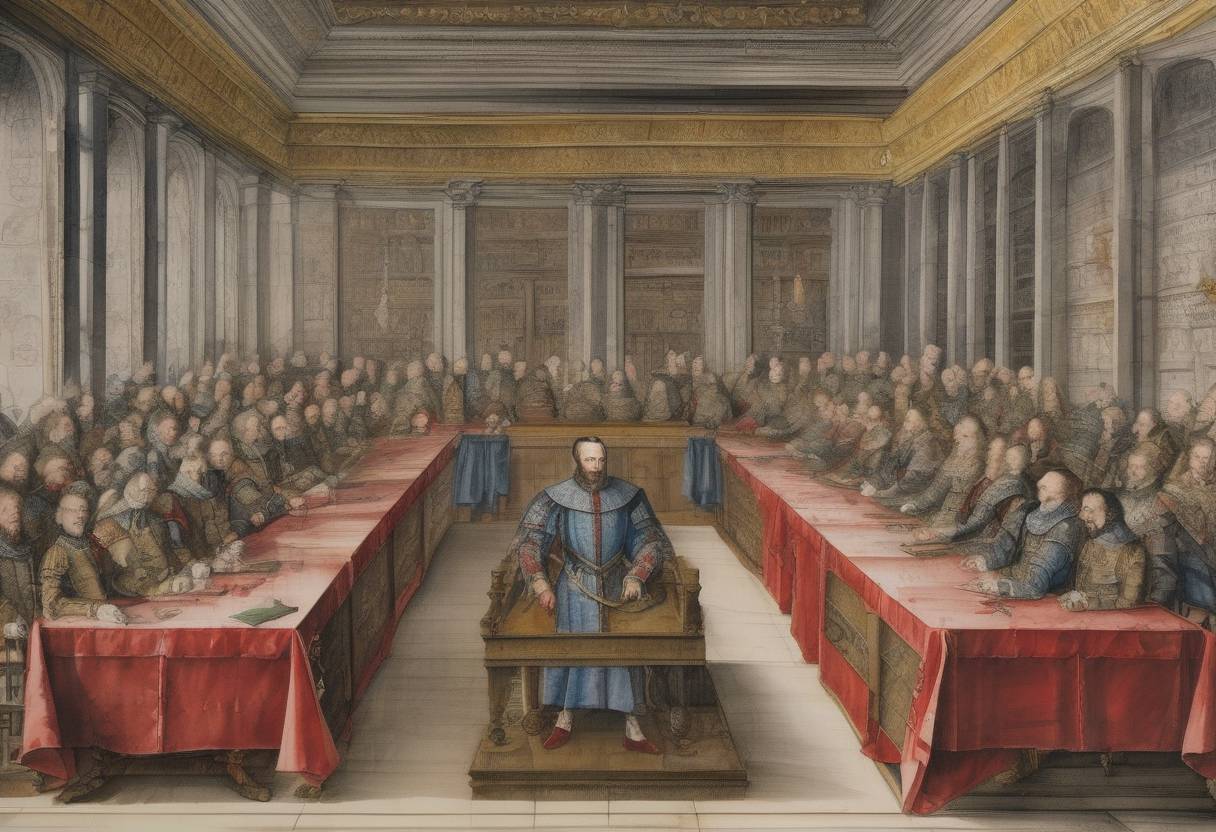
On September 29, 1567, Fernando Álvarez de Toledo, the 3rd Duke of Alba, established the Council of Troubles in the Netherlands. This council, which became infamously known as the “Council of Blood,” was a pivotal institution in the Spanish efforts to suppress Protestant dissent and maintain control over the turbulent region during the Eighty Years’ War.
The mid-16th century was a period of significant religious and political upheaval in Europe. The Protestant Reformation had spread across the continent, challenging the Catholic Church’s authority and leading to widespread religious conflicts. The Habsburg Netherlands, under the rule of King Philip II of Spain, was no exception. The region was experiencing growing unrest due to religious tensions, economic grievances, and resistance to Spanish centralization efforts.
In response to the increasing disorder and the iconoclastic riots of 1566, King Philip II dispatched the Duke of Alba to the Netherlands with a formidable army. Alba, a staunch Catholic and loyal servant of the Spanish crown, was tasked with restoring order and reasserting Spanish authority. His arrival marked the beginning of a harsh military and judicial crackdown on Protestantism and rebellion.
The Council of Troubles was established by Alba as a special tribunal to prosecute those involved in the recent uprisings and to root out heresy. The council was granted extraordinary powers, bypassing local legal systems and operating with little regard for traditional legal rights. It quickly gained a reputation for its severe and arbitrary justice, leading to its nickname, the “Council of Blood.”
The harsh measures implemented by the Council of Troubles intensified resistance against Spanish rule and contributed to the outbreak of the Eighty Years’ War, a protracted conflict that ultimately led to the independence of the Dutch Republic. The council’s legacy is one of repression and brutality, symbolizing the broader struggle for religious and political freedom in the Netherlands.
The establishment of the Council of Troubles on September 29, 1567, remains a significant event in European history, illustrating the complex interplay of religion, politics, and power during a transformative period.
Source: en.wikipedia.org