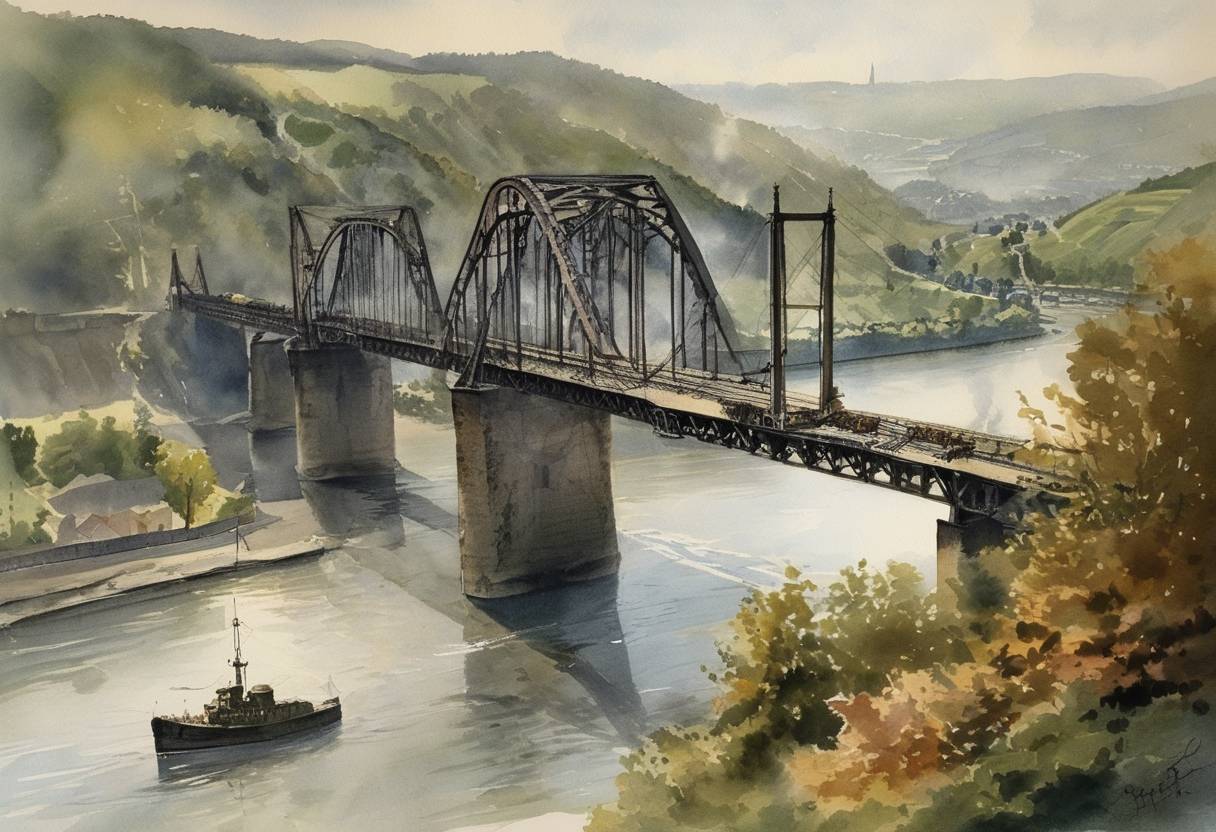
Capture of the Ludendorff Bridge at Remagen - March 7, 1945
On March 7, 1945, during World War II, American forces achieved a strategic victory by capturing the Ludendorff Bridge at Remagen, Germany. This event was significant as it enabled the Allied forces to establish a bridgehead across the Rhine River, a critical geographical barrier to advancing into the heartland of Nazi Germany.
Background
By early 1945, Allied forces had made significant advances across Western Europe following the D-Day landings in June 1944. As they pushed eastwards, crossing the Rhine River became a crucial step in breaching Germany’s central defenses and hastening the end of the war.
The Strategic Importance of the Ludendorff Bridge
The Ludendorff Bridge, located in the small town of Remagen, was one of the last remaining bridges over the Rhine that had not been destroyed by retreating German forces. This made it a highly strategic target for the Allies, as capturing it intact would allow for a rapid deployment of men and materials into the heart of Germany, bypassing the need for risky amphibious assaults across the river.
The Capture
On the afternoon of March 7, 1945, soldiers of the U.S. 9th Armored Division approached Remagen. Much to their surprise, they found the Ludendorff Bridge still standing, though it had been rigged with explosives by the Germans for demolition. Under orders from Brigadier General William M. Hoge, American infantry and engineers quickly moved to seize the bridge, cutting wires to demolition charges. Despite German attempts to destroy it, the main detonation failed, and the bridge remained largely intact.
Consequences and Aftermath
The capture of the Ludendorff Bridge at Remagen allowed the Allies to establish a critical bridgehead on the eastern side of the Rhine. Over the next ten days, thousands of troops and massive quantities of equipment were moved across, significantly accelerating the Allied advance into Germany.
For the German High Command, the loss of the Ludendorff Bridge was a severe blow. Adolf Hitler, furious at the failure to destroy the bridge, ordered severe reprisals against those responsible, leading to court-martials and executions.
While the bridge ultimately collapsed on March 17 due to structural damage, by then, a substantial number of Allied forces had already crossed the Rhine, marking a pivotal moment in the Allied offensive that contributed to the rapid conclusion of World War II in Europe.
Historical Significance
The capture of the Ludendorff Bridge at Remagen is remembered as a textbook example of seizing tactical opportunities in warfare. It highlighted the importance of infrastructure in military logistics and demonstrated the adaptability and resourcefulness of Allied forces. This event marks an essential milestone in the final Allied push into Germany, effectively shortening the war in Europe.