Peru Declares Independence from Spain: July 28, 1821
1821 · Lima, Peru
Peru declared its independence from Spain, marking a significant moment in the Latin American wars of independence.
June 26, 1541
Francisco Pizarro, the Spanish conquistador known for conquering the Inca Empire, was assassinated by forces of rival Spanish conquistador Diego de Almagro II in Lima, Peru.
Lima, Peru | None
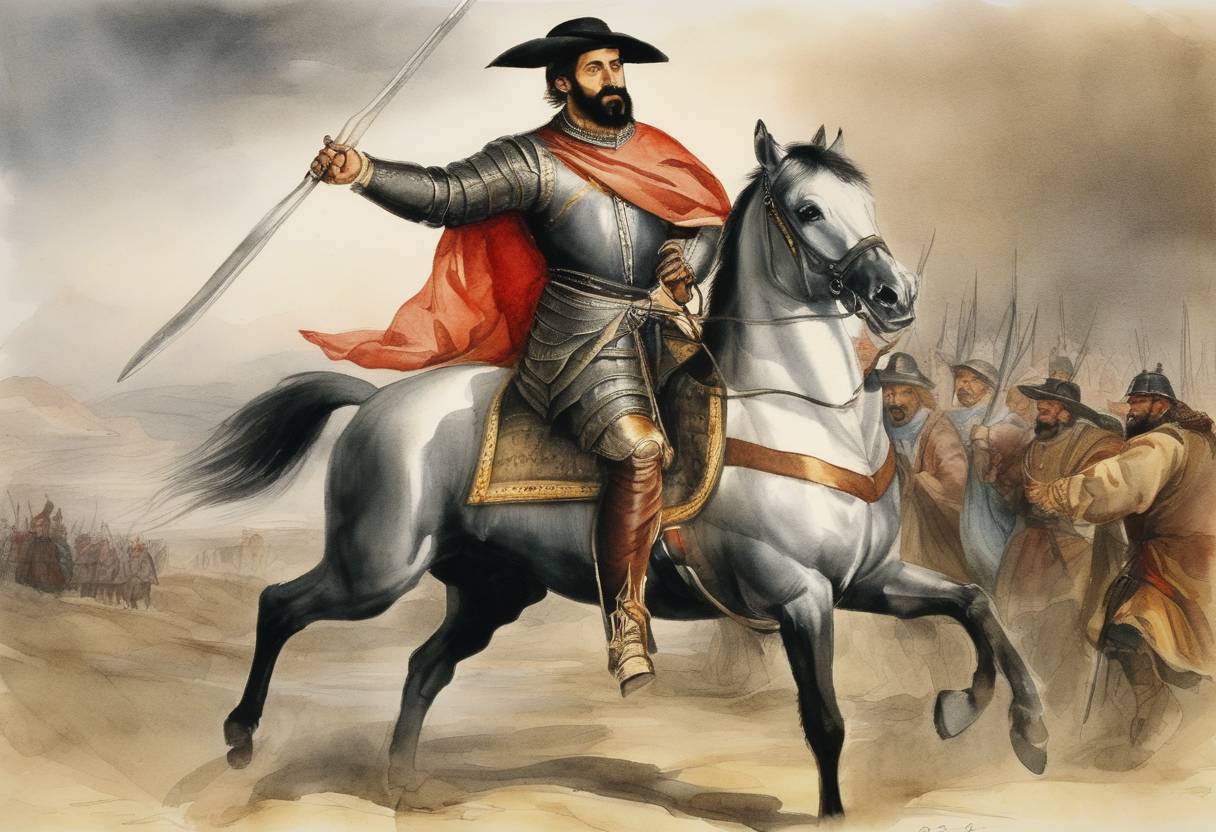
On June 26, 1541, Francisco Pizarro, the Spanish conquistador renowned for his conquest of the Inca Empire, was assassinated in Lima, Peru. This event marked the culmination of escalating tensions among Spanish factions vying for control over the newly conquered territories in South America.
Francisco Pizarro had successfully overthrown the Inca Empire with a small band of Spanish conquistadors in the 1530s, capturing the Inca emperor Atahualpa and eventually founding the city of Lima in 1535. His conquests brought considerable wealth and power but also led to rivalry and resentment among his compatriots, particularly with Diego de Almagro, Pizarro’s former ally.
The Treaty of Toledo in 1529 had divided the newly discovered lands along the 1525 Treaty of Tordesillas line, with Pizarro’s governance extending over Peru. Almagro, feeling marginalized, claimed governance over some parts of the territory, intensifying disputes between the two groups of followers known respectively as Pizarristas and Almagrists.
Following further conflicts, Almagro was captured and executed by Pizarro’s supporters in 1538, exacerbating the animosity within the Spanish settlers. Diego de Almagro II, known as “El Mozo”—the illegitimate son of Almagro—sought revenge for his father’s death and aimed to reclaim his family’s honor and position within the colonial hierarchy.
On June 26, 1541, a group of Almagro’s loyalists infiltrated Pizarro’s palace in Lima. Armed and seeking retribution, they surprised Pizarro and his companions during a midday meal. Despite resistance from a few of his men, Pizarro was overwhelmed and fatally wounded. Reports describe him using his own blood to draw a cross on the floor, kissing it as he died.
The assassination created a power vacuum and further destabilized Spanish rule in Peru. Civil strife continued as factions vied for dominance, leading to prolonged conflict known as the “Spanish Civil Wars of Peru.” Over time, the Spanish Crown intervened by sending Pedro de la Gasca to restore order and reaffirm royal authority over the disputed territories.
Pizarro’s assassination underscored the ruthless and volatile nature of early colonial rule in the Americas, characterized by treachery and internal conflict amidst the European conquest of indigenous civilizations.
Source: www.historytoday.com