1774 · London, United Kingdom
The Quartering Act, part of the Intolerable Acts, is passed by the British Parliament. It requires American colonies to provide housing and supplies to British soldiers stationed in America.
March 31, 1774
The British Parliament passed the Boston Port Act, effectively closing the port of Boston in response to the Boston Tea Party.
London, Great Britain | British Parliament
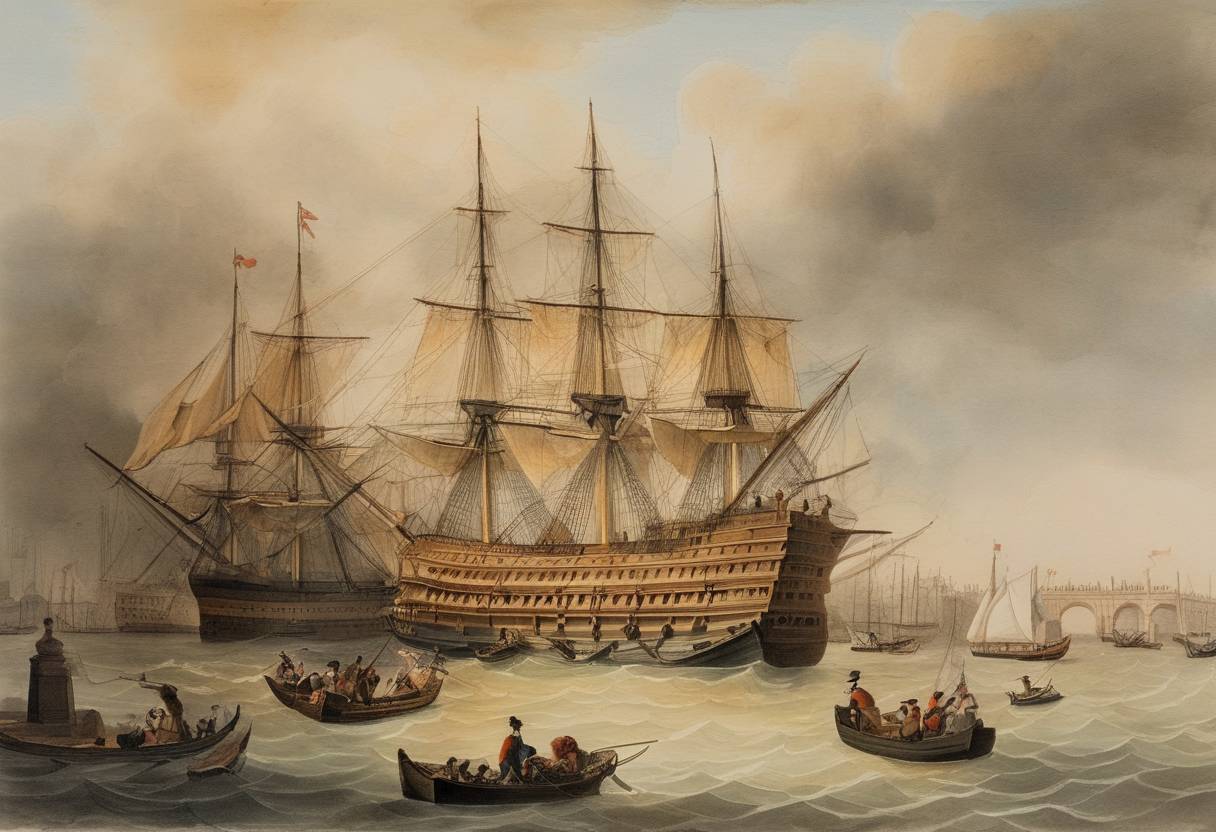
On March 31, 1774, the British Parliament enacted the Boston Port Act, a pivotal measure in response to the Boston Tea Party, an event where American colonists protesting British taxation dumped large quantities of tea into Boston Harbor. The Act was one of the Coercive Acts—known as the Intolerable Acts in the American colonies—designed to reassert British authority over the increasingly defiant American colonies.
The Boston Tea Party, which took place on December 16, 1773, marked a significant escalation in tensions between the British government and American colonists. The act of civil disobedience involved members of the Sons of Liberty, disguised as Mohawk Indians, boarding British ships and disposing of 342 chests of tea in response to the Tea Act, which allowed the British East India Company to sell tea directly to the colonies, undercutting local businesses.
In retaliation, the British government sought to punish Massachusetts and deter similar actions in other colonies. The Boston Port Act stipulated the closure of the Port of Boston to all ships until restitution for the destroyed tea was made to the East India Company and the king’s treasury. The bill received royal assent overwhelmingly and was strictly enforced.
The Boston Port Act had profound implications. It not only paralyzed Boston’s economy, reliant heavily on its mercantile activities but also unified the colonies against perceived British tyranny. Colonists felt that the act was overly punitive and unjust, as it affected all residents of Boston irrespective of their involvement in the Tea Party.
The Boston Port Act exemplifies the escalating cycle of punitive measures and colonial resistance that characterized the prelude to the American Revolution. It highlights the British miscalculation of colonial resolve and foreshadows the broader conflict that would unfold over the following years.
Source: www.history.com