The Murder of King Edward II at Berkeley Castle
1327 · Berkeley, England
King Edward II of England was murdered at Berkeley Castle.
July 7, 1307
King Edward I of England dies, and is succeeded by his son, Edward II.
Burgh by Sands, England | English Monarchy
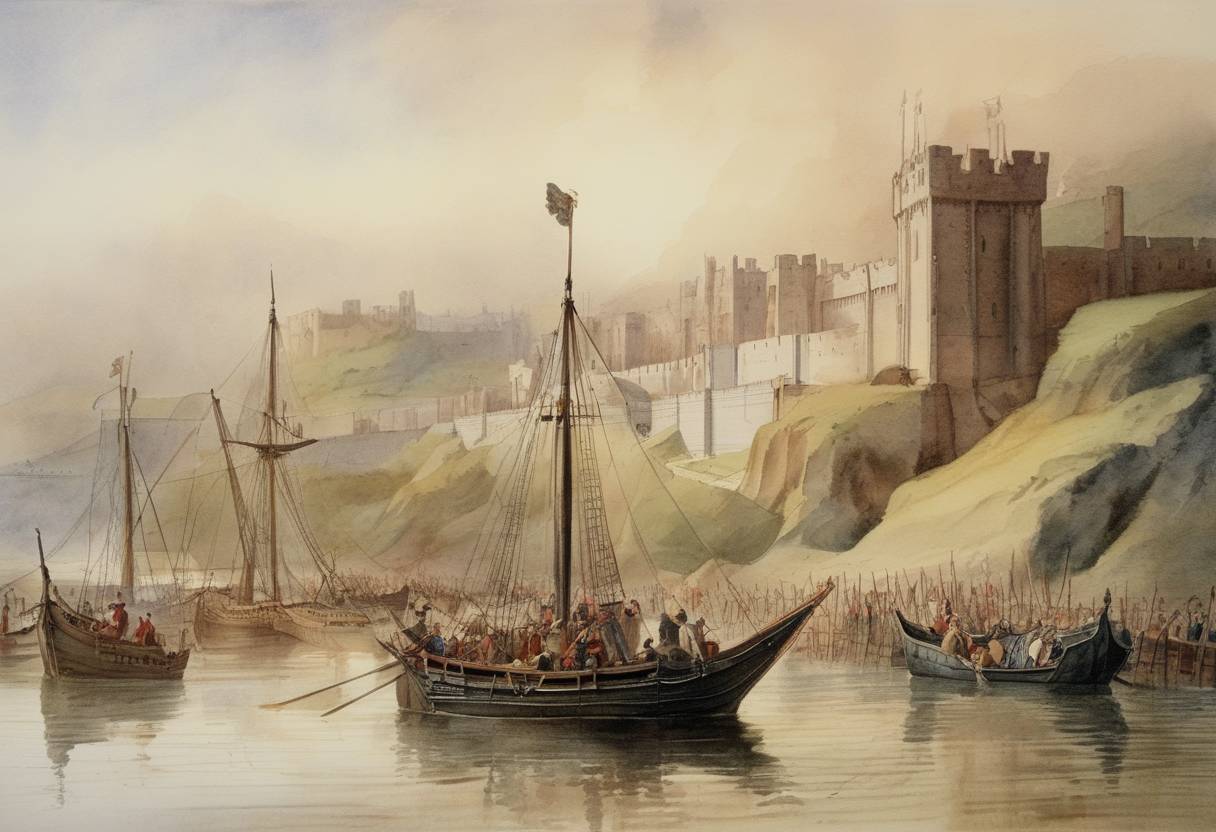
On July 7, 1307, King Edward I of England, known as “Longshanks” due to his tall stature and “The Hammer of the Scots” for his military campaigns against Scotland, died at Burgh by Sands, near Carlisle. He was on his way to Scotland to continue his campaigns against the Scots, led by Robert the Bruce. His death marked the end of a 35-year reign characterized by significant legal and governmental reforms, as well as extensive military campaigns.
Edward I ascended to the English throne in 1272. His reign is marked by the conquest of Wales, which was completed with the Statute of Rhuddlan in 1284, integrating it into England. Edward also convened the Model Parliament in 1295, which included commoners, showing a move towards more representative government.
His ambitions extended to Scotland, where his ongoing efforts to assert dominance led to the Wars of Scottish Independence. These conflicts would continue beyond his death, leaving a legacy of English-Scottish animosity.
Edward I was succeeded by his son, Edward II. Edward II’s ascension marked a significant shift as he differed greatly from his father in terms of leadership style and effectiveness. Edward II’s reign (1307-1327) would be marked by military failures, most notably the defeat at the Battle of Bannockburn in 1314, which secured Scottish independence for a time.
His personal relationships and favoritism, especially towards Piers Gaveston and later Hugh Despenser, led to significant political unrest and conflict with the English barons. This unrest eventually culminated in Edward II’s deposition in 1327 in favor of his son, Edward III.
The transition from Edward I to Edward II illustrates the difficulties of succession and the complexities of medieval monarchy, where personal and political weaknesses could destabilize a nation. The failure of Edward II to emulate his father’s success profoundly impacted the English monarchy’s authority and its relations with the nobility and neighboring countries.
Source: www.britannica.com