Iceland Declares Independence from Denmark: June 17, 1944
1944 · Reykjavik, Iceland
Iceland declares independence from Denmark and becomes a republic.
October 26, 1905
Sweden accepted the independence of Norway, formally dissolving the union between the two countries.
Karlstad, Sweden
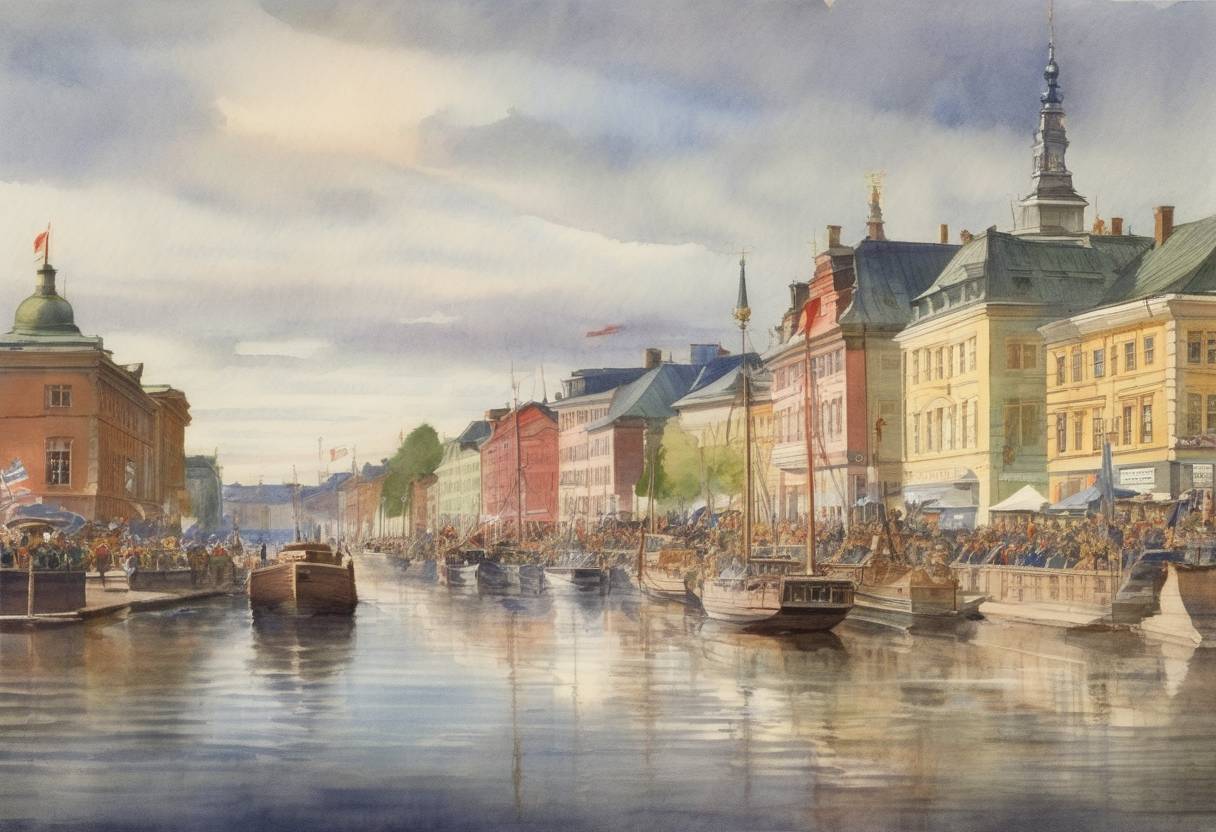
On October 26, 1905, Sweden formally recognized the independence of Norway, marking the end of the union between the two countries that had lasted since 1814. This significant event in Scandinavian history was the culmination of a peaceful and diplomatic process, reflecting the growing desire for national sovereignty and self-determination in Norway.
The union between Sweden and Norway was established in 1814 following the Treaty of Kiel, which ended the Napoleonic Wars. Norway was ceded to the King of Sweden after being under Danish rule for centuries. Although Norway retained its own constitution and parliament, the union was characterized by a shared monarch and foreign policy, which often led to tensions and dissatisfaction in Norway.
Throughout the 19th century, Norway experienced a rise in nationalism and a growing movement for greater autonomy. Key issues included the desire for a separate Norwegian consular service and the push for more control over domestic affairs. These tensions were exacerbated by cultural and economic differences between the two nations.
The early 20th century saw increased efforts by Norway to assert its independence. In 1905, the Norwegian parliament, the Storting, took decisive action by unilaterally declaring the dissolution of the union on June 7, 1905. This bold move was supported by a national referendum held in August, where an overwhelming majority of Norwegians voted in favor of independence.
Negotiations between Sweden and Norway followed, with both sides keen to avoid conflict. The peaceful resolution of the union’s dissolution was facilitated by diplomatic talks held in the Swedish town of Karlstad. The Karlstad Agreement, reached in September 1905, outlined the terms of separation, including the peaceful withdrawal of Swedish troops from Norwegian territory and the dismantling of border fortifications.
On October 26, 1905, the Swedish parliament formally recognized Norway’s independence, and King Oscar II of Sweden renounced his claim to the Norwegian throne. This act officially dissolved the union and allowed Norway to establish itself as a fully independent nation.
Following independence, Norway sought a new monarch and offered the throne to Prince Carl of Denmark, who accepted and became King Haakon VII of Norway. His reign marked the beginning of a new era for Norway as a sovereign state.
The peaceful dissolution of the union between Sweden and Norway is often cited as a model for resolving international disputes through negotiation and diplomacy. It set a precedent for the amicable settlement of conflicts and demonstrated the power of democratic processes in achieving national self-determination.
The dissolution of the union had significant implications for both countries. For Norway, it marked the start of a new chapter in its history, allowing it to pursue its own path in international affairs and domestic governance. For Sweden, it was an opportunity to redefine its national identity and focus on internal development.
The peaceful resolution of the union’s dissolution also contributed to the stability of the Scandinavian region and reinforced the principles of peaceful coexistence and cooperation that continue to characterize Nordic relations today.
Source: en.wikipedia.org