Adolf Hitler's Decision to Remain in Berlin: April 22, 1945
1945 · Berlin, Germany
Adolf Hitler admits defeat in his underground bunker and decides to remain in Berlin until the end of the war.
December 19, 1941
Adolf Hitler became Supreme Commander-in-Chief of the German Army, consolidating his control over the military during World War II.
Berlin, Germany | Nazi Germany
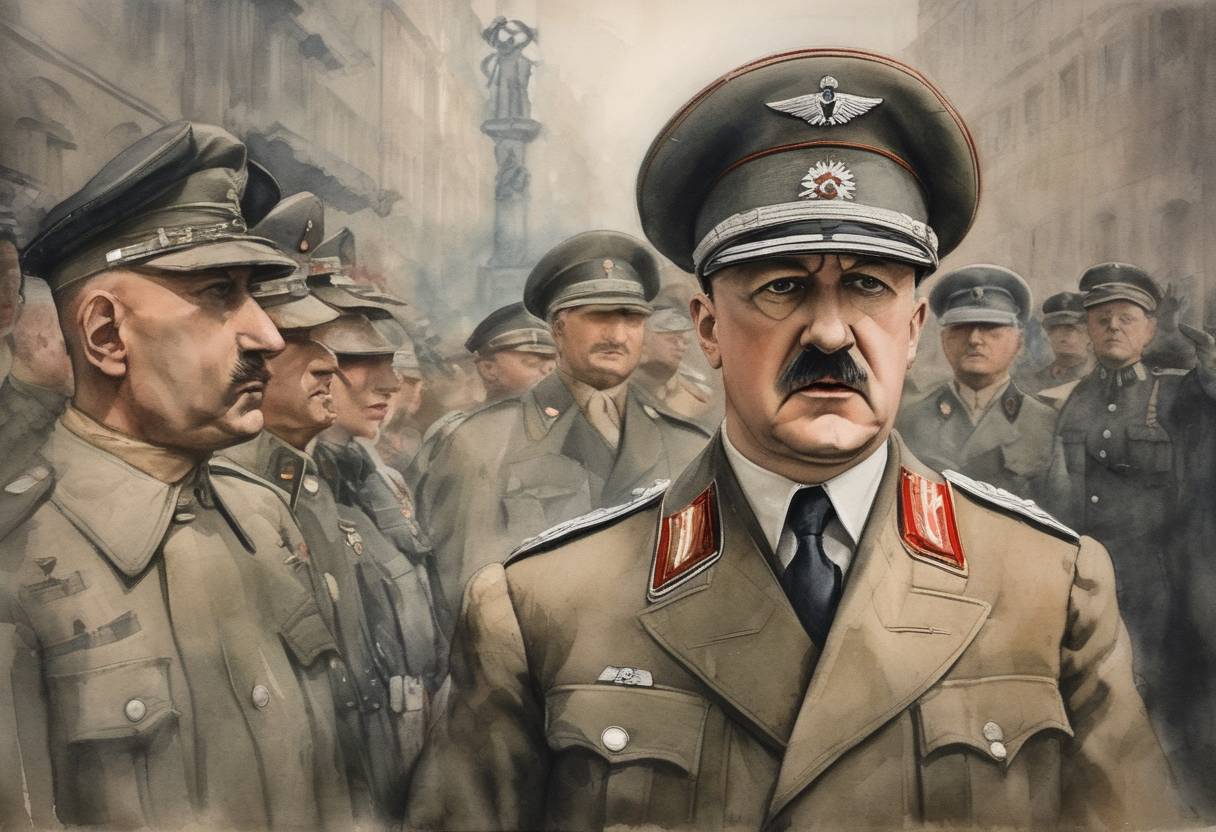
On December 19, 1941, Adolf Hitler assumed the position of Supreme Commander-in-Chief of the German Army, further consolidating his control over Nazi Germany’s military forces during World War II. This significant shift in military leadership occurred amidst the backdrop of a challenging phase for Germany in the war.
Operation Barbarossa: Launched in June 1941, this was Nazi Germany’s invasion of the Soviet Union. Initially, the operation saw rapid advances, but by December, the German forces were facing severe setbacks due to the harsh Russian winter and staunch Soviet resistance.
Military Struggles: The German Army’s failure to capture Moscow and the subsequent Soviet counteroffensive marked a turning point in the Eastern Front. These difficulties highlighted strategic miscalculations and logistical issues within the German military command.
Internal Military Tensions: Discontent was growing within the German military hierarchy. The failures on the Eastern Front led to a loss of confidence in the existing military leadership, particularly in Field Marshal Walther von Brauchitsch, the then-Commander-in-Chief of the Army.
Resignation of Walther von Brauchitsch: On December 19, 1941, Field Marshal von Brauchitsch resigned, officially due to health reasons, but largely because of the mounting pressure and Hitler’s dissatisfaction with his performance.
Hitler’s Assumption of Command: Following von Brauchitsch’s resignation, Hitler took direct command of the German Army. This move was part of his broader strategy to centralize power and eliminate any potential dissent within the military ranks.
Centralization of Power: By becoming the Supreme Commander-in-Chief, Hitler further centralized military and political power, reducing the autonomy of professional military leaders and increasing his personal control over military strategy and operations.
Impact on Military Strategy: Hitler’s direct involvement in military decisions often led to strategic blunders. His insistence on holding positions at all costs and refusal to allow tactical retreats contributed to significant German losses, particularly on the Eastern Front.
Long-term Implications: This consolidation of power marked a critical point in the war, as it led to increasingly erratic and ideologically driven military strategies. Hitler’s decisions, unchallenged by military professionals, ultimately contributed to the downfall of Nazi Germany.
In summary, Hitler’s assumption of the role of Supreme Commander-in-Chief on December 19, 1941, was a pivotal moment in World War II, reflecting his desire for absolute control and foreshadowing the strategic missteps that would follow.
Source: en.wikipedia.org