The Second Diet of Speyer and the Origin of the Term 'Protestant'
1529 · Speyer, Holy Roman Empire
The Second Diet of Speyer ends, resulting in a protest by Lutheran princes and the origin of the term 'Protestant.'
January 28, 1521
The Diet of Worms began, where Martin Luther was summoned to recant his teachings, marking a pivotal moment in the Protestant Reformation.
Worms, Holy Roman Empire | Holy Roman Empire
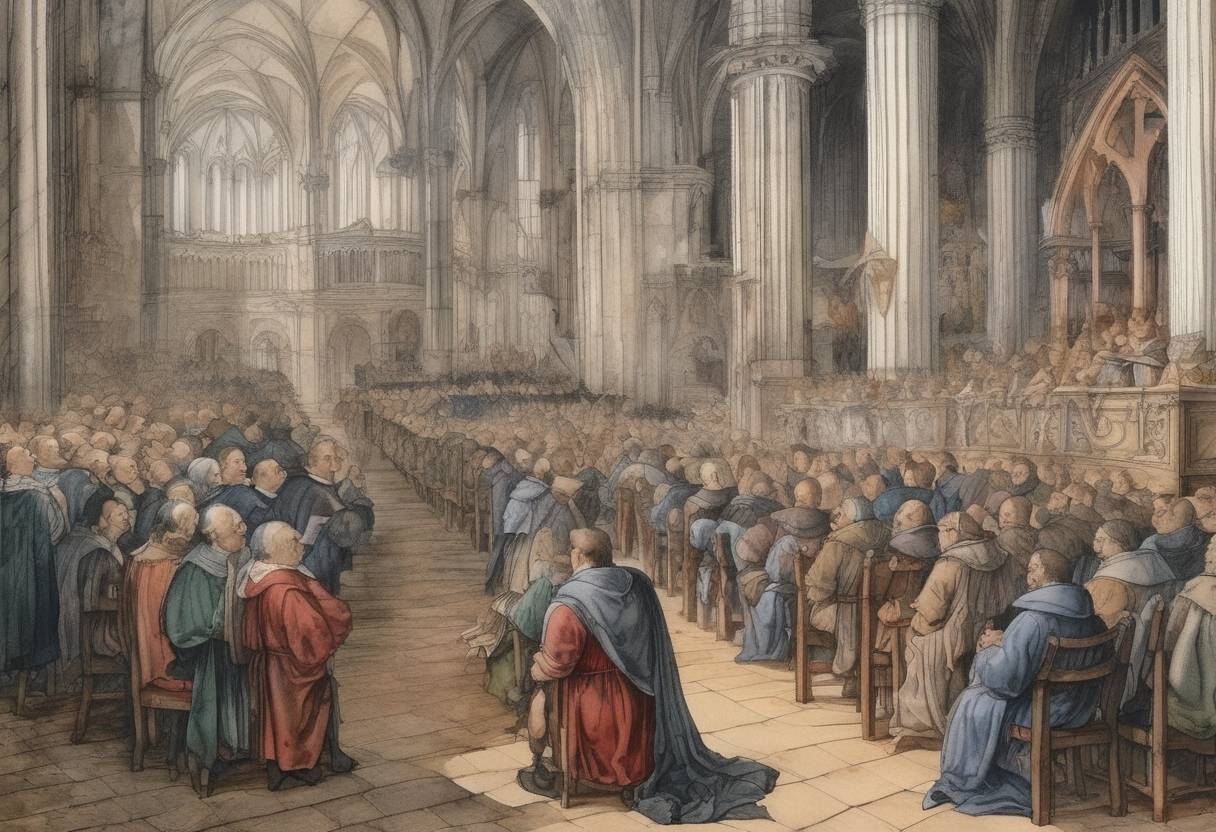
The Diet of Worms, which began on January 28, 1521, was a significant event in the history of the Protestant Reformation. This imperial council was convened by Charles V, the Holy Roman Emperor, in the city of Worms, located in present-day Germany. The primary purpose of the Diet was to address the growing religious and political challenges posed by Martin Luther’s teachings.
Martin Luther’s 95 Theses: In 1517, Martin Luther, a German monk and theologian, famously nailed his 95 Theses to the door of the Wittenberg Castle Church. This act criticized the Catholic Church’s sale of indulgences and questioned papal authority, sparking widespread debate and leading to the Protestant Reformation.
Excommunication: In response to his teachings, Luther was excommunicated by Pope Leo X in January 1521 through the papal bull “Decet Romanum Pontificem.”
Political Tensions: The Reformation was not only a religious movement but also a political one. Many German princes saw Luther’s ideas as an opportunity to assert greater independence from the Holy Roman Empire and the Catholic Church.
Summoning Luther: Martin Luther was summoned to the Diet to recant his teachings. He arrived in Worms on April 16, 1521, and was granted safe conduct by Emperor Charles V.
Luther’s Defense: On April 17 and 18, Luther stood before the assembly. He famously refused to recant his writings unless convinced by Scripture or reason, stating, “Here I stand, I can do no other. God help me. Amen.”
Edict of Worms: Following Luther’s refusal, the Diet issued the Edict of Worms on May 25, 1521. This decree declared Luther an outlaw and heretic, banning his writings and calling for his arrest.
Protection by Frederick the Wise: Despite the edict, Luther was protected by Frederick the Wise, Elector of Saxony, who arranged for his “kidnapping” and safe haven at Wartburg Castle. Here, Luther translated the New Testament into German, making the scriptures more accessible to the general populace.
Spread of Reformation Ideas: The Diet of Worms was a turning point that solidified Luther’s role as a central figure in the Reformation. His defiance inspired others to challenge the Catholic Church’s authority, leading to the spread of Protestantism across Europe.
Long-term Impact: The events at Worms set the stage for religious and political upheaval throughout the 16th century, contributing to wars of religion and the eventual establishment of Protestant churches.
The Diet of Worms remains a pivotal moment in history, symbolizing the clash between emerging Protestant ideals and established Catholic doctrine, and marking a significant step in the broader Protestant Reformation.
Source: en.wikipedia.org