President Lyndon B. Johnson's 'Great Society' Plan
1965 · Washington D.C., United States
President Lyndon B. Johnson outlined his 'Great Society' plan in his State of the Union address.
January 8, 1964
President Lyndon B. Johnson declared a 'War on Poverty' in the United States during his State of the Union address, leading to significant social welfare legislation.
Washington, D.C., United States | United States Government
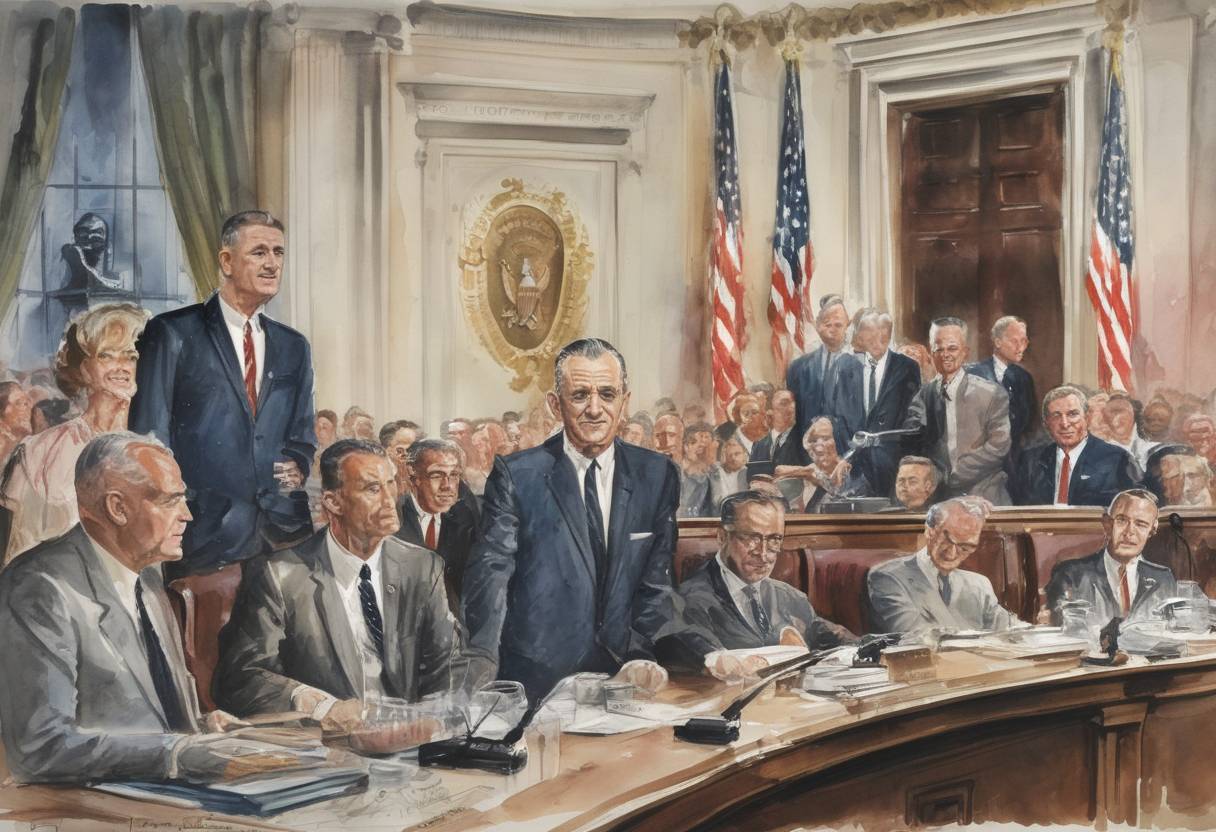
On January 8, 1964, President Lyndon B. Johnson delivered his State of the Union address to Congress, during which he declared an “unconditional war on poverty in America.” This announcement marked the beginning of a series of legislative initiatives aimed at reducing poverty and improving the quality of life for millions of Americans.
Johnson’s “War on Poverty” was part of his broader vision for a “Great Society,” which aimed to eliminate poverty and racial injustice. Several key programs and legislative acts emerged from this initiative:
Economic Opportunity Act of 1964: This act was the cornerstone of Johnson’s anti-poverty efforts. It established the Office of Economic Opportunity (OEO) to oversee various programs, including:
Food Stamp Act of 1964: Expanded the federal food assistance program to help low-income families purchase food.
Medicare and Medicaid (1965): Although enacted a year later, these programs were part of the broader Great Society agenda. Medicare provided health insurance to the elderly, while Medicaid offered assistance to low-income individuals and families.
Johnson’s “War on Poverty” was a pivotal moment in American history, reflecting a shift towards a more active government role in addressing social issues. It laid the groundwork for future debates on welfare, healthcare, and economic inequality, influencing policy discussions to this day.
Source: en.wikipedia.org