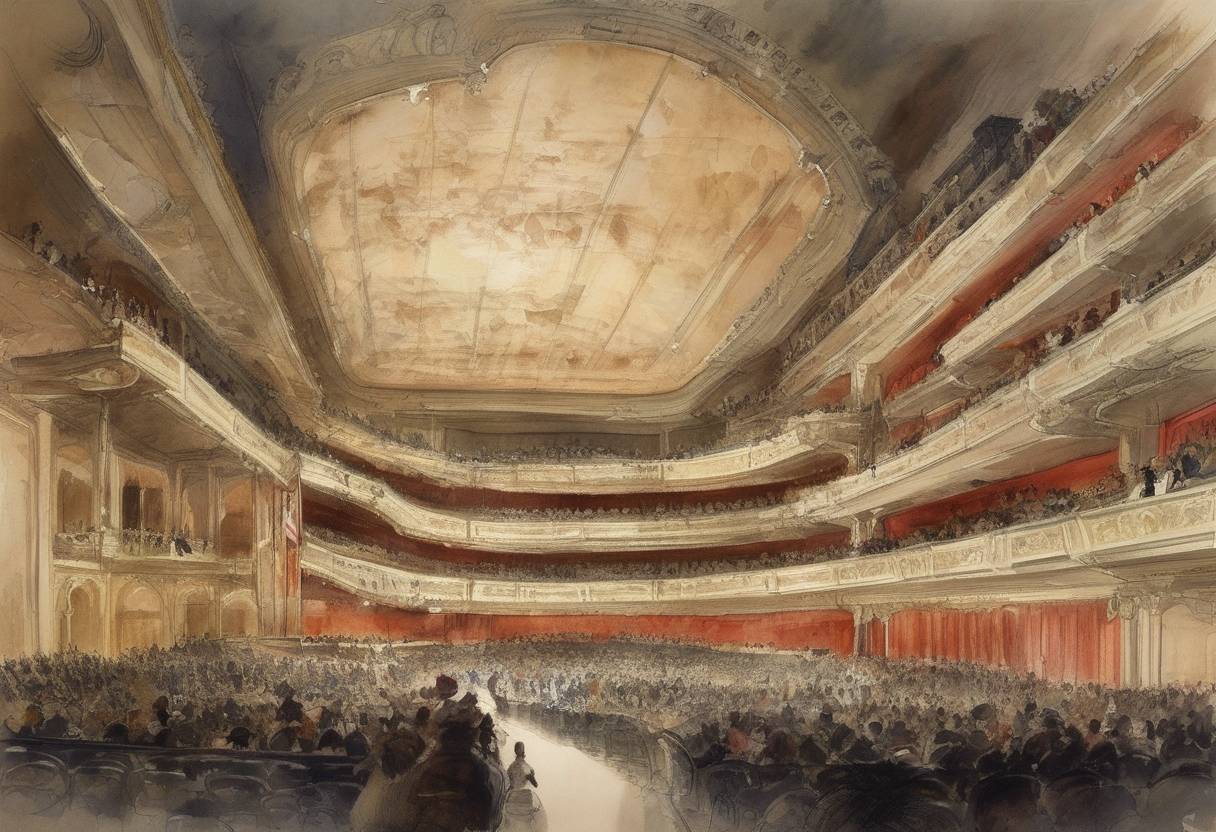
The Opening of The Metropolitan Opera House
Date: October 22, 1883
Event Overview
On October 22, 1883, the Metropolitan Opera House in New York City opened its doors for the first time with a grand performance of Charles Gounod’s opera Faust. This event marked a significant moment in the cultural history of New York City and the United States, establishing the Metropolitan Opera as a premier institution for opera and classical music.
Background
- The Metropolitan Opera Company was founded in 1880 by a group of wealthy New Yorkers who sought to create an opera house that could rival the established Academy of Music. Dissatisfied with the exclusivity and limited seating of the Academy, these patrons envisioned a more accessible and grandiose venue.
- Construction of the new opera house began in 1880, designed by architect J. Cleaveland Cady. The building was located at 1411 Broadway, between 39th and 40th Streets, and featured a seating capacity of approximately 3,700.
The Opening Night
- The choice of Faust for the opening night was significant, as it was one of the most popular operas of the time. Gounod’s work, based on Goethe’s Faust, was known for its melodic richness and dramatic depth.
- The performance was conducted by Auguste Vianesi, with Christine Nilsson starring as Marguerite, Italo Campanini as Faust, and Franco Novara as Mephistopheles.
- The opening night was a lavish affair, attended by New York’s elite, including prominent figures from the worlds of business, politics, and society.
Significance and Impact
- The successful opening of the Metropolitan Opera House marked the beginning of a new era for opera in America. It provided a platform for both established and emerging artists and became a cultural hub for New Yorkers.
- Over the years, the Metropolitan Opera has hosted countless legendary performances and has been home to some of the greatest voices in opera history.
- The original building served as the home of the Metropolitan Opera until 1966, when the company moved to its current location at Lincoln Center.
Aftermath
- The opening of the Metropolitan Opera House contributed to the cultural enrichment of New York City, helping to establish it as a major center for the performing arts.
- The institution has played a crucial role in popularizing opera in the United States, influencing the development of American opera and music education.
The opening of the Metropolitan Opera House with Faust was not just a significant cultural event; it was a statement of New York City’s growing importance as a global cultural capital.