The Voyage of the Anne and Little James: December 18, 1622
1622 · London, England
The English ship Anne and Little James set sail from London to join the Plymouth Colony in America.
December 4, 1619
Thirty-eight colonists from Berkeley Parish in England disembark in Virginia and give thanks to God, considered by some as the first Thanksgiving in the Americas.
Berkeley, United States | Berkeley Hundred
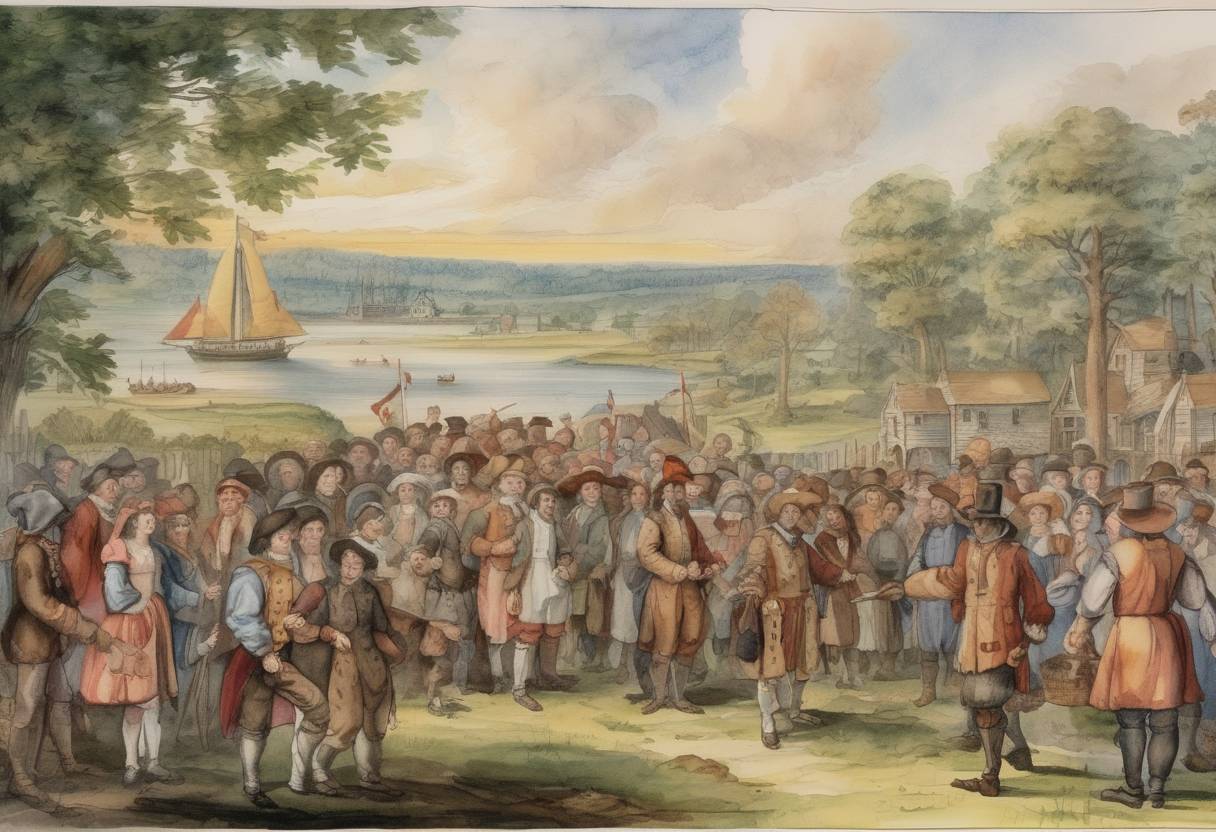
On December 4, 1619, a group of 38 English settlers from Berkeley Parish in Gloucestershire, England, arrived at what is now known as Berkeley Hundred in the Colony of Virginia. This event is significant as it is considered by some historians to be the first Thanksgiving in the Americas, predating the more widely recognized Pilgrim Thanksgiving at Plymouth in 1621.
The Virginia Company: The settlers were sent by the Virginia Company of London, which was responsible for establishing settlements in the New World. The company’s goal was to expand English influence and economic opportunities through the establishment of new colonies.
The Journey: The colonists embarked on their journey aboard the ship Margaret, departing from England in September 1619. Their voyage was part of a broader effort to establish a series of plantations along the James River.
Landing at Berkeley Hundred: Upon their arrival at the site along the James River, the settlers followed the instructions given to them by the Virginia Company. These instructions included a directive to observe an annual day of thanksgiving to God for their safe passage and the establishment of their new settlement.
The Thanksgiving Ceremony: The settlers held a religious service to give thanks, marking the occasion with prayer and reflection. This event was intended to be an annual observance, as dictated by the charter of the Berkeley Hundred settlement.
Recognition as the First Thanksgiving: While the 1621 Thanksgiving at Plymouth is more commonly celebrated in American culture, the 1619 event at Berkeley Hundred is recognized by some as the first official Thanksgiving in the English colonies. This is due to its formal establishment as an annual day of thanks by the settlers.
Legacy: The Berkeley Hundred Thanksgiving did not become a widely recognized tradition in the same way as the Plymouth celebration. However, it remains an important historical footnote, highlighting the diverse origins of Thanksgiving traditions in the United States.
The Fate of Berkeley Hundred: The settlement at Berkeley Hundred faced significant challenges, including attacks by Indigenous groups and difficulties in sustaining the colony. In 1622, the settlement was abandoned following a devastating attack during the Powhatan uprising.
Rediscovery and Commemoration: The story of the 1619 Thanksgiving was largely forgotten until it was rediscovered in the 20th century. Today, it is commemorated by some as a precursor to the national Thanksgiving holiday.
In summary, the 1619 Thanksgiving at Berkeley Hundred represents an early instance of European settlers in North America giving thanks, reflecting the complex history of colonization and cultural exchange in the early 17th century.
Source: en.wikipedia.org