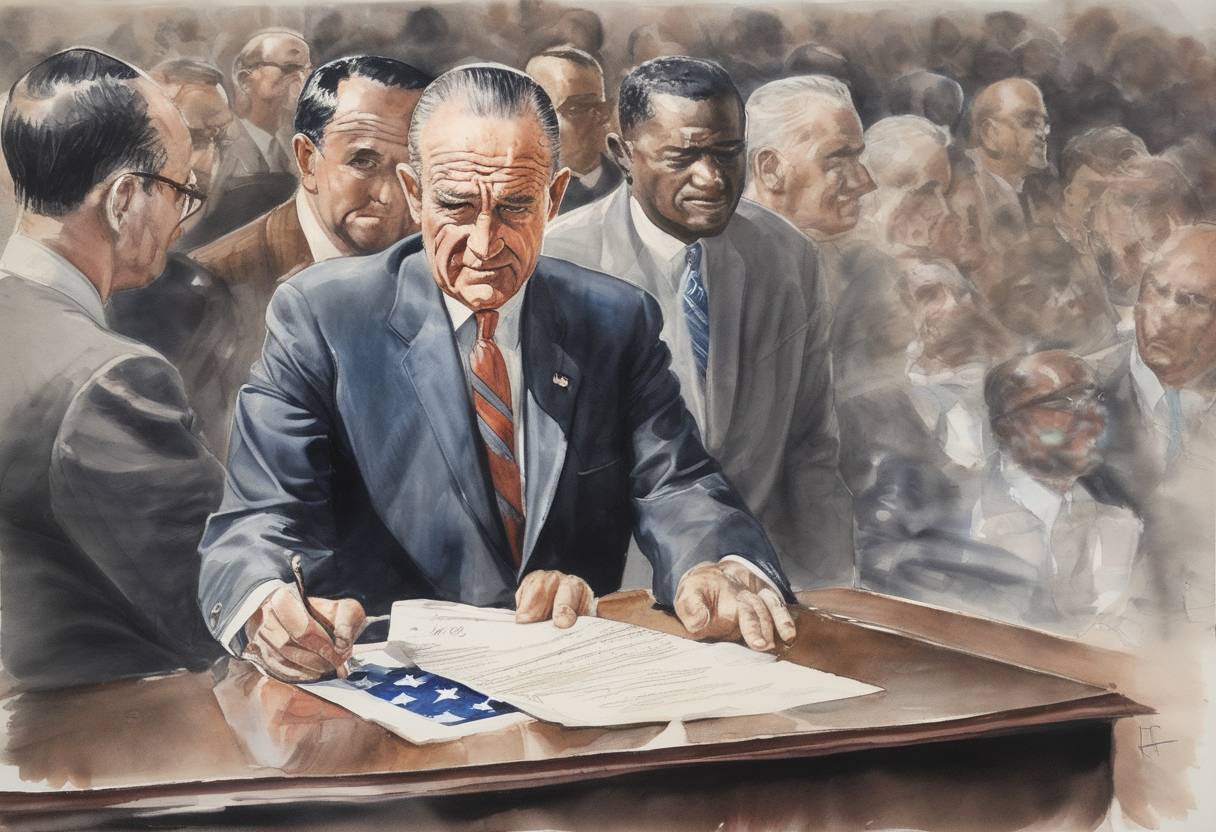
The Signing of the Voting Rights Act of 1965
On August 6, 1965, U.S. President Lyndon B. Johnson signed the Voting Rights Act into law, marking a pivotal moment in the American civil rights movement. This landmark legislation aimed to eliminate racial discrimination in voting, a pervasive issue particularly in the Southern United States.
Context and Background
The Voting Rights Act was a response to the systemic disenfranchisement of African Americans. Despite the 15th Amendment, which was ratified in 1870 and prohibited denying a citizen the right to vote based on “race, color, or previous condition of servitude,” various discriminatory practices effectively barred many African Americans from voting. These included literacy tests, poll taxes, and other bureaucratic barriers, often enforced with intimidation and violence.
The civil rights movement of the 1950s and 1960s brought national attention to these injustices. Events such as the Selma to Montgomery marches in early 1965 highlighted the brutal opposition faced by African Americans seeking to exercise their voting rights. The violence against peaceful protesters, particularly on “Bloody Sunday” (March 7, 1965), where marchers were brutally attacked by law enforcement, galvanized public opinion and increased pressure on the federal government to act.
Key Provisions of the Act
The Voting Rights Act of 1965 included several critical measures:
- Section 2: Prohibited any voting practice or procedure that discriminates on the basis of race or color.
- Section 4(b): Established a formula to identify areas where racial discrimination in voting was most prevalent, primarily targeting Southern states.
- Section 5: Required jurisdictions identified by the formula to obtain federal approval, or “preclearance,” before making any changes to their voting laws or practices.
- Section 6-9: Authorized the appointment of federal examiners to oversee voter registration in jurisdictions with a history of discrimination.
Impact and Significance
The Voting Rights Act had an immediate and profound impact on voter registration and participation among African Americans. In the years following its enactment, millions of African Americans registered to vote, and the number of African American elected officials increased significantly.
The Act is widely regarded as one of the most effective pieces of civil rights legislation in U.S. history. It not only dismantled many of the legal barriers to voting but also set a precedent for subsequent legislation aimed at ensuring equal voting rights for all Americans.
Aftermath and Legacy
The Voting Rights Act has been reauthorized and amended several times since 1965, reflecting ongoing challenges and changes in the landscape of voting rights. However, parts of the Act have faced legal challenges, most notably in the 2013 Supreme Court case Shelby County v. Holder, which invalidated the coverage formula in Section 4(b), effectively nullifying the preclearance requirement.
Despite these challenges, the Voting Rights Act remains a cornerstone of American democracy, symbolizing the nation’s commitment to ensuring that every citizen has an equal opportunity to participate in the electoral process. Its legacy continues to influence debates and policies surrounding voting rights in the United States today.