CBS Evening News Expands to 30 Minutes: September 2, 1963
1963 · New York City, United States
CBS Evening News expands from 15 minutes to 30 minutes, becoming network television’s first half-hour weekday news broadcast.
September 4, 1951
The first live transcontinental television broadcast took place in the United States, featuring President Harry Truman's speech at the Japanese Peace Treaty Conference in San Francisco.
San Francisco, United States | CBS
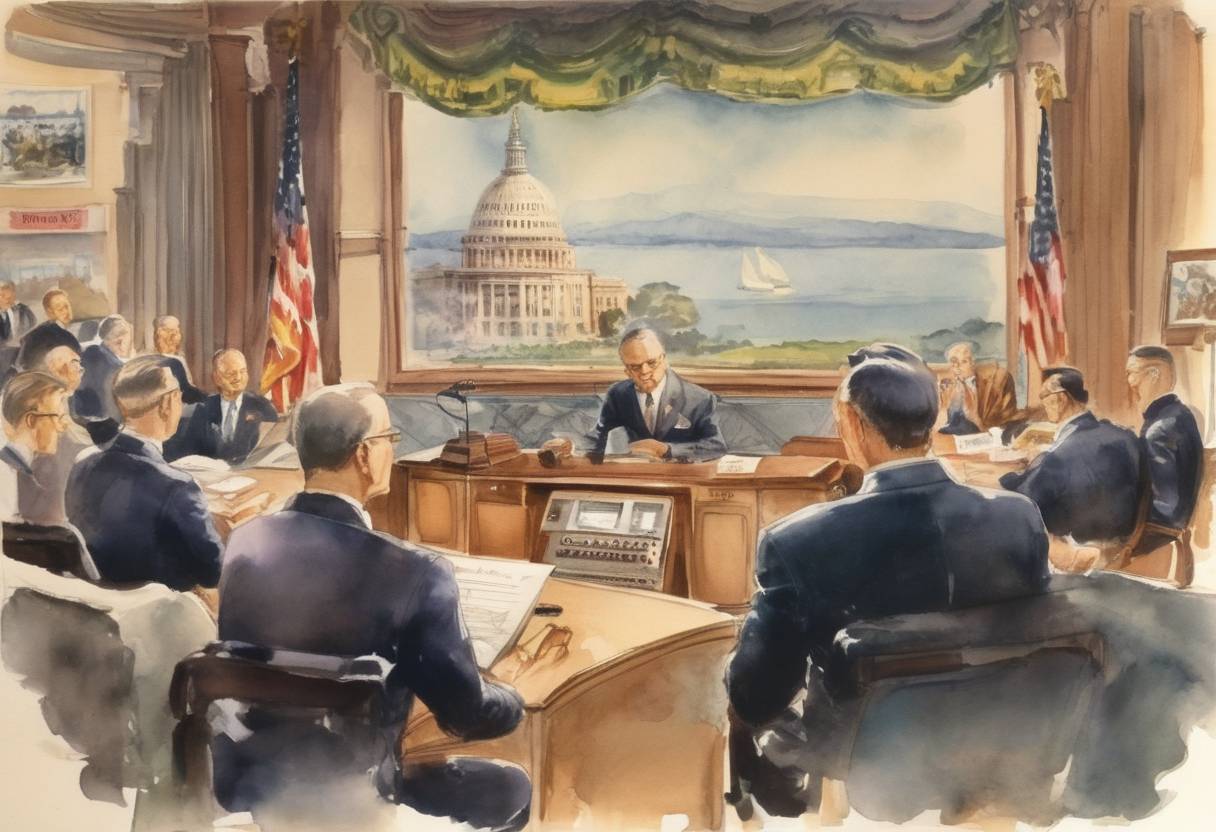
On September 4, 1951, a significant milestone in broadcasting history was achieved with the first live transcontinental television broadcast in the United States. This event marked a pivotal moment in the evolution of television as a medium capable of connecting audiences across vast distances in real-time.
Prior to this broadcast, television was primarily a regional medium, with broadcasts limited to local or nearby areas due to technological constraints. The development of a coast-to-coast television network required significant advancements in infrastructure, including the installation of microwave relay towers and coaxial cables across the country.
The broadcast was facilitated by the National Broadcasting Company (NBC), which had been working on expanding its network capabilities to enable live broadcasts from coast to coast. This technological feat was a culmination of years of planning and investment in the necessary infrastructure.
The historic broadcast featured a speech by President Harry S. Truman at the Japanese Peace Treaty Conference, held in San Francisco. This conference was a significant post-World War II event, aimed at formally ending the state of war between Japan and the Allied Powers and establishing peace in the Pacific region.
President Truman’s speech was transmitted live from San Francisco to viewers across the United States, reaching audiences in major cities such as New York, Chicago, and Los Angeles. This broadcast demonstrated the potential of television to bring important national and international events directly into American homes.
The success of this live transcontinental broadcast had far-reaching implications for the television industry and American society. It showcased the ability of television to serve as a powerful tool for communication and information dissemination, enhancing its role in shaping public opinion and culture.
Technological Advancement: The broadcast underscored the technological advancements in television transmission, paving the way for future developments in broadcasting and the eventual establishment of a nationwide television network.
Cultural Impact: By making significant events accessible to a wider audience, television began to play a crucial role in unifying the nation and fostering a shared cultural experience.
Political Influence: The ability to broadcast live speeches and events allowed political leaders to reach a broader audience, influencing public discourse and engagement with political processes.
Following this successful broadcast, the television industry continued to expand rapidly, with networks investing in further infrastructure improvements and programming innovations. The event marked the beginning of a new era in television, where live broadcasts became a staple of American media consumption.
In conclusion, the first live transcontinental television broadcast on September 4, 1951, was a landmark achievement that transformed the landscape of American media and communication, setting the stage for the television-dominated era that followed.
Source: en.wikipedia.org