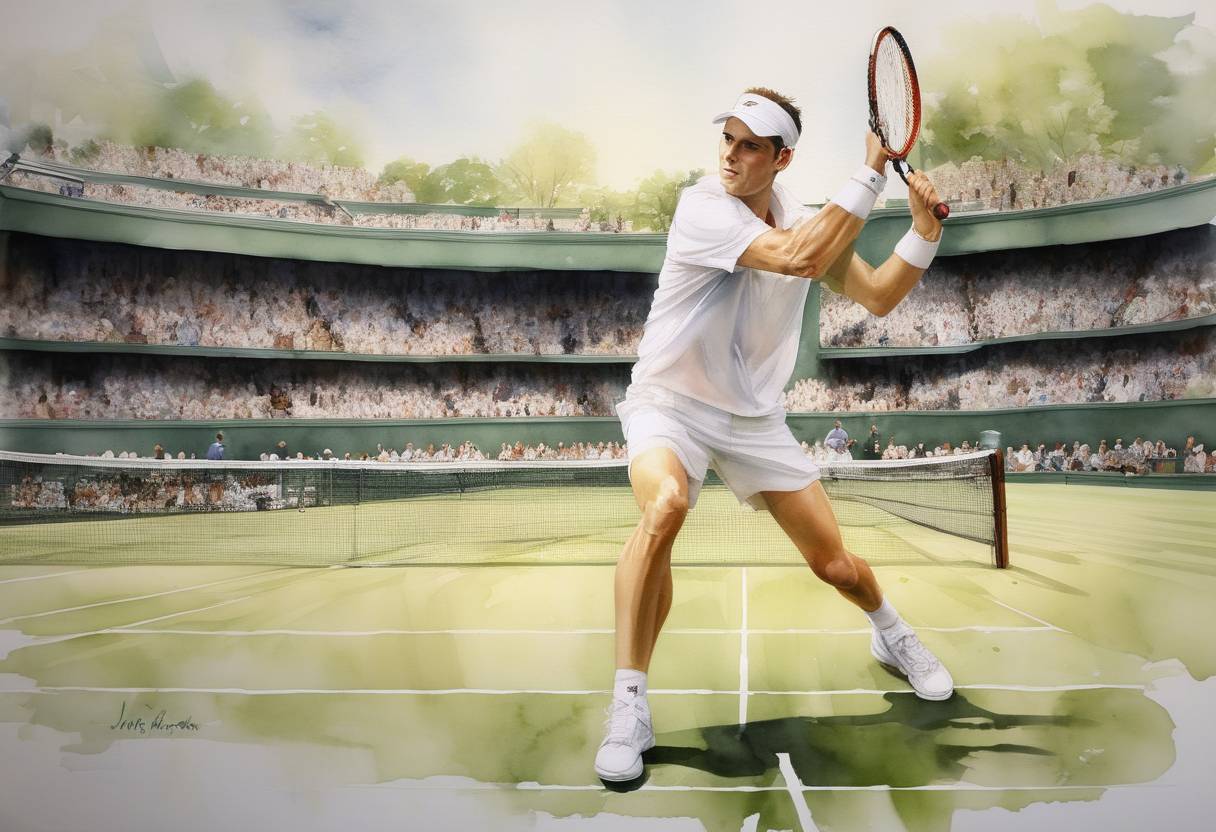
The Longest Match in Professional Tennis History
Overview
On June 22, 2010, during the first round of the Wimbledon Championships, an extraordinary tennis match began between American John Isner and Frenchman Nicolas Mahut. This match would go down in history as the longest in professional tennis, lasting a total of 11 hours and 5 minutes over the course of three days.
Key Details
- Date Started: June 22, 2010
- Date Ended: June 24, 2010
- Duration: 11 hours and 5 minutes
- Sets Played: 5
- Final Score: 6–4, 3–6, 6–7(7), 7–6(3), 70–68 in favor of John Isner
Context and Significance
Pre-Match Context
- Players: John Isner, known for his powerful serve, was ranked 19th in the world at the time. Nicolas Mahut, a skilled grass-court player, was ranked 148th.
- Tournament: The match took place at Wimbledon, one of the four Grand Slam tournaments, renowned for its grass courts and tradition.
Match Progression
- Day 1 (June 22): The match began and was suspended due to fading light after four sets, tied at two sets each.
- Day 2 (June 23): Play resumed, and the fifth set alone lasted 7 hours and 6 minutes. The match was again suspended due to darkness with the score tied at 59–59 in the final set.
- Day 3 (June 24): The match concluded with Isner winning the final set 70–68.
Records Set
- Longest Match Duration: 11 hours and 5 minutes.
- Most Games in a Match: 183 games.
- Longest Set: The fifth set alone lasted 8 hours and 11 minutes.
- Most Aces in a Match: John Isner hit 113 aces, and Nicolas Mahut hit 103.
Aftermath and Impact
- Physical Toll: Both players were visibly exhausted, with Isner losing his subsequent match in straight sets.
- Rule Changes: The match prompted discussions about the need for a tiebreaker in the final set at Wimbledon, leading to eventual rule changes in 2019, introducing a tiebreak at 12–12 in the final set.
- Cultural Impact: The match captured global attention, highlighting the endurance and determination of professional athletes. It remains a symbol of perseverance in sports.
Conclusion
The Isner-Mahut match at Wimbledon in 2010 is remembered not only for its length but also for the sportsmanship and resilience displayed by both players. It stands as a testament to the unpredictable and thrilling nature of tennis, leaving a lasting legacy in the sport’s history.