The Opening of the First Wendy's Restaurant
1969 · Columbus, United States
The first Wendy's restaurant opens in Columbus, Ohio, founded by Dave Thomas, marking the beginning of a major fast-food chain.
December 4, 1954
The first Burger King is opened in Miami, Florida, marking the beginning of one of the world's largest fast-food chains.
Miami, United States | Burger King
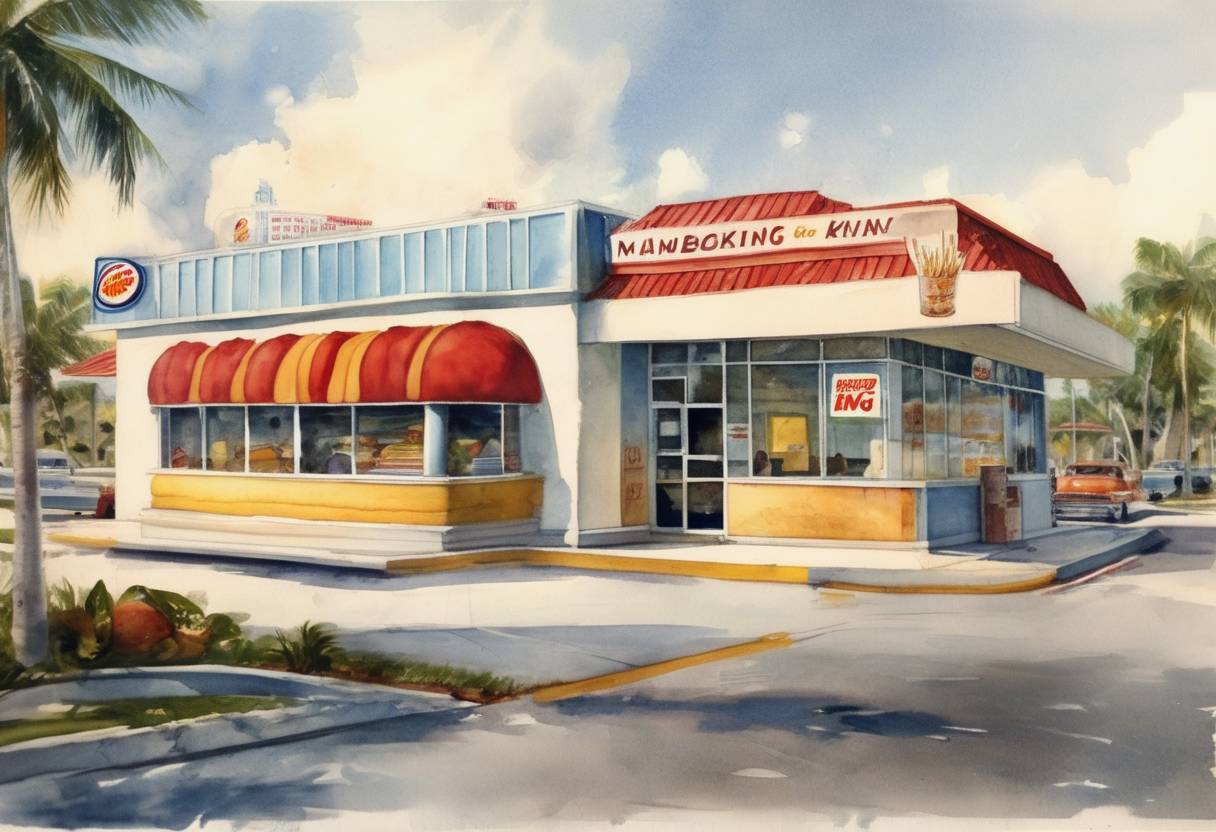
On December 4, 1954, the first Burger King restaurant opened its doors in Miami, Florida, marking the inception of what would become one of the world’s largest and most recognizable fast-food chains. This event was a significant milestone in the fast-food industry, setting the stage for the global expansion of the brand.
The origins of Burger King trace back to the entrepreneurial vision of James McLamore and David Edgerton. Both were alumni of the Cornell University School of Hotel Administration and shared a keen interest in the burgeoning fast-food industry. Inspired by the success of McDonald’s, they sought to create a restaurant that offered quality food at affordable prices, with a focus on flame-grilled burgers.
1953: The concept that would eventually become Burger King began with a small chain called Insta-Burger King, founded by Keith J. Kramer and Matthew Burns in Jacksonville, Florida. They utilized a piece of equipment known as the “Insta-Broiler” to cook their burgers.
1954: McLamore and Edgerton purchased a franchise of Insta-Burger King in Miami. Recognizing the potential for growth and improvement, they revamped the business model and rebranded it as “Burger King.”
Location: The first Burger King restaurant was strategically located in Miami, Florida, a city experiencing rapid growth and development during the 1950s.
Menu: The initial menu featured the now-iconic “Whopper,” introduced in 1957, which became a signature item and a key differentiator from competitors.
Franchising: Following the success of the Miami location, McLamore and Edgerton began franchising the Burger King brand. By the end of the 1960s, Burger King had expanded to over 250 locations across the United States.
Global Reach: In the subsequent decades, Burger King continued to grow, establishing a presence in international markets. Today, it operates in over 100 countries, with thousands of locations worldwide.
Corporate Changes: Over the years, Burger King underwent several ownership changes and strategic shifts, including a merger with the Canadian coffee chain Tim Hortons in 2014, forming Restaurant Brands International.
The opening of the first Burger King in 1954 was a pivotal moment in the fast-food industry, contributing to the rise of quick-service restaurants and shaping consumer dining habits. Burger King’s emphasis on flame-grilled burgers and its innovative marketing strategies have left a lasting impact on the global food landscape.
In summary, the establishment of Burger King in Miami laid the foundation for a fast-food empire that continues to influence the industry and culture worldwide.
Source: en.wikipedia.org