Al Capone Convicted of Income Tax Evasion
1931 · Chicago, United States
American gangster Al Capone was convicted of income tax evasion.
February 14, 1929
The Saint Valentine's Day Massacre took place in Chicago, where seven members of Chicago's North Side Gang were murdered, allegedly on the orders of Al Capone.
Chicago, United States | North Side Gang
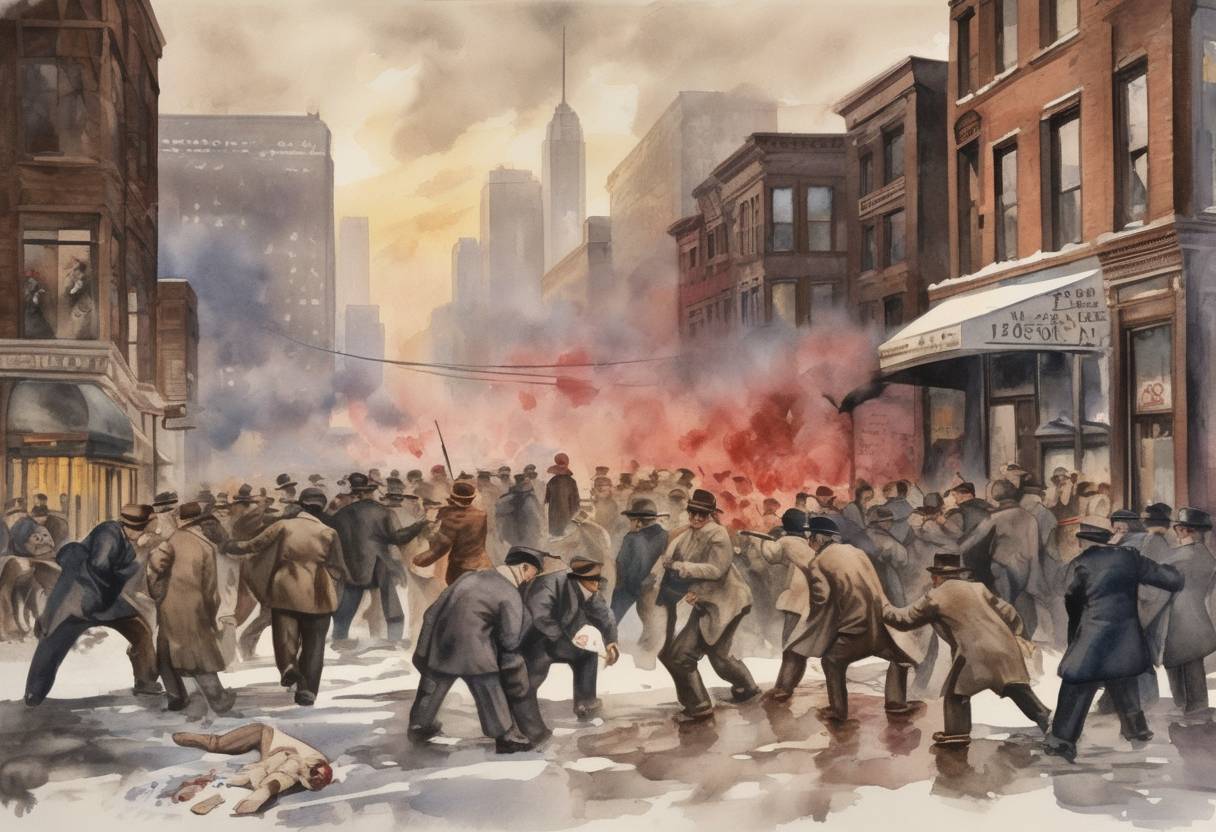
The Saint Valentine’s Day Massacre was a pivotal event in the violent history of organized crime in the United States during the Prohibition era. This period, which lasted from 1920 to 1933, saw the rise of powerful criminal organizations that profited from the illegal production and distribution of alcohol. Chicago became a notorious battleground for these gangs, with two dominant factions: the South Side Italian gang led by Al Capone and the North Side Irish gang led by George “Bugs” Moran.
On the morning of February 14, 1929, seven members and associates of the North Side Gang were lined up against a wall inside a garage at 2122 North Clark Street. They were then shot and killed by four men, two of whom were dressed as uniformed policemen. This strategic disguise allowed the gunmen to enter the garage without raising suspicion.
The victims included:
The massacre was widely believed to have been orchestrated by Al Capone, who sought to eliminate his rival, Bugs Moran. However, Capone was in Florida at the time, providing him with an alibi. The actual shooters were never conclusively identified, and no one was ever tried for the murders.
The Saint Valentine’s Day Massacre exemplified the lawlessness of the Prohibition era and underscored the challenges faced by authorities in controlling organized crime. It also contributed to the growing public disillusionment with Prohibition, which was eventually repealed in 1933 with the 21st Amendment.
The massacre remains one of the most infamous events in the history of American organized crime, symbolizing the violent power struggles that characterized the era.
Source: en.wikipedia.org