Utah's Admission as the 45th State of the United States
1896 · Salt Lake City, United States
Utah was admitted as the 45th state of the United States.
July 10, 1890
Wyoming was admitted as the 44th state of the United States, becoming the first state to grant women the right to vote.
Cheyenne, United States | United States Congress
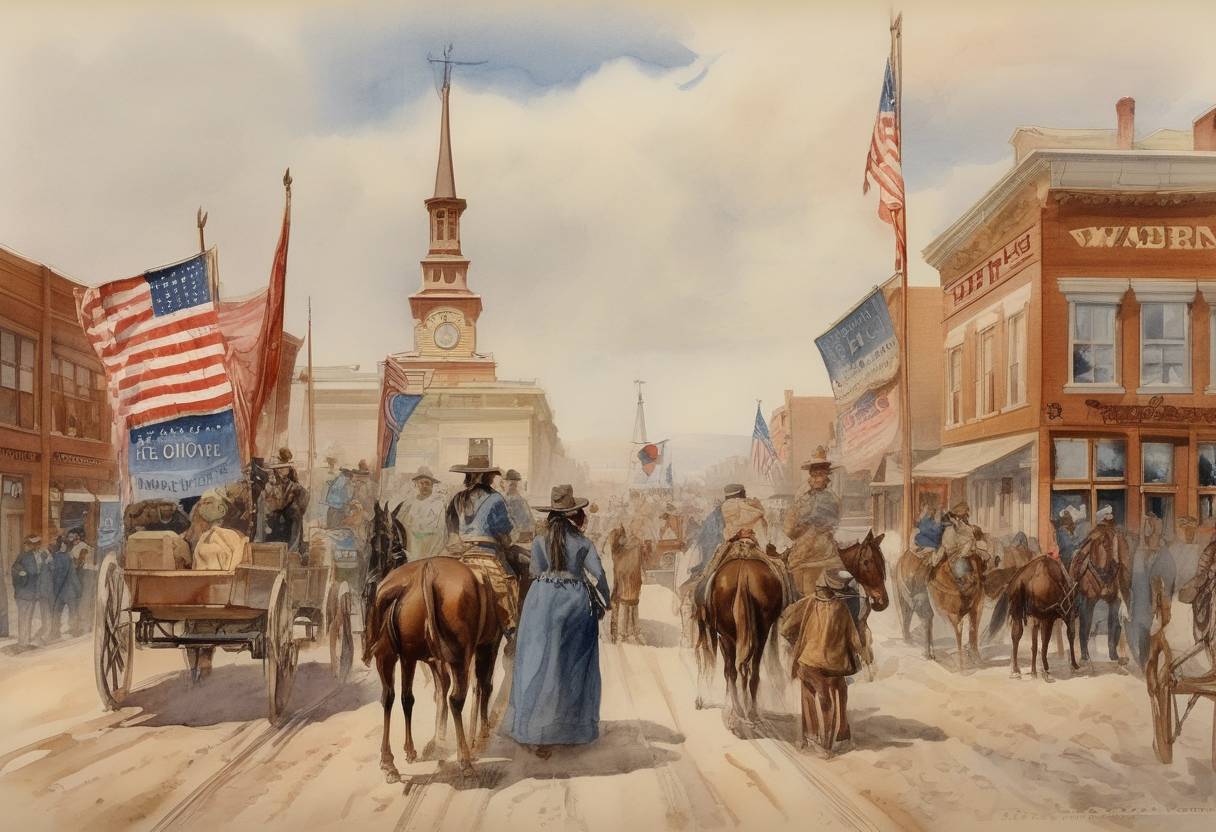
On July 10, 1890, Wyoming was admitted to the Union as the 44th state of the United States. This event was significant not only because it expanded the Union but also because Wyoming was the first state to grant women the right to vote, setting a precedent for women’s suffrage in the United States.
Early Settlement: The area that would become Wyoming was originally inhabited by various Native American tribes, including the Arapaho, Shoshone, and Cheyenne. European-American settlement began in earnest in the mid-19th century, spurred by the Oregon Trail and the discovery of gold.
Territorial Status: Wyoming Territory was established on July 25, 1868, carved out of portions of the Dakota, Utah, and Idaho territories. Its sparse population and vast landscapes were characterized by ranching, mining, and the construction of the Union Pacific Railroad.
Suffrage Legislation: In 1869, the Wyoming Territorial Legislature passed a groundbreaking law granting women the right to vote. This decision was influenced by a combination of progressive ideals and practical considerations, such as attracting more settlers to the territory.
First Female Voter: In 1870, Louisa Swain of Laramie became the first woman in the United States to cast a vote in a general election under laws granting women equal suffrage.
Statehood Process: The push for statehood was driven by Wyoming’s growing population and economic development. The statehood bill passed through Congress and was signed into law by President Benjamin Harrison on July 10, 1890.
Constitutional Convention: Wyoming’s state constitution, adopted in 1889, included a provision guaranteeing women’s suffrage, making it the first state to enshrine this right in its constitution.
Impact on Women’s Suffrage Movement: Wyoming’s decision to grant women the right to vote was a pivotal moment in the women’s suffrage movement in the United States. It provided a successful model that suffragists could point to in their campaigns for voting rights across the country.
Legacy: Wyoming’s nickname, “The Equality State,” reflects its pioneering role in advancing women’s rights. The state’s early adoption of women’s suffrage helped pave the way for the 19th Amendment to the U.S. Constitution, ratified in 1920, which granted women the right to vote nationwide.
Wyoming’s admission as the 44th state on July 10, 1890, was a landmark event in American history. Its progressive stance on women’s suffrage not only distinguished it from other states at the time but also contributed significantly to the broader movement for gender equality in the United States.
Source: en.wikipedia.org