Conviction of Sirhan Sirhan for the Assassination of Robert F. Kennedy
1969 · Los Angeles, United States
Sirhan Sirhan was convicted of assassinating United States Senator Robert F. Kennedy.
January 25, 1971
Charles Manson and three female 'Family' members are found guilty of the 1969 Tate–LaBianca murders.
Los Angeles, United States | Los Angeles County Court
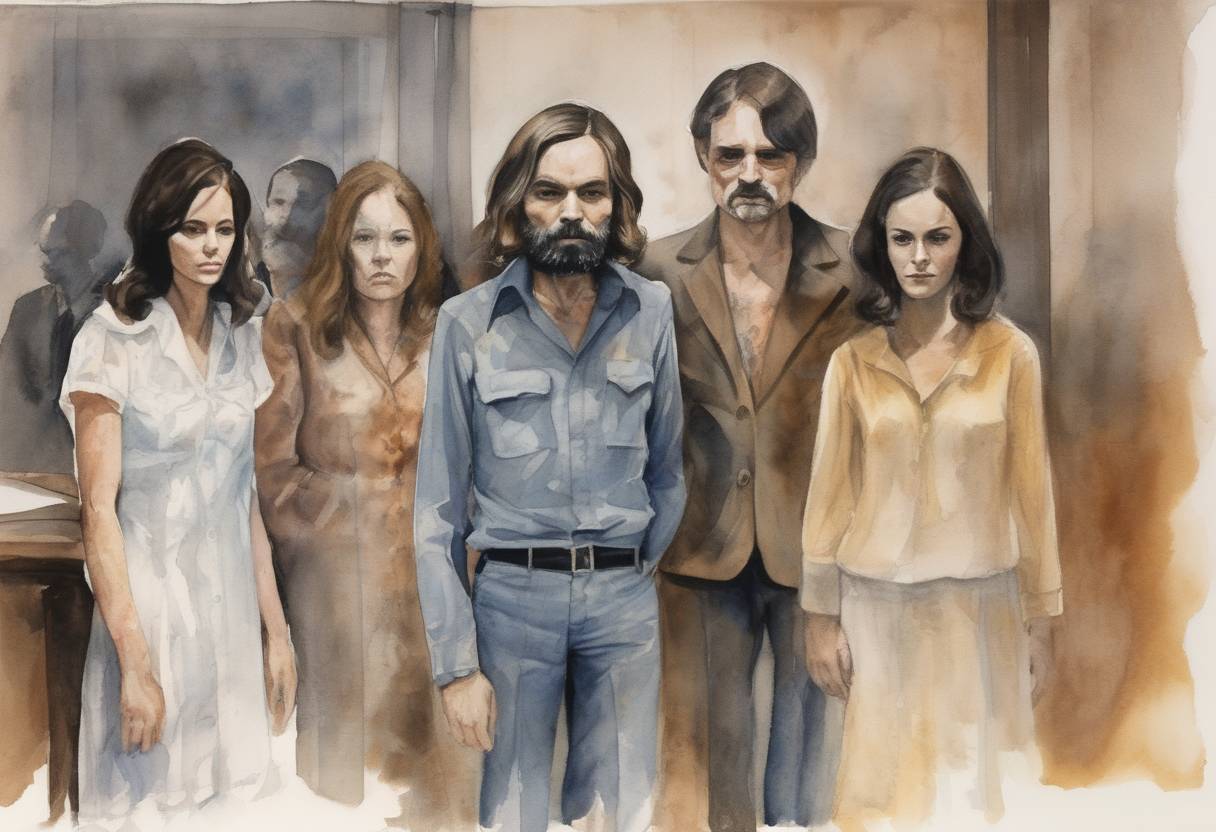
On January 25, 1971, Charles Manson and three female members of his so-called “Family” were found guilty of the 1969 Tate–LaBianca murders. This verdict marked the culmination of one of the most infamous criminal trials in American history, which captivated the nation and highlighted the dark undercurrents of the 1960s counterculture.
The Tate–LaBianca murders occurred over two nights in August 1969. On August 8, members of the Manson Family brutally murdered actress Sharon Tate, who was eight months pregnant, and four others at her home in Los Angeles. The following night, they killed Leno and Rosemary LaBianca in their home. These murders were part of Manson’s delusional plan to incite a race war, which he referred to as “Helter Skelter,” a term he borrowed from a Beatles song.
The trial began in June 1970 and was presided over by Judge Charles H. Older. Charles Manson, along with Susan Atkins, Patricia Krenwinkel, and Leslie Van Houten, faced charges of murder and conspiracy to commit murder. The trial was marked by bizarre behavior from Manson and his followers, including Manson carving an “X” into his forehead, which he later turned into a swastika.
Key evidence against the defendants included the testimony of Linda Kasabian, a former Family member who was present during the murders but did not participate. Her testimony was crucial in detailing the events of those nights and the involvement of Manson and the others.
On January 25, 1971, the jury found Charles Manson, Susan Atkins, Patricia Krenwinkel, and Leslie Van Houten guilty of all charges. The verdict was a significant moment in American legal history, as it demonstrated the ability of the justice system to handle cases involving cult-like groups and charismatic leaders.
In March 1971, all four defendants were sentenced to death. However, their sentences were commuted to life imprisonment in 1972 when the California Supreme Court invalidated the state’s death penalty statutes.
The Manson trial had a profound impact on American society, symbolizing the end of the 1960s era of peace and love. It exposed the potential dangers of cults and the influence of charismatic leaders over vulnerable individuals. The case also led to increased media scrutiny of high-profile criminal cases and the individuals involved.
Charles Manson remained a figure of public fascination until his death in 2017, while the female members of the Family have repeatedly sought parole, with varying degrees of success. The Tate–LaBianca murders continue to be a subject of study and discussion, reflecting on the complexities of crime, punishment, and societal influence.
Source: en.wikipedia.org