Dissolution of the Central African Federation
1963 · Salisbury, Rhodesia
The Central African Federation, also known as the Federation of Rhodesia and Nyasaland, was officially dissolved, leading to the independence of its constituent countries.
May 30, 1967
The Nigerian Civil War, also known as the Biafran War, began as the Eastern Region of Nigeria declared independence as the Republic of Biafra. The conflict lasted until 1970 and resulted in significant loss of life and humanitarian crises.
Enugu, Nigeria | Republic of Biafra
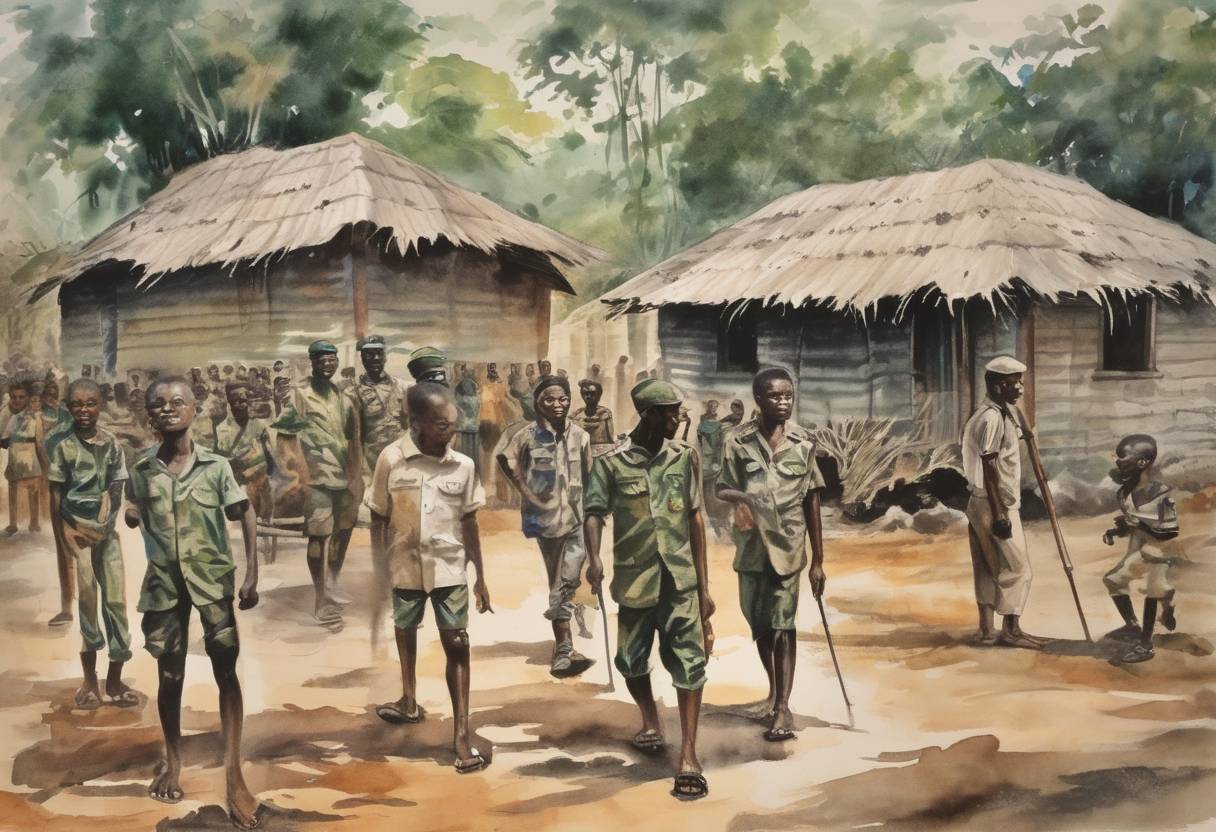
The Nigerian Civil War, also known as the Biafran War, was a complex and devastating conflict that erupted following the secession of the Eastern Region of Nigeria. The roots of the conflict can be traced back to ethnic tensions, political instability, and economic disparities in post-colonial Nigeria. The country, which gained independence from Britain in 1960, was a patchwork of diverse ethnic groups, with the three largest being the Hausa-Fulani in the north, the Yoruba in the west, and the Igbo in the east.
The immediate precursors to the war included a series of military coups and ethnic violence. In January 1966, a coup led by predominantly Igbo officers resulted in the assassination of key political leaders, including the Prime Minister, Sir Abubakar Tafawa Balewa. This coup was perceived as an Igbo attempt to dominate the country, leading to a counter-coup in July 1966 by northern officers, which brought Lieutenant Colonel Yakubu Gowon to power.
The counter-coup exacerbated ethnic tensions, leading to widespread violence against the Igbo population in the north. Thousands of Igbos were killed, and many more fled to the Eastern Region for safety. The failure of peace talks and the inability of the federal government to protect the Igbo people further fueled secessionist sentiments.
On May 30, 1967, Lieutenant Colonel Chukwuemeka Odumegwu Ojukwu, the military governor of the Eastern Region, declared the region an independent state known as the Republic of Biafra. This declaration was driven by the desire to protect the Igbo people from further persecution and to establish a sovereign state free from the perceived injustices of the Nigerian federation.
The Nigerian government, led by Yakubu Gowon, rejected Biafra’s secession and launched a military campaign to reunify the country. The conflict officially began in July 1967 and lasted until January 15, 1970. The war was marked by intense fighting, with both sides experiencing significant casualties.
One of the most tragic aspects of the war was the humanitarian crisis it precipitated. Biafra faced a blockade imposed by the Nigerian government, leading to severe shortages of food and medical supplies. The resulting famine garnered international attention, with images of starving children becoming emblematic of the conflict. Humanitarian organizations, including the Red Cross and various church groups, attempted to provide relief, but the scale of the crisis was overwhelming.
The war ended with Biafra’s surrender on January 15, 1970. The Nigerian government declared a policy of “no victor, no vanquished” and embarked on a program of reconciliation and reconstruction. However, the war left deep scars on the nation, with an estimated one to three million people dead, primarily from starvation and disease.
The Nigerian Civil War had profound implications for Nigeria and the African continent. It highlighted the challenges of nation-building in post-colonial Africa, where artificial borders often encompassed diverse and sometimes antagonistic ethnic groups. The war also underscored the importance of addressing ethnic and regional grievances to prevent conflict.
The legacy of the Biafran War continues to influence Nigerian politics and society, with ongoing discussions about federalism, resource control, and ethnic identity. The conflict remains a poignant reminder of the need for unity and understanding in a diverse nation.
Source: en.wikipedia.org