February 21, 2014: Ukrainian Crisis Agreement
2014 · Kyiv, Ukraine
Ukrainian President Viktor Yanukovych and opposition leaders sign a deal to end the crisis in Ukraine, which includes a return to the 2004 constitution and early elections.
February 18, 2014
Violent clashes erupted in Kyiv, Ukraine, between protesters and police, marking a significant escalation in the Euromaidan protests.
Kyiv, Ukraine | Ukrainian Government
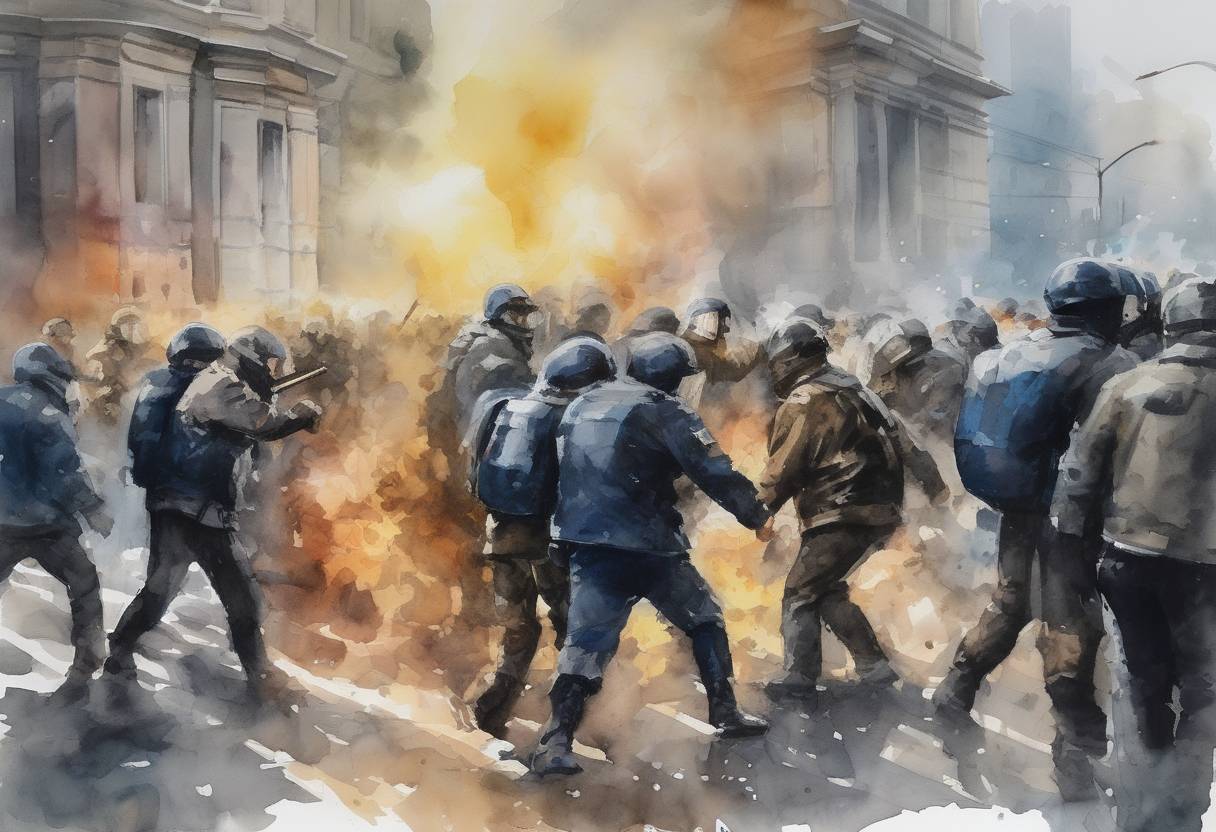
On February 18, 2014, Kyiv, the capital of Ukraine, witnessed a significant escalation in the Euromaidan protests, marked by violent clashes between protesters and police forces. This day became a pivotal moment in the series of demonstrations that had been ongoing since November 2013, driven by public discontent with the Ukrainian government’s decision to suspend the signing of an association agreement with the European Union.
The Euromaidan protests began on November 21, 2013, when then-President Viktor Yanukovych’s government announced the suspension of the EU association agreement in favor of closer ties with Russia. This decision sparked widespread protests, primarily centered in Kyiv’s Maidan Nezalezhnosti (Independence Square), as many Ukrainians favored European integration over alignment with Russia.
March to the Verkhovna Rada: On February 18, protesters organized a march towards the Verkhovna Rada, Ukraine’s parliament, to demand constitutional changes that would limit presidential powers. The march was intended to pressure lawmakers into restoring the 2004 constitution, which had been amended in 2010 to expand presidential authority.
Clashes Erupt: As the march progressed, tensions escalated into violent confrontations between protesters and security forces. Protesters attempted to breach police lines, leading to the use of tear gas, stun grenades, and rubber bullets by the police. In response, some demonstrators resorted to throwing stones and Molotov cocktails.
Casualties and Damage: The clashes resulted in significant casualties, with reports indicating that at least 18 people were killed, including both protesters and police officers. Hundreds more were injured. The violence also led to the destruction of property, including government buildings and vehicles.
Intensification of Protests: The violence on February 18 marked a turning point in the Euromaidan protests, leading to further escalation in the days that followed. The situation in Kyiv became increasingly volatile, with more intense confrontations and a rising death toll.
Political Repercussions: The events of February 18 contributed to mounting pressure on President Yanukovych, ultimately leading to his removal from office on February 22, 2014. The Ukrainian parliament voted to impeach him, and he fled to Russia.
International Response: The violent crackdown drew condemnation from the international community, with calls for restraint and dialogue. The European Union and the United States expressed support for the protesters’ demands for democratic reforms and criticized the Ukrainian government’s use of force.
The February 18 clashes were a critical juncture in the Euromaidan movement, highlighting the deep divisions within Ukraine over its geopolitical orientation and governance. The subsequent political upheaval set the stage for further developments, including Russia’s annexation of Crimea and the ongoing conflict in Eastern Ukraine. These events have had lasting implications for Ukraine’s domestic politics and its relations with both the West and Russia.
Source: www.bbc.com