1139 · Rome, Papal States (modern-day Italy)
The Second Lateran Council opened by Pope Innocent II addressed issues within the Church, including the reaffirmation of clerical celibacy and the condemnation of usury.
April 15, 0769
The Lateran Council of 769, a significant ecclesiastical synod, concluded in Rome. It was convened by Pope Stephen III to address issues of church reform and the legitimacy of papal elections.
Rome, Italy | Catholic Church
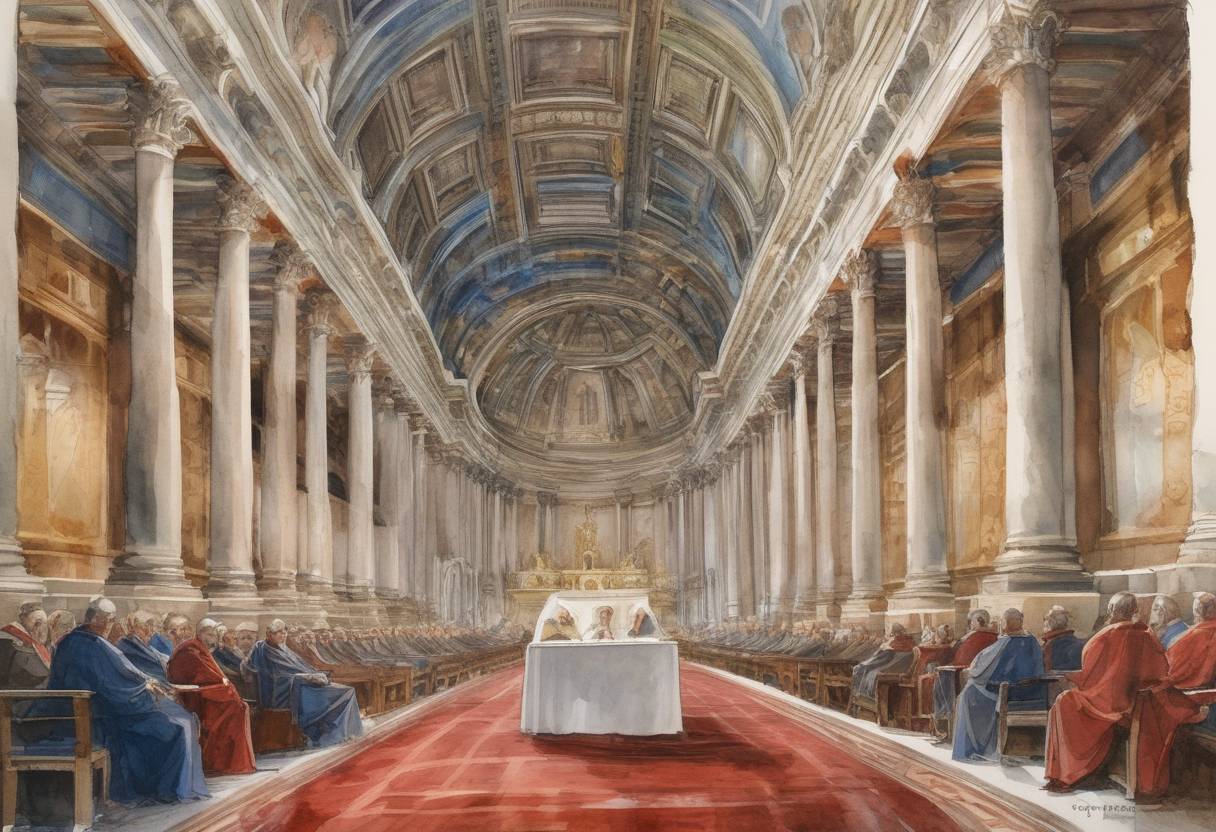
The Lateran Council of 769 was a significant ecclesiastical synod convened by Pope Stephen III (also known as Stephen IV) in Rome. This council, which concluded on April 15, 769, was primarily focused on addressing issues of church reform and the legitimacy of papal elections, amidst a period of considerable turmoil and factionalism within the Church.
The mid-8th century was a tumultuous time for the papacy, marked by political instability and interference from secular authorities. The election of antipopes and the manipulation of papal elections by powerful Roman families and external rulers had become a pressing concern. The immediate backdrop to the council was the contested papal election following the death of Pope Paul I in 767, which saw the installation of the antipope Constantine II, a layman who was forcibly enthroned by a faction of Roman nobility.
The Lateran Council of 769 was convened to restore order and legitimacy to the papal election process and to address broader issues of church reform. Key objectives included:
The Lateran Council of 769 had several important outcomes:
In conclusion, the Lateran Council of 769 was a pivotal moment in the history of the papacy, addressing critical issues of legitimacy and reform that would shape the future of the Church. Its decisions had lasting implications for the relationship between the papacy and secular powers, as well as for the internal governance of the Church.
Source: en.wikipedia.org