The Signing of the New START Treaty
2010 · Prague, Czech Republic
The United States and Russia signed the New START treaty in Prague, aiming to reduce the number of deployed strategic nuclear warheads.
January 14, 1994
President Bill Clinton and Russian President Boris Yeltsin sign the Kremlin accords, which stop the preprogrammed aiming of nuclear missiles at each other's countries.
Moscow, Russia | United States and Russia
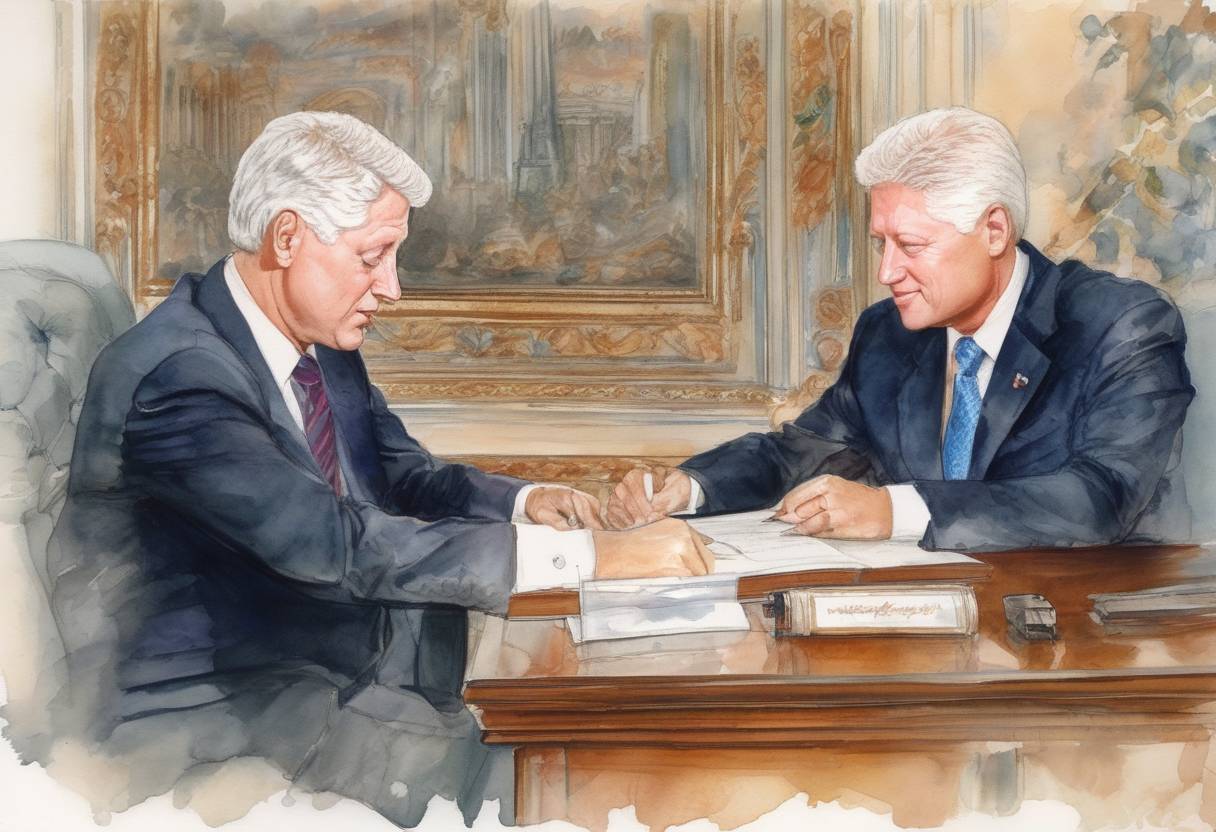
On January 14, 1994, a significant milestone in post-Cold War diplomacy was achieved when U.S. President Bill Clinton and Russian President Boris Yeltsin signed the Kremlin Accords in Moscow. This agreement marked a pivotal step in reducing the nuclear threat that had loomed over the world for decades.
The end of the Cold War in the early 1990s brought about a new era of international relations, characterized by efforts to reduce the nuclear arsenals that had been amassed by the United States and the Soviet Union. The dissolution of the Soviet Union in 1991 led to a reconfiguration of global power dynamics and necessitated new agreements to ensure nuclear stability.
Strategic Arms Reduction Treaty (START I): Signed in 1991, START I was a bilateral treaty between the U.S. and the Soviet Union that aimed to reduce and limit strategic offensive arms. It laid the groundwork for further arms reduction discussions.
Post-Soviet Transition: Following the collapse of the Soviet Union, Russia inherited the majority of the Soviet nuclear arsenal. This transition period required new diplomatic efforts to address nuclear security and control.
Bilateral Relations: Throughout the early 1990s, the U.S. and Russia engaged in numerous diplomatic discussions to build a cooperative relationship and address mutual security concerns.
The Kremlin Accords were a series of agreements that included several key provisions aimed at reducing the nuclear threat:
De-targeting of Nuclear Missiles: One of the most significant aspects of the accords was the agreement to stop the preprogrammed targeting of nuclear missiles at each other’s countries. This move was largely symbolic but represented a significant step in reducing the immediate threat of nuclear conflict.
Further Arms Reduction Talks: The accords also paved the way for further negotiations on arms reduction, including discussions on the START II treaty, which aimed to further reduce the number of strategic nuclear warheads.
The signing of the Kremlin Accords was a crucial step in the ongoing process of nuclear disarmament and the establishment of a more stable post-Cold War international order. It demonstrated a commitment by both nations to move away from the adversarial stance of the Cold War and towards a more cooperative approach to global security.
Improved U.S.-Russia Relations: The accords contributed to a period of improved relations between the United States and Russia, fostering dialogue and cooperation on various international issues.
Nuclear Non-Proliferation Efforts: By reducing the immediate threat of nuclear conflict, the accords supported broader global efforts towards nuclear non-proliferation and disarmament.
Symbol of Peace: The de-targeting of nuclear missiles served as a powerful symbol of the desire for peace and stability in the post-Cold War world.
In conclusion, the signing of the Kremlin Accords on January 14, 1994, was a landmark event in the history of nuclear diplomacy, reflecting a shared commitment by the United States and Russia to reduce the nuclear threat and promote global security.
Source: en.wikipedia.org