Mary, Queen of Scots, Abdication - July 24, 1567
1567 · Edinburgh, Scotland
Mary, Queen of Scots, is forced to abdicate in favor of her one-year-old son, James VI.
August 19, 1561
Mary, Queen of Scots, returns to Scotland after spending 13 years in France.
Leith, Scotland
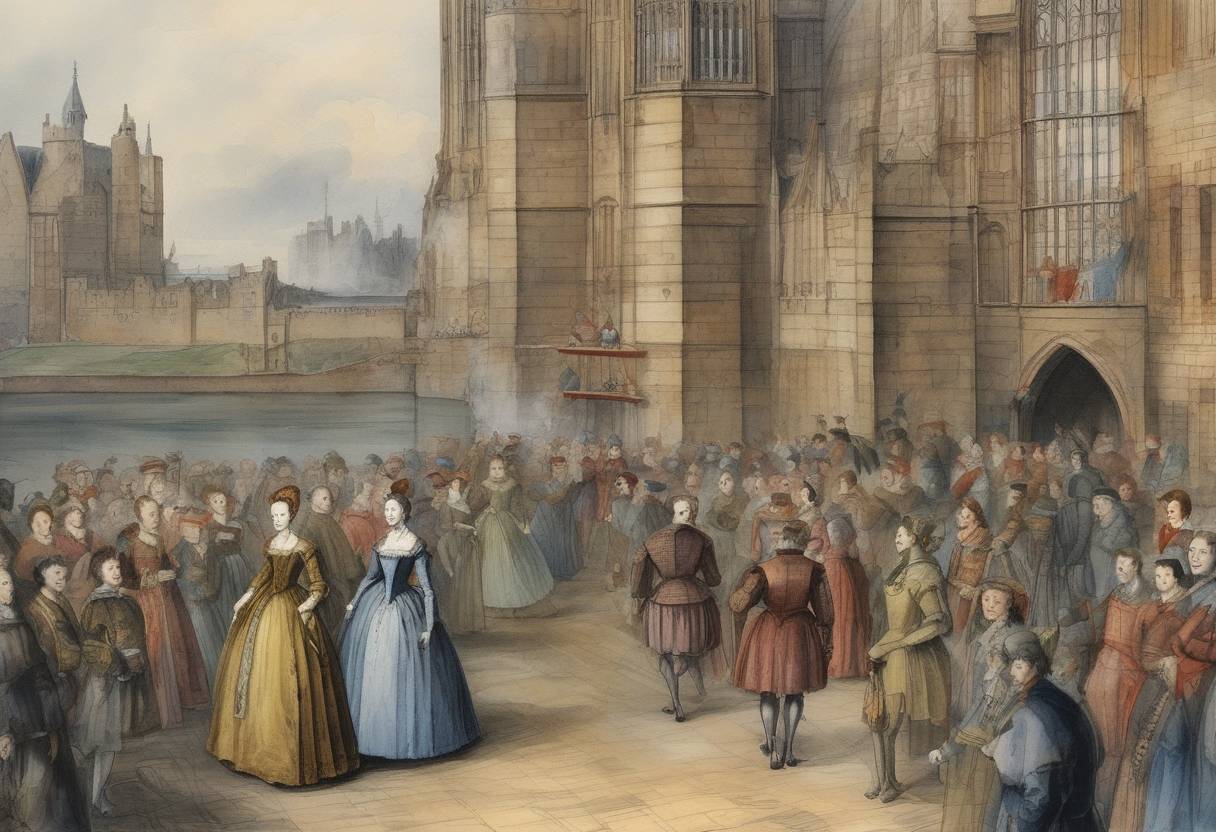
On August 19, 1561, Mary, Queen of Scots, returned to her homeland of Scotland after spending 13 years in France. This marked a significant moment in Scottish history, as Mary’s return would have profound implications for the political and religious landscape of the country.
Mary Stuart was born on December 8, 1542, and became Queen of Scots when she was just six days old, following the death of her father, King James V of Scotland. Due to the political instability in Scotland and the threat posed by England, Mary was sent to France in 1548 for her safety and to strengthen the alliance between Scotland and France through her betrothal to the Dauphin, Francis.
In 1558, Mary married Francis, who became King Francis II of France in 1559. However, her reign as Queen Consort of France was short-lived, as Francis died in December 1560. Widowed and with no political role in France, Mary decided to return to Scotland, a country she had left as a child.
Mary’s return to Scotland was fraught with challenges. The country had undergone significant changes during her absence, particularly with the Protestant Reformation, which had gained substantial ground. The Scottish Parliament had declared Scotland a Protestant nation in 1560, and the Catholic Mary faced a predominantly Protestant nobility and populace.
Despite these challenges, Mary was determined to rule her country. She arrived in Leith, the port of Edinburgh, on August 19, 1561, and was greeted with a mixture of enthusiasm and suspicion. Her return was marked by a cautious optimism among her supporters and a wary watchfulness from her opponents.
Mary’s return to Scotland came at a time of religious tension. The Protestant Reformation had led to the establishment of the Church of Scotland, and many of the Scottish nobility had embraced Protestantism. Mary’s Catholic faith was a point of contention, and she had to navigate the complex religious landscape carefully.
Mary attempted to adopt a policy of religious tolerance, allowing Protestantism to continue while maintaining her Catholic faith privately. However, this balancing act proved difficult, as religious and political factions vied for influence.
Mary’s reign in Scotland was marked by a series of political intrigues, marriages, and conflicts. Her marriage to Henry Stuart, Lord Darnley, in 1565, and his subsequent murder in 1567, led to a scandal that weakened her position. Her third marriage to James Hepburn, Earl of Bothwell, further alienated her supporters.
In 1567, Mary was forced to abdicate in favor of her son, James VI, and fled to England, seeking the protection of her cousin, Queen Elizabeth I. This decision ultimately led to her imprisonment and execution in 1587, as she became embroiled in plots against Elizabeth.
Mary’s return to Scotland and her subsequent reign had lasting impacts on the country’s history. Her son, James VI, would eventually unite the crowns of Scotland and England, becoming James I of England in 1603. Mary’s life and legacy continue to fascinate historians and the public alike, symbolizing the complex interplay of politics, religion, and personal ambition in the tumultuous 16th century.
Source: www.britannica.com