1942 · Amsterdam, Netherlands
Anne Frank received a diary as a gift for her thirteenth birthday, which she would later use to document her life in hiding during the German occupation of the Netherlands.
April 20, 1889
Adolf Hitler is born in Braunau am Inn, Austria. He would later become the dictator of Nazi Germany, leading the country during World War II and orchestrating the Holocaust.
Braunau am Inn, Austria | N/A
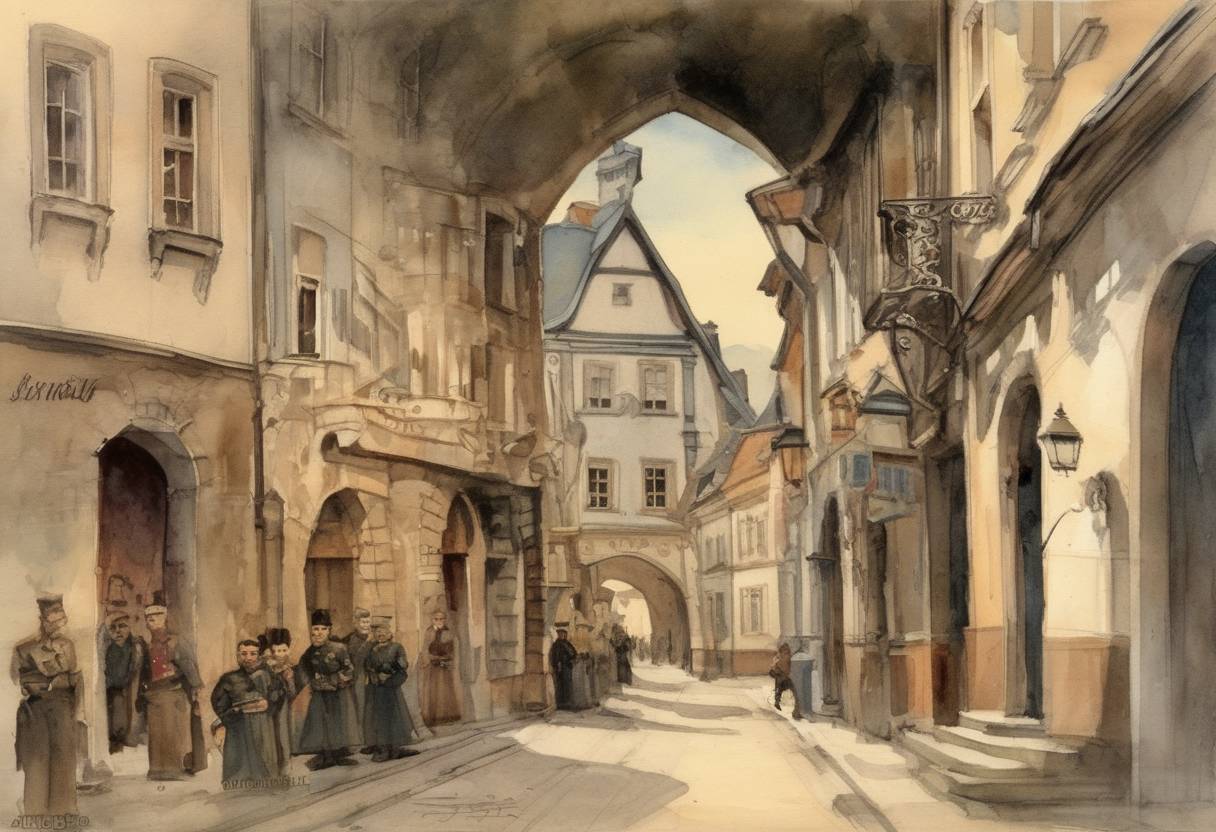
Adolf Hitler was born on April 20, 1889, in Braunau am Inn, a small town in Austria-Hungary, located near the border with Germany. He was the fourth of six children born to Alois Hitler and Klara Pölzl. His father, Alois, was a customs official, and his mother, Klara, was a homemaker. The family moved several times during Hitler’s childhood, living in various towns in Austria.
Hitler’s early education was unremarkable, and he showed little interest in academics. He attended primary school in Fischlham and later enrolled in secondary school in Linz. Despite his lack of academic success, Hitler developed a keen interest in the arts, particularly painting and architecture. However, his aspirations to attend the Academy of Fine Arts in Vienna were thwarted when he failed the entrance exam twice.
During his time in Vienna, Hitler was exposed to various political ideologies and developed a deep-seated German nationalism. He also encountered anti-Semitic rhetoric, which would later become a central element of his ideology.
After moving to Munich in 1913, Hitler served in the German army during World War I, where he was wounded and awarded for bravery. The defeat of Germany and the Treaty of Versailles deeply affected him, fueling his nationalist and anti-Semitic beliefs.
In the post-war years, Hitler joined the National Socialist German Workers’ Party (NSDAP), where his oratory skills and propaganda acumen quickly elevated him to leadership. By 1933, he had become Chancellor of Germany, and by 1934, he had consolidated power as the Führer, establishing a totalitarian regime.
Adolf Hitler’s rise to power had profound consequences for Germany and the world. His aggressive expansionist policies led to the outbreak of World War II in 1939. Under his leadership, Nazi Germany pursued the systematic genocide of six million Jews and millions of others in what became known as the Holocaust.
Hitler’s actions and the war he instigated resulted in immense human suffering and reshaped global politics. His legacy is a stark reminder of the dangers of totalitarianism, unchecked power, and racial hatred.
Adolf Hitler’s birth on April 20, 1889, marks the beginning of a life that would have a devastating impact on the 20th century. Understanding his early life and the factors that shaped his ideology provides crucial context for the events that unfolded during his dictatorship.
Source: www.britannica.com