Gerald Ford Pardons Richard Nixon: September 8, 1974
1974 · Washington, D.C., United States
U.S. President Gerald Ford pardons former President Richard Nixon for any crimes he may have committed while in office.
August 9, 1974
Richard Nixon became the first U.S. president to resign from office, following the Watergate scandal.
Washington, D.C., United States | U.S. Government
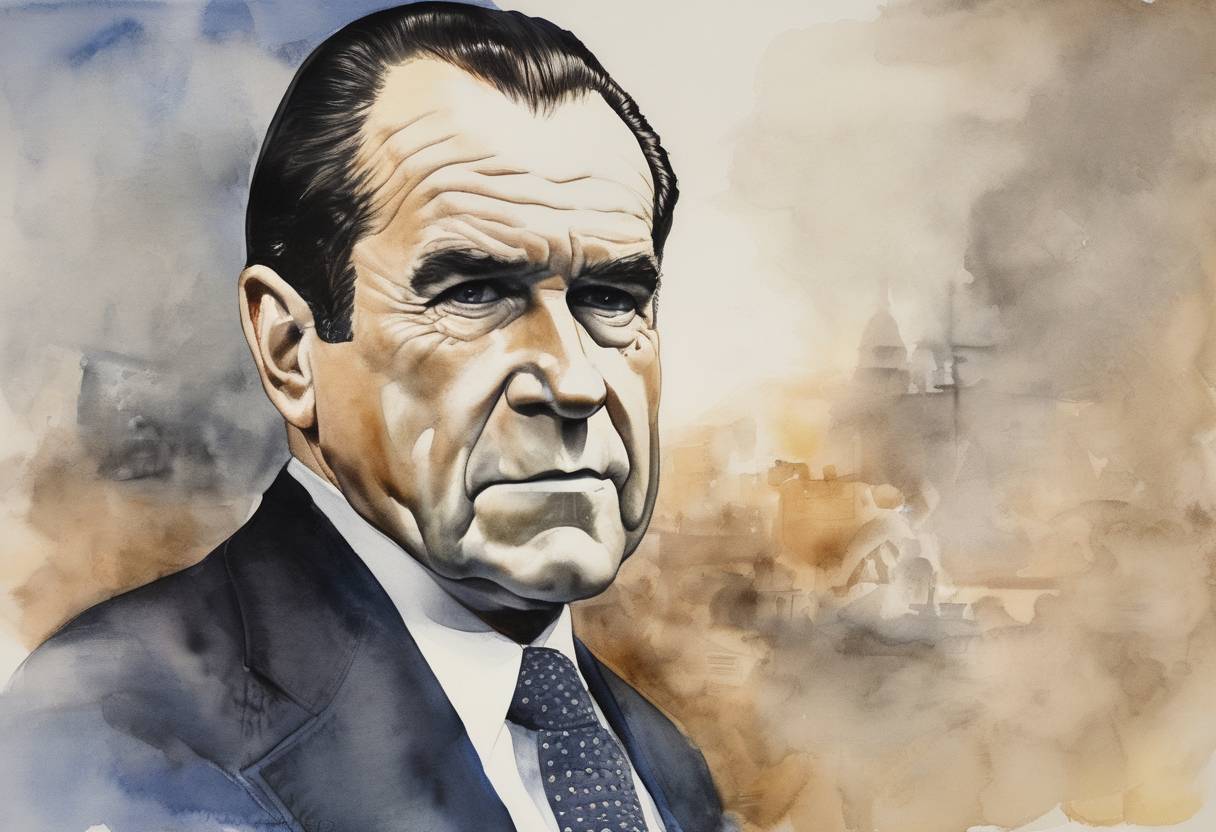
On August 9, 1974, Richard Nixon became the first U.S. president to resign from office, a historic event precipitated by the Watergate scandal. This moment marked a significant turning point in American political history, underscoring the importance of accountability and the rule of law in the U.S. government.
The Watergate scandal began with a break-in at the Democratic National Committee headquarters at the Watergate office complex in Washington, D.C., on June 17, 1972. The break-in was part of a larger campaign of political espionage and sabotage conducted on behalf of Nixon’s re-election committee. As investigations unfolded, it became clear that the Nixon administration had attempted to cover up its involvement.
Investigation and Revelations: Investigative journalism, particularly by Bob Woodward and Carl Bernstein of The Washington Post, played a crucial role in uncovering the scandal. Their reporting, along with the Senate Watergate Committee hearings, revealed extensive abuses of power by the Nixon administration.
The Tapes: A pivotal moment came when it was discovered that Nixon had a secret recording system in the Oval Office. The tapes provided undeniable evidence of Nixon’s involvement in the cover-up.
The “Smoking Gun” Tape: On August 5, 1974, a tape from June 23, 1972, was released, revealing that Nixon had ordered the FBI to halt the investigation into the break-in. This tape, known as the “smoking gun,” eroded any remaining support Nixon had in Congress.
Impeachment Proceedings: Facing almost certain impeachment by the House of Representatives and conviction by the Senate, Nixon chose to resign.
On the evening of August 8, 1974, Nixon announced his resignation in a televised address to the nation, effective at noon the following day. In his speech, he stated, “I have never been a quitter. To leave office before my term is completed is abhorrent to every instinct in my body. But as President, I must put the interest of America first.”
Gerald Ford’s Presidency: Vice President Gerald Ford was sworn in as the 38th President of the United States on August 9, 1974. One month later, Ford granted Nixon a full pardon for any crimes he might have committed against the United States while president, a controversial decision that sparked significant public debate.
Impact on American Politics: The Watergate scandal led to increased skepticism toward political leaders and heightened demands for transparency and ethics in government. It also resulted in several legislative reforms aimed at increasing accountability, including amendments to the Freedom of Information Act and the establishment of new campaign finance laws.
Legacy: Nixon’s resignation remains a powerful reminder of the checks and balances inherent in the U.S. political system and the enduring principle that no one, not even the President, is above the law.
Richard Nixon’s resignation was a profound moment in U.S. history, reflecting the resilience of democratic institutions in the face of political corruption.
Source: en.wikipedia.org