Hosni Mubarak's Sentencing on June 2, 2012
2012 · Cairo, Egypt
Former Egyptian President Hosni Mubarak was sentenced to life imprisonment for his role in the killing of protesters during the 2011 Egyptian revolution.
February 3, 2011
The Egyptian Revolution of 2011 continues as protesters gather in Tahrir Square, demanding the resignation of President Hosni Mubarak.
Cairo, Egypt | Egyptian government
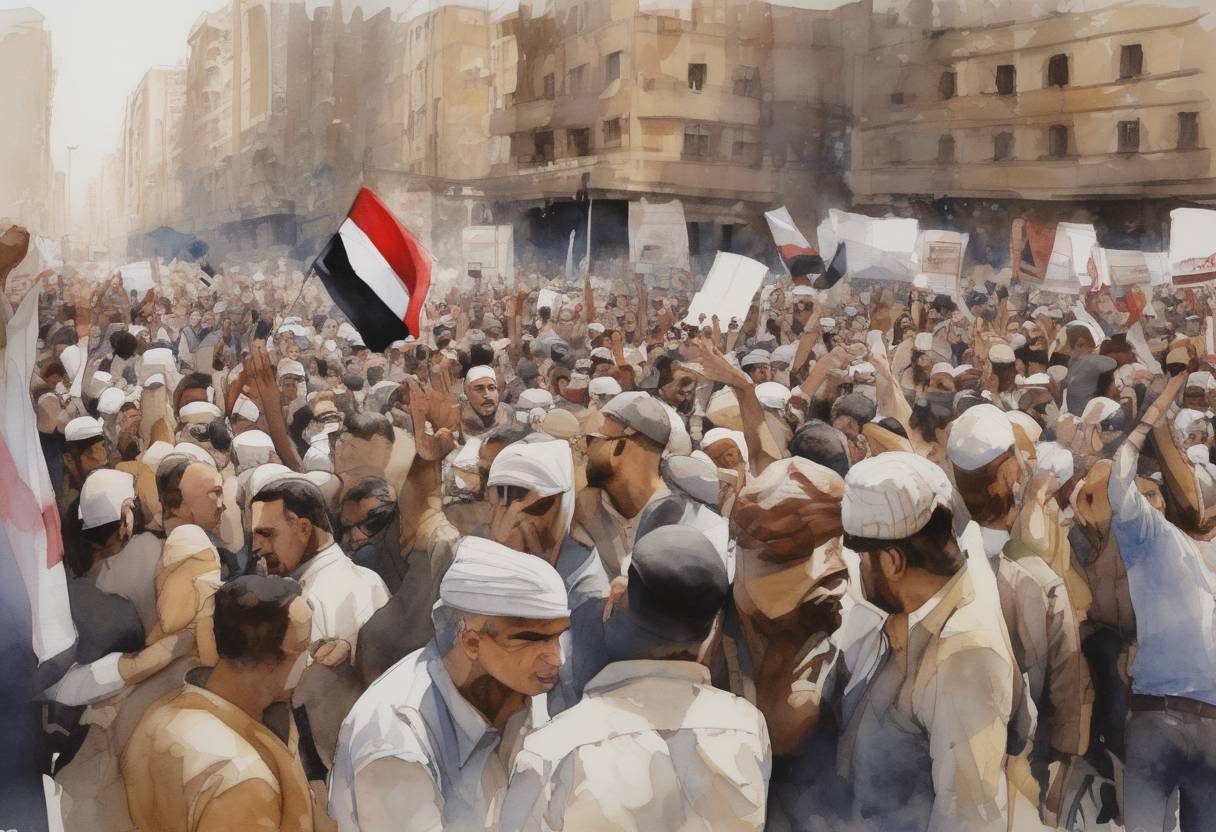
On February 3, 2011, the Egyptian Revolution, part of the broader Arab Spring movement, continued to intensify as protesters gathered in Cairo’s Tahrir Square. This day marked a significant moment in the ongoing demonstrations against President Hosni Mubarak’s regime, which had been in power for nearly 30 years.
Background: The Egyptian Revolution began on January 25, 2011, inspired by the successful uprising in Tunisia. Egyptians took to the streets to protest against police brutality, state corruption, lack of free elections, and economic issues.
Tahrir Square: By early February, Tahrir Square had become the epicenter of the protests, symbolizing the demand for democratic reforms and the end of Mubarak’s rule.
Government Response: The Egyptian government had attempted to quell the protests through a combination of concessions, such as appointing a vice president for the first time, and force, including police crackdowns and the deployment of the military.
Protester Determination: Despite violent clashes with pro-Mubarak supporters the previous day, which resulted in numerous injuries and fatalities, protesters remained resolute in their demands for Mubarak’s resignation.
International Attention: The events in Egypt were drawing significant international attention. Global leaders and organizations were increasingly calling for a peaceful resolution and urging Mubarak to heed the demands of the Egyptian people.
Media Coverage: The role of social media and international news outlets was crucial in documenting the protests and the government’s response, helping to galvanize support both domestically and internationally.
Mubarak’s Resignation: The persistent protests eventually led to Mubarak’s resignation on February 11, 2011, marking a pivotal moment in Egyptian history and the Arab Spring.
Transition of Power: Following Mubarak’s departure, the Supreme Council of the Armed Forces assumed control, promising a transition to democratic governance.
Long-term Impact: The revolution set off a series of political changes in Egypt, including the election of Mohamed Morsi in 2012 and subsequent political turmoil, which highlighted the complexities of transitioning from authoritarian rule to democracy.
The events of February 3, 2011, were a testament to the determination of the Egyptian people to seek change and reform, contributing to a significant shift in the political landscape of the Middle East.
Source: www.britannica.com