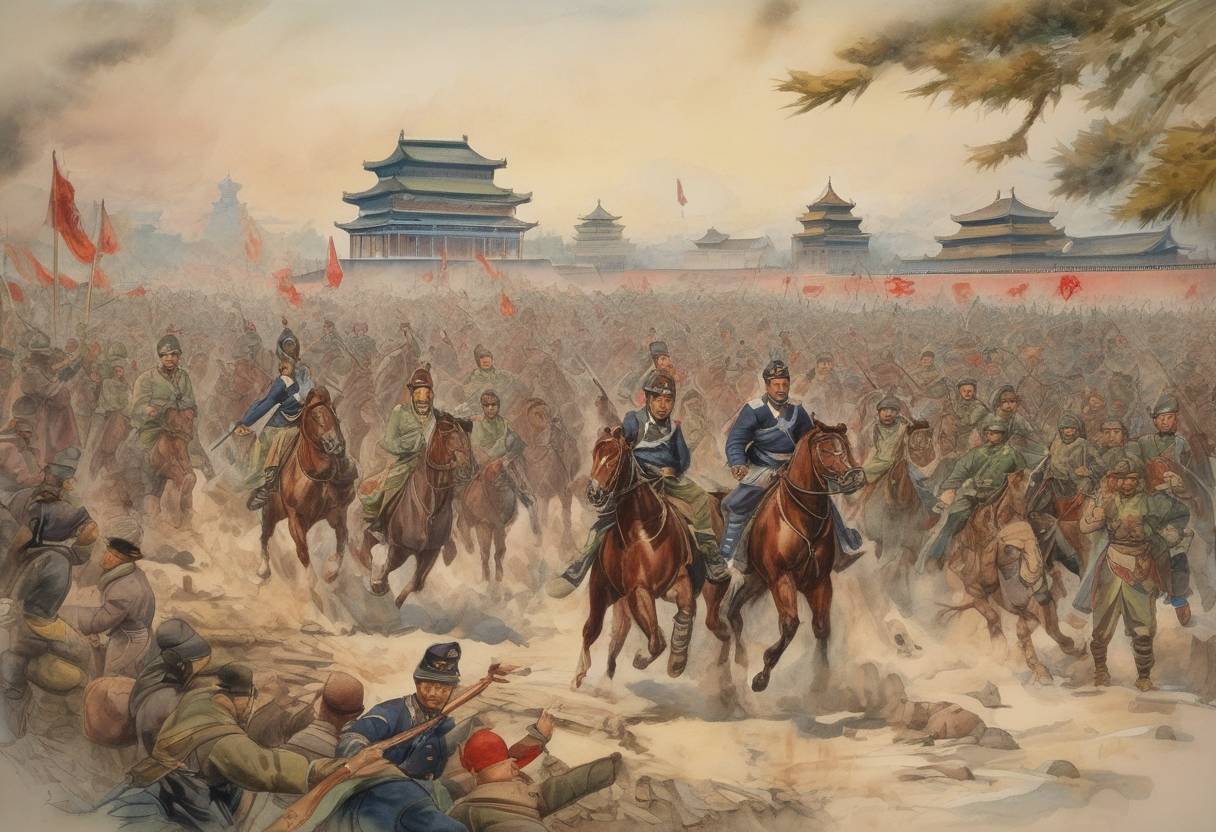
The End of the Boxer Rebellion: Capture of Beijing on August 14, 1900
The Boxer Rebellion, a significant anti-foreign, anti-colonial, and anti-Christian uprising in China, reached a pivotal moment on August 14, 1900, with the capture of Beijing by an international coalition. This event marked the culmination of a complex conflict that had profound implications for China and the international community.
Background
The Boxer Rebellion, also known as the Yihetuan Movement, began in 1899. It was driven by the “Boxers,” a Chinese secret society officially known as the “Righteous and Harmonious Fists.” The Boxers were primarily motivated by opposition to foreign imperialism and Christian missionary activity, which they believed were eroding Chinese culture and sovereignty.
The Qing Dynasty, under Empress Dowager Cixi, initially vacillated in its response to the Boxers. However, as the rebellion gained momentum, the Qing government began to support the Boxers, seeing them as a means to expel foreign influence.
The Siege of Beijing
By June 1900, the Boxers had laid siege to Beijing, targeting foreign legations and Chinese Christians. The situation escalated as the Boxers, with tacit support from the Qing government, attacked foreign nationals and Chinese converts, leading to a violent standoff in the capital.
In response, an international coalition, known as the Eight-Nation Alliance, was formed. This alliance included Japan, Russia, Britain, France, the United States, Germany, Italy, and Austria-Hungary. Their goal was to relieve the besieged legations and restore order.
Capture of Beijing
On August 14, 1900, the international forces launched a coordinated assault on Beijing. The coalition troops, despite facing fierce resistance, managed to breach the city’s defenses. The capture of Beijing effectively ended the Boxer Rebellion, as the Qing government was forced to negotiate peace.
Aftermath and Consequences
The fall of Beijing led to the signing of the Boxer Protocol in September 1901. This treaty imposed severe penalties on China, including:
- Indemnities: China was required to pay large reparations to the foreign powers involved.
- Military Occupation: Foreign troops were stationed in Beijing and other strategic locations.
- Execution of Officials: Several Chinese officials who had supported the Boxers were executed.
- Ban on Arms Imports: China was prohibited from importing arms for two years.
The Boxer Rebellion and its suppression had lasting impacts on China. It exposed the weaknesses of the Qing Dynasty, contributing to its eventual downfall in 1912. The rebellion also intensified anti-foreign sentiment and fueled nationalist movements, setting the stage for future upheavals in China.
Broader Historical Significance
The Boxer Rebellion highlighted the tensions between traditional societies and the forces of modernization and imperialism. It underscored the complexities of international diplomacy and military intervention, themes that would continue to resonate throughout the 20th century.
The events of August 14, 1900, remain a significant chapter in the history of China and its interactions with the world, illustrating the challenges of balancing sovereignty with global pressures.