Germanicus' Triumph in Rome - May 26, 17 AD
17 · Rome, Roman Empire
Germanicus, a prominent Roman general and member of the Julio-Claudian dynasty, celebrated a triumph in Rome for his victories over the Germanic tribes.
August 4, 0367
The Roman Empire faced the Great Conspiracy, a coordinated uprising of Picts, Scots, Saxons, and Franks against Roman Britain.
Roman Britain, Roman Empire | Roman Empire
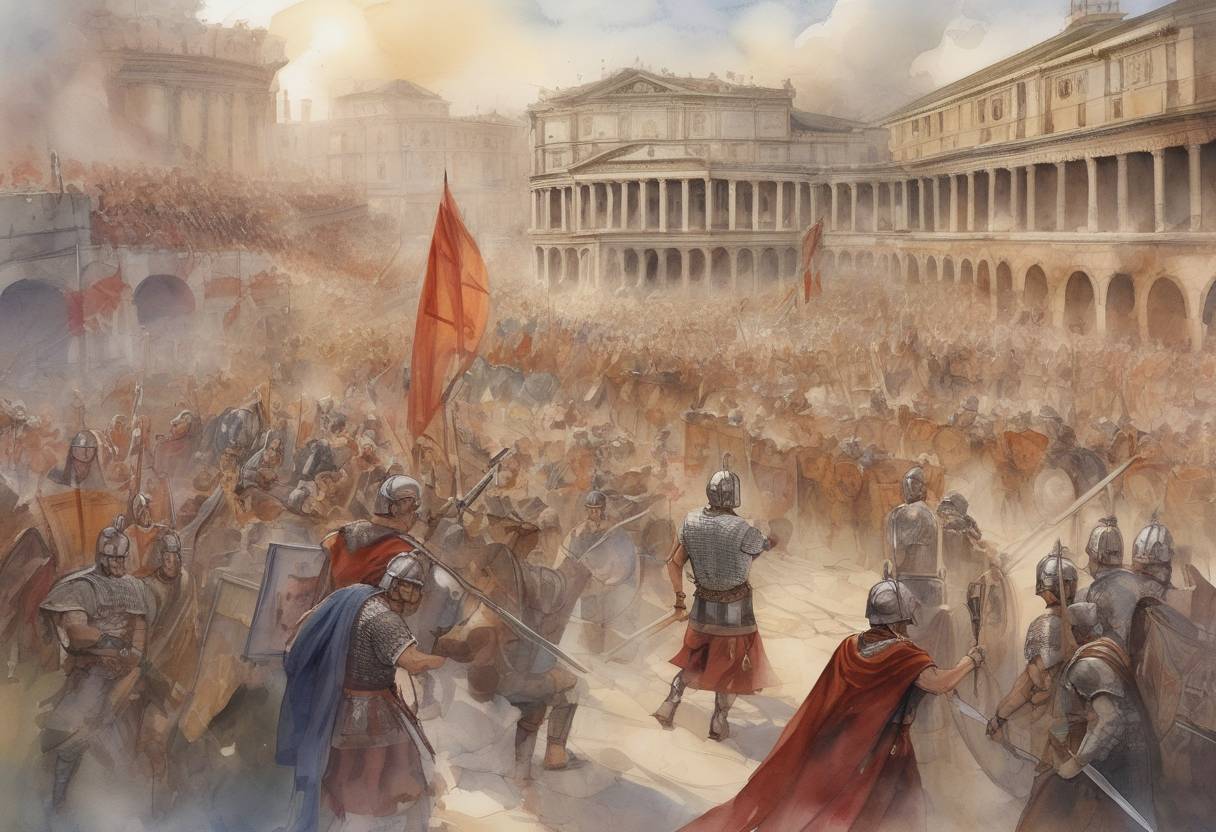
The Great Conspiracy, which reached a critical point on August 4, 367 CE, was a significant coordinated uprising against Roman Britain. This event involved multiple barbarian groups, including the Picts, Scots, Saxons, and Franks, who launched simultaneous attacks on the Roman territories in Britain. The uprising posed a severe threat to Roman control and stability in the region.
By the mid-4th century, the Roman Empire was experiencing internal and external pressures. The Empire’s vast borders were increasingly difficult to defend against various barbarian groups. In Britain, the Roman military presence was stretched thin, and the defenses along Hadrian’s Wall and the Saxon Shore were vulnerable to attack.
The Great Conspiracy was marked by a series of coordinated attacks:
The simultaneous nature of these attacks overwhelmed the Roman defenses, leading to widespread chaos and destruction across Britain.
The Roman response to the Great Conspiracy was initially slow due to the surprise and scale of the attacks. However, the Emperor Valentinian I recognized the severity of the situation and dispatched a capable general, Count Theodosius, to restore order.
The successful suppression of the Great Conspiracy restored a measure of stability to Roman Britain, but it also highlighted the vulnerabilities of the Roman Empire’s frontier defenses. The event underscored the need for stronger military presence and better coordination among Roman forces.
The Great Conspiracy of 367 CE remains a significant event in the history of Roman Britain, illustrating the complex challenges faced by the Roman Empire during its later years.
Source: en.wikipedia.org