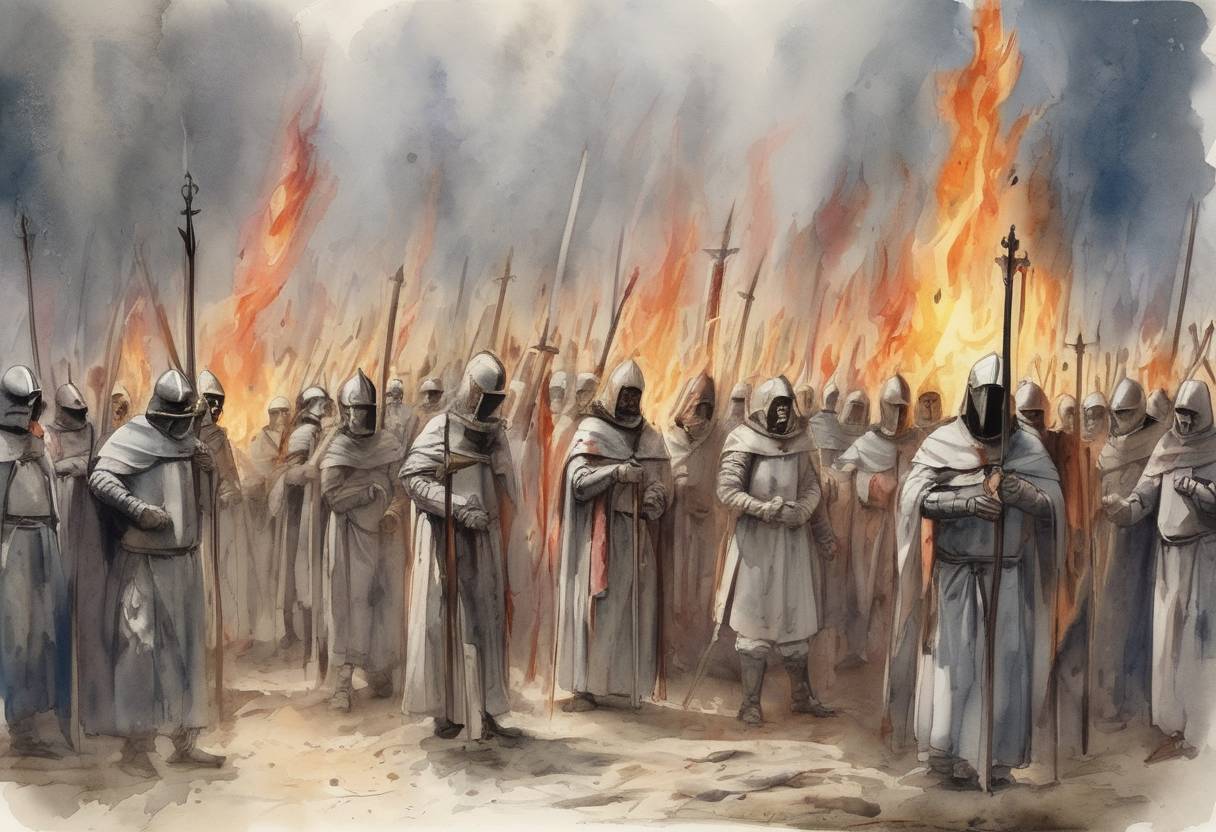
The Execution of the Knights Templar on May 11, 1310
On May 11, 1310, a significant and tragic event unfolded in the history of the Knights Templar, a medieval Christian military order. On this day, 54 members of the order were burned at the stake in Paris, France, accused of heresy. This event was part of a larger campaign against the Templars, initiated by King Philip IV of France and supported by Pope Clement V.
Background
The Knights Templar was founded around 1119 to protect Christian pilgrims traveling to the Holy Land. Over the centuries, the order grew in wealth and power, establishing a network of financial and military resources across Europe and the Middle East. However, their success and influence eventually attracted suspicion and envy.
The Fall of the Templars
King Philip IV’s Motives: By the early 14th century, King Philip IV of France was deeply in debt to the Templars due to his wars and extravagant lifestyle. Seeking to eliminate his debt and consolidate power, Philip targeted the Templars, accusing them of heresy, blasphemy, and other crimes.
Papal Involvement: Pope Clement V, under pressure from Philip, reluctantly agreed to investigate the Templars. In 1307, Philip ordered the arrest of Templars across France, and many were tortured into confessing to various charges.
The Trial and Execution
The Council of Vienne: In 1310, a church council was convened to address the charges against the Templars. Despite the coerced confessions, many Templars recanted, asserting their innocence and the order’s loyalty to the Church.
The Execution: On May 11, 1310, 54 Templars who had recanted their confessions were condemned as relapsed heretics and burned at the stake in Paris. This brutal execution was intended to serve as a warning and demonstrate the seriousness of the charges against the order.
Aftermath and Historical Significance
Dissolution of the Order: In 1312, the Council of Vienne officially dissolved the Knights Templar. Their assets were largely transferred to the Knights Hospitaller, another military order, although much was seized by the French crown.
Legacy: The persecution and eventual dissolution of the Knights Templar remain subjects of intrigue and speculation. The order’s dramatic fall from grace has inspired numerous legends and conspiracy theories, contributing to their enduring legacy in popular culture.
The execution of the 54 Templars on May 11, 1310, marked a pivotal moment in the decline of the order, reflecting the complex interplay of power, politics, and religion in medieval Europe.