Canonization of Ignatius of Loyola and Francis Xavier
1622 · Rome, Italy
Ignatius of Loyola and Francis Xavier, founders of the Society of Jesus (Jesuits), are canonized as saints by the Catholic Church.
February 25, 1570
Pope Pius V excommunicated Queen Elizabeth I of England through the papal bull 'Regnans in Excelsis', declaring her a heretic and releasing her subjects from allegiance to her.
Rome, Italy | Catholic Church
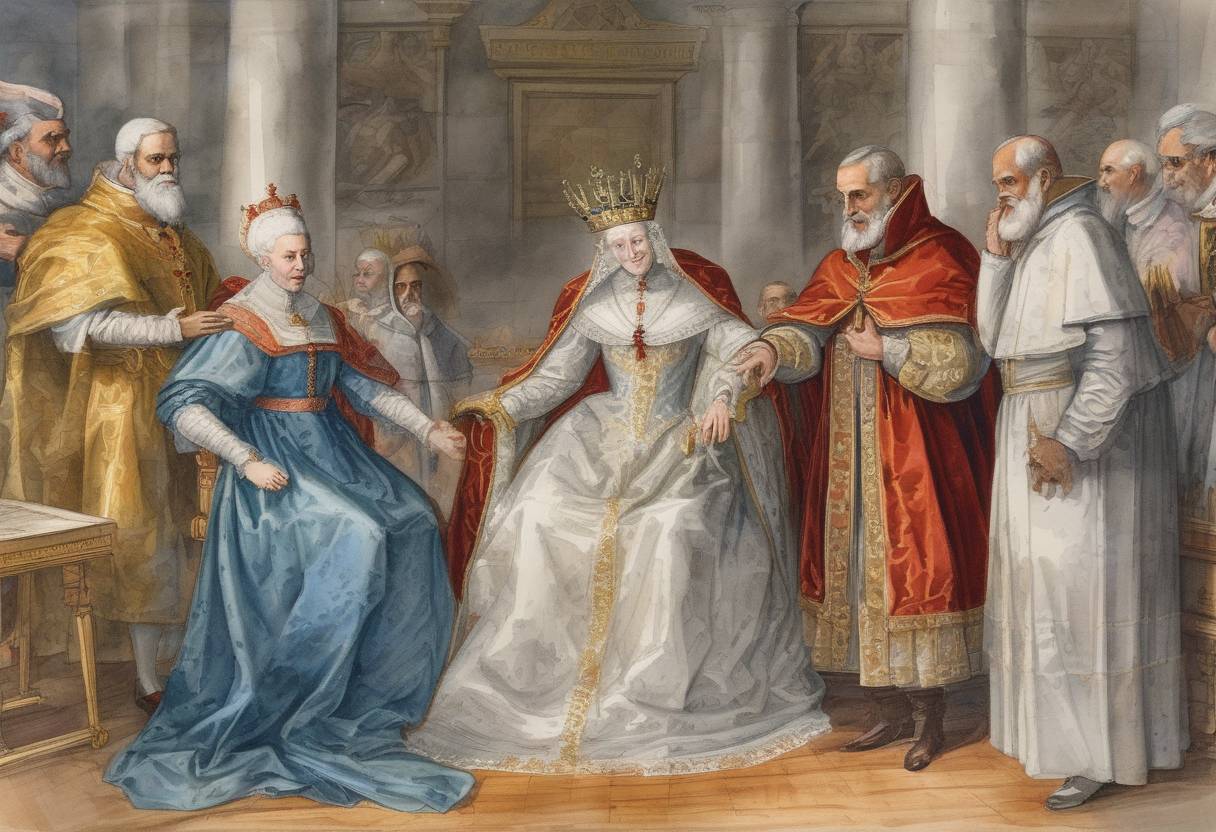
On February 25, 1570, Pope Pius V issued the papal bull Regnans in Excelsis, a significant document that excommunicated Queen Elizabeth I of England. This act declared her a heretic and released her subjects from any allegiance to her. The excommunication was a pivotal moment in the religious and political history of England and Europe, reflecting the intense religious conflicts of the era.
Religious Turmoil: The excommunication occurred during a period of intense religious conflict in Europe, following the Protestant Reformation. England had broken away from the Roman Catholic Church under Elizabeth’s father, King Henry VIII, and had established the Church of England.
Elizabeth’s Religious Policies: Queen Elizabeth I, who ascended to the throne in 1558, pursued a policy of religious compromise known as the Elizabethan Religious Settlement. This aimed to establish a moderate form of Protestantism while maintaining some traditional Catholic practices, which was unacceptable to the Papacy.
Catholic Opposition: Elizabeth’s rule faced opposition from Catholic factions within England and from Catholic monarchs abroad. Her excommunication was partly a response to the Catholic desire to restore papal authority in England.
Content and Declaration: The bull declared Elizabeth a heretic and an illegitimate ruler, citing heresy and the usurpation of the Catholic Church’s authority. It absolved her subjects from any oaths of loyalty to her, effectively encouraging rebellion against her rule.
Impact on England: The excommunication heightened tensions between Catholics and Protestants in England. It also increased the threat of Catholic plots against Elizabeth, as it provided religious justification for her overthrow.
Political Repercussions: The excommunication strained relations between England and Catholic nations, particularly Spain, which would later attempt to invade England with the Spanish Armada in 1588.
Domestic Impact: In response, Elizabeth’s government enacted stricter laws against Catholics, increasing penalties for recusancy (refusal to attend Anglican services) and suppressing Catholic practices.
Long-term Effects: The excommunication solidified England’s Protestant identity and further isolated it from Catholic Europe. It also contributed to the development of a distinct English national identity, separate from Catholic influence.
The excommunication of Elizabeth I by Pope Pius V was a defining moment in the religious and political landscape of the 16th century, illustrating the deep divisions and conflicts that characterized the Reformation era.
Source: en.wikipedia.org