Napoleon Bonaparte Proclaimed Emperor of the French
1804 · Paris, France
Napoleon Bonaparte is proclaimed Emperor of the French by the French Senate, marking the transition from the French Consulate to the First French Empire.
December 3, 1799
The coup d'état of 18 Brumaire is declared to establish Napoleon Bonaparte as First Consul of France, effectively ending the French Revolution.
Paris, France | French Government
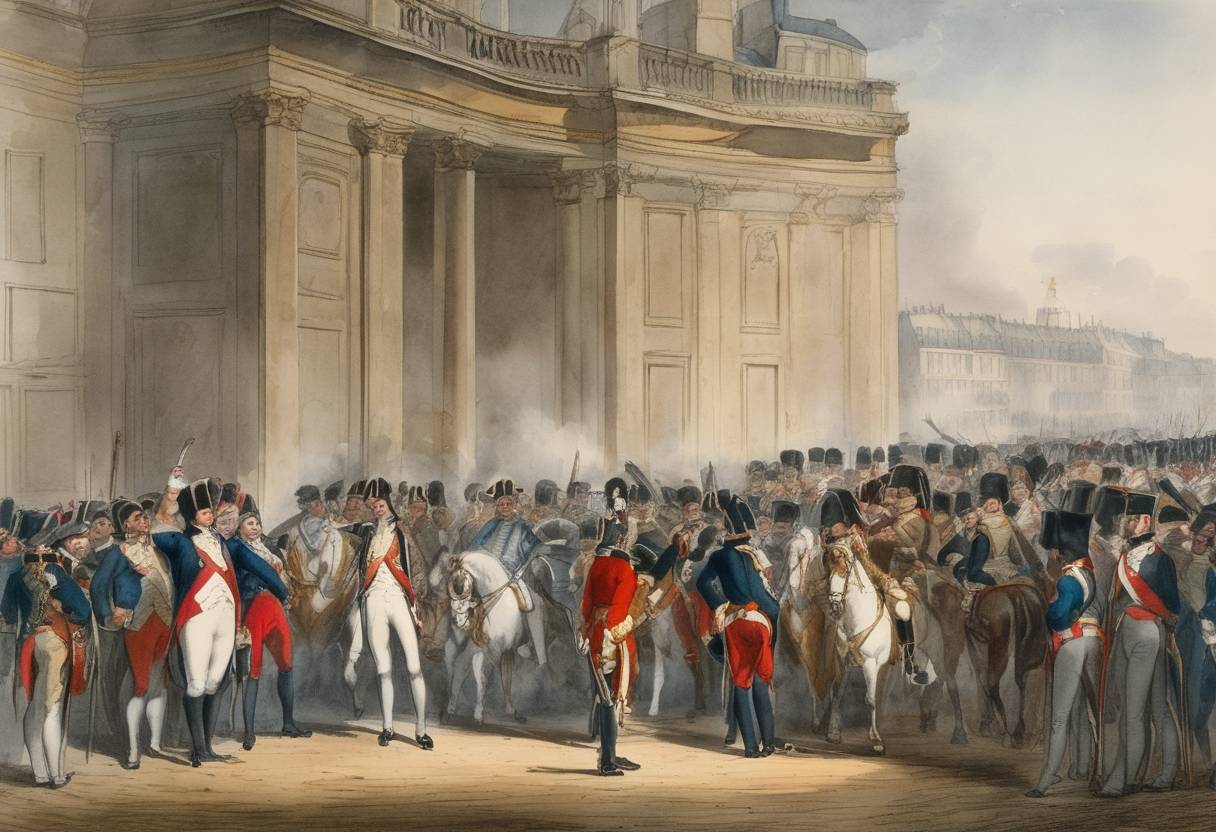
The Coup d’État of 18 Brumaire, which took place on November 9, 1799, according to the French Revolutionary Calendar (corresponding to 18 Brumaire, Year VIII), is a significant event in French history. It marked the decline of the French Revolution and the rise of Napoleon Bonaparte as the dominant political leader in France. This pivotal movement dismantled the existing structures of the French Directory and heralded the establishment of the Consulate, with Napoleon at its helm as First Consul.
The Directory, which had governed France since 1795, was marred by corruption, military defeats, and economic instability. The political climate was increasingly volatile, leading to widespread dissatisfaction among the populace and the political elite. Many sought a strong leadership figure who could bring stability to the nation, making the political atmosphere ripe for a coup.
Napoleon Bonaparte, a successful military general, had returned to France after his Egyptian campaign amid a climate of both military and public admiration. His political ambitions—combined with the perceived failures of the Directory—set the stage for drastic change. Key figures, including Emmanuel Sieyès, one of the creators of the Directory, saw in Napoleon the opportunity to reforge France’s government structure.
On the morning of 18 Brumaire, the political operatives supporting the coup made their move. The Council of Ancients was persuaded to decree the relocation of both legislative councils to Saint-Cloud, under the pretext of a Jacobin plot against the government. Napoleon was appointed to oversee the security of both councils, giving him control over troops in Paris.
Upon arriving at Saint-Cloud on November 10, confusion reigned in the legislative councils. While the Council of Ancients supported the movement, the Council of Five Hundred expressed vehement opposition. Events took a radical turn when Napoleon, accompanied by soldiers, entered the councils, leading to scenes of chaos and fainting dramatics. His brother, Lucien Bonaparte, played a critical role, calming the situation and calling upon soldiers to disperse the resisting deputies.
By evening, the legislative body had conceded, and the Consulate was proclaimed with Napoleon as the First Consul, giving him significant control over the state.
The immediate aftermath of the coup was the dismantling of the Directory and the establishment of the Consulate, which would rule France until 1804 when Napoleon declared himself Emperor. The coup effectively ended the French Revolution, and established a new political order dominated by Napoleon.
Napoleon’s rise to power launched an era of significant reform, military conquest, and eventual imperialism. The restructuring of French government under the Consulate laid the groundwork for a centralized state that would tackle many lingering issues from the revolutionary period. Napoleon’s subsequent conquests and reforms would reshape France and have a lasting impact on Europe. His leadership style and political maneuvers would become a subject of extensive study and debate in historical analyses of power and governance.
Source: www.britannica.com