NATO Formally Invites Finland and Sweden to Join the Alliance
2022 · Madrid, Spain
NATO formally invites Finland and Sweden to join the alliance after Turkey agrees to lift its veto on their membership applications.
October 6, 1808
The Finnish War ended with Sweden ceding Finland to Russia, as formalized in the Treaty of Fredrikshamn.
Fredrikshamn, Russia
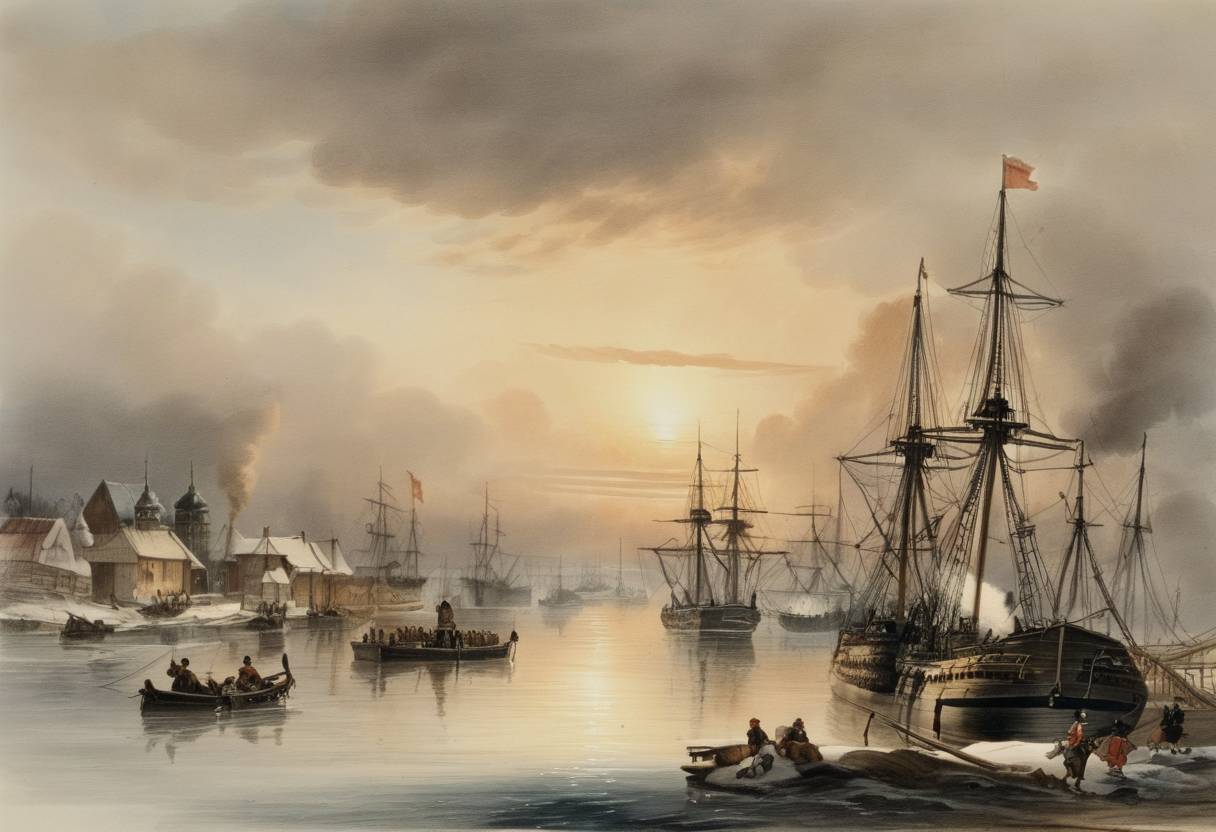
On September 17, 1809, the Finnish War officially concluded with the signing of the Treaty of Fredrikshamn, resulting in significant territorial changes between Sweden and Russia. This crucial treaty marked the cessation of hostilities that began in February 1808 and fundamentally altered the political landscape of Northern Europe.
The Finnish War was part of a broader conflict tied to the Napoleonic Wars. Tensions arose when Russia, allied with Napoleon Bonaparte through the Treaty of Tilsit in 1807, demanded that Sweden join the Continental System, a blockade against Great Britain. Sweden’s refusal to comply led to a Russian invasion of Finland, then an integral part of the Swedish kingdom.
The conflict was characterized by several key battles and shifting frontlines. Despite some initial successes by Swedish forces, the Russian military gradually gained control over much of Finnish territory.
The Treaty of Fredrikshamn was signed in the town of Hamina (Fredrikshamn in Swedish), in present-day Finland. The main terms included:
The Treaty of Fredrikshamn was more than a mere territorial shift—it redefined relationships and borders in Northern Europe, with lasting implications that echoed throughout the 19th century and beyond.
Source: en.wikipedia.org