Transition from British Broadcasting Company to British Broadcasting Corporation
1927 · London, United Kingdom
The British Broadcasting Company became the British Broadcasting Corporation (BBC), a public corporation.
December 31, 1923
The chimes of Big Ben, the clock tower of the Palace of Westminster in London, were broadcast for the first time by the BBC to mark the new year.
London, United Kingdom | BBC
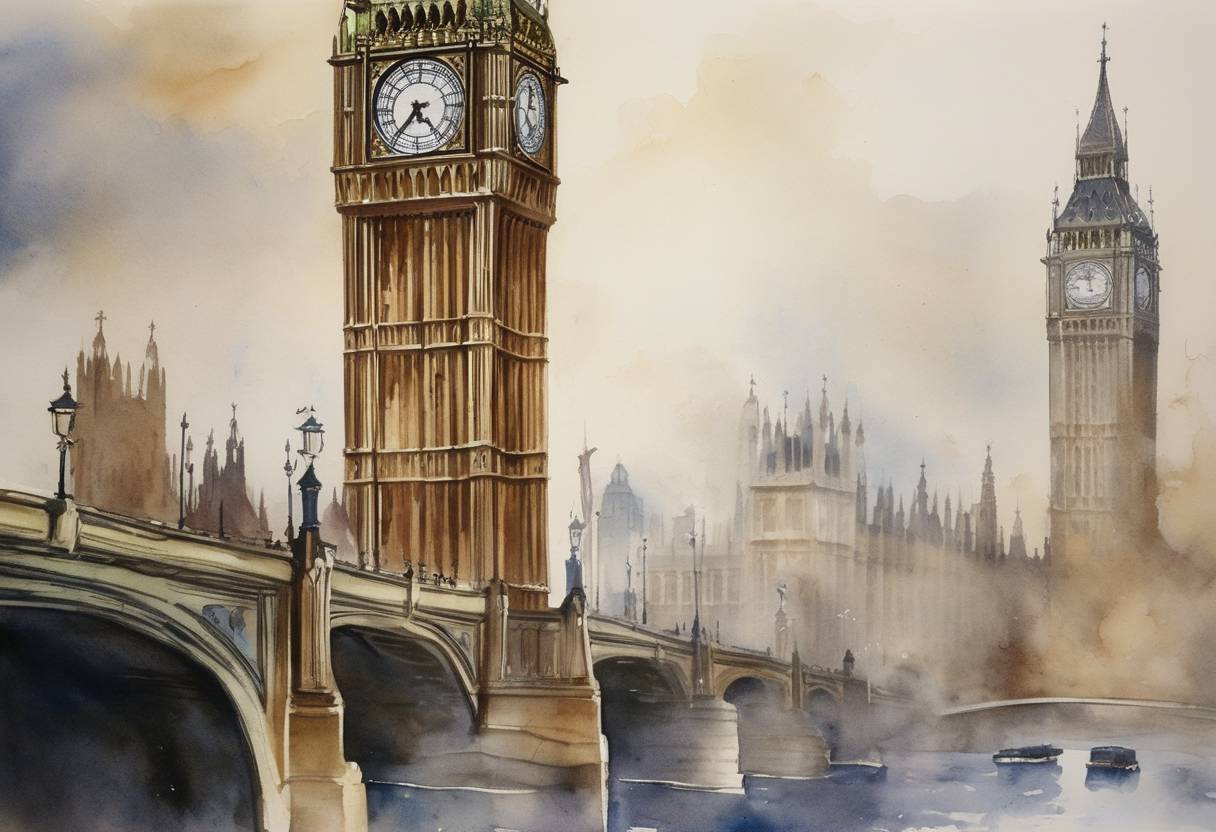
On December 31, 1923, a pivotal moment in broadcasting history occurred when the British Broadcasting Corporation (BBC) broadcast the chimes of Big Ben, the Great Clock of Westminster, for the first time to mark the New Year. This event signified the inaugural use of radio to transmit the iconic sounds from the clock tower at the Palace of Westminster, London, to a wide audience.
The early 1920s were a period of rapid technological development in radio broadcasting. The BBC, founded just the previous year in 1922, had quickly established itself as a pioneering force in British public broadcasting. At this time, radio was emerging as a new medium that could reach millions of listeners.
The decision to broadcast Big Ben’s chimes was both symbolic and practical for the BBC. It showcased the technological possibilities of radio, allowing people to participate in the New Year celebrations from the comfort of their own homes, no matter where they were in the country. The broadcast was carried out with the aid of microphones placed near Big Ben, which captured the resonant chimes as the clock struck midnight, ushering in the year 1924.
This broadcast marked the beginning of a long-standing tradition. Broadcasts of Big Ben’s chimes were soon to become a regular feature of New Year celebrations across the UK, establishing a cultural touchstone for the nation. Furthermore, it highlighted the transformative potential of radio in uniting a dispersed audience, foreshadowing the medium’s role in shaping public communication.
The successful transmission of the chimes helped to solidify the BBC’s role as a central figure in British broadcasting. It underscored the importance of the corporation in disseminating cultural and national events. Today, the BBC remains one of the world’s foremost public service broadcasters, and the tradition of broadcasting Big Ben’s chimes continues, symbolizing unity and shared experiences through the power of broadcasting technology.
Source: en.wikipedia.org