Space Shuttle Discovery: STS-114 Mission
2005 · Cape Canaveral, United States
The Space Shuttle Discovery was launched on mission STS-114, marking NASA's first return to flight since the Columbia disaster in 2003.
October 17, 2009
NASA's Lunar Crater Observation and Sensing Satellite (LCROSS) mission confirmed the presence of significant amounts of water ice on the Moon's south pole.
, United States | NASA
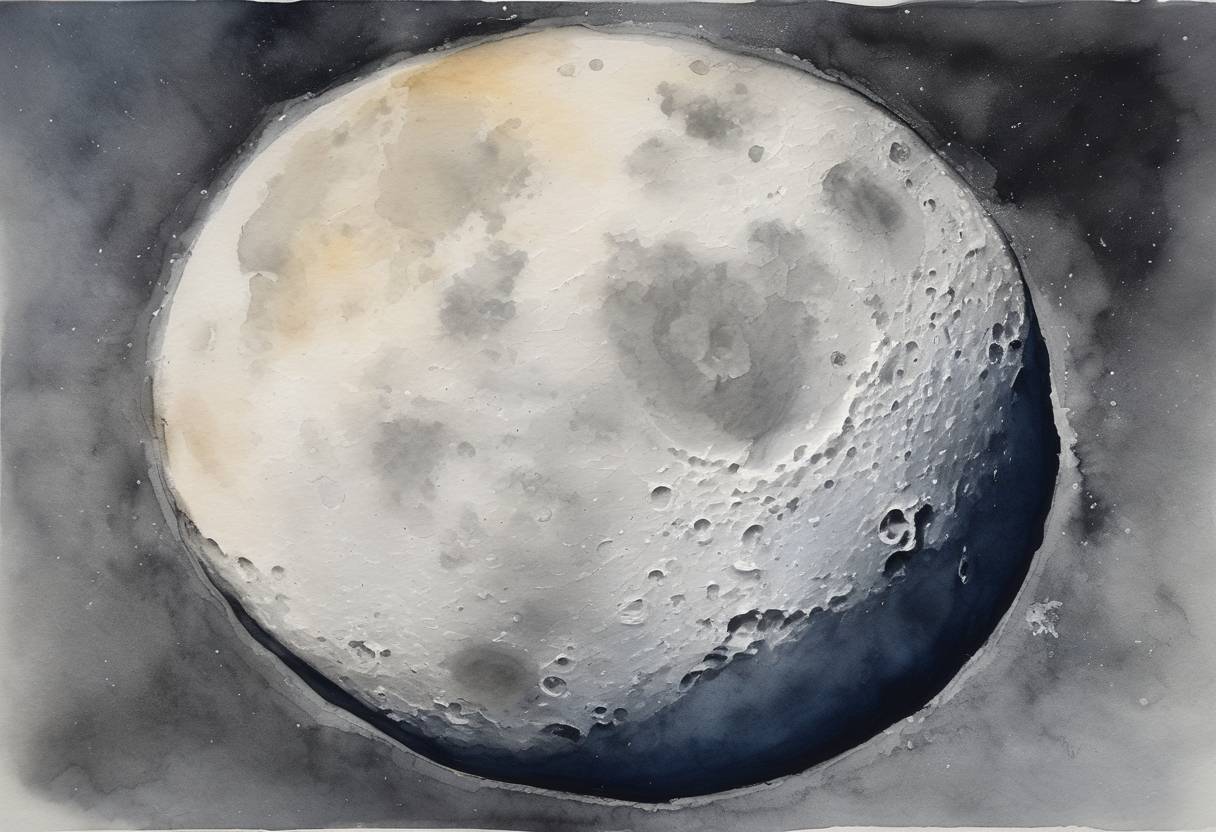
NASA’s Lunar Crater Observation and Sensing Satellite (LCROSS) mission, launched on June 18, 2009, alongside the Lunar Reconnaissance Orbiter (LRO), aimed to enhance the understanding of the presence of water ice in permanently shadowed craters at the Moon’s poles. The discovery of water on the Moon has significant implications for future lunar exploration, potentially supporting human habitation and providing resources for fuel production.
On October 17, 2009, NASA confirmed that its LCROSS mission had successfully detected significant amounts of water ice on the Moon’s south pole. The LCROSS mission involved a targeted impact experiment in which an empty Centaur rocket stage was deliberately crashed into the Cabeus crater near the lunar south pole. This impact was followed by a swift observation from the trailing LCROSS spacecraft, equipped with sensors and cameras to analyze the plume of debris ejected by the impact.
This discovery marked a pivotal moment in lunar exploration, demonstrating that the Moon’s polar regions contain resources that could prove invaluable for sustained human exploration. The evidence of water availability raised prospects for utilizing local resources for life support systems and fuel manufacturing, aligning with strategies for long-term lunar habitation and as a stepping stone for deeper space explorations, including missions to Mars. The results from LCROSS highlighted a paradigm shift in lunar science, revitalizing interest in the Moon as a vital component of space exploration initiatives.
Source: www.nasa.gov