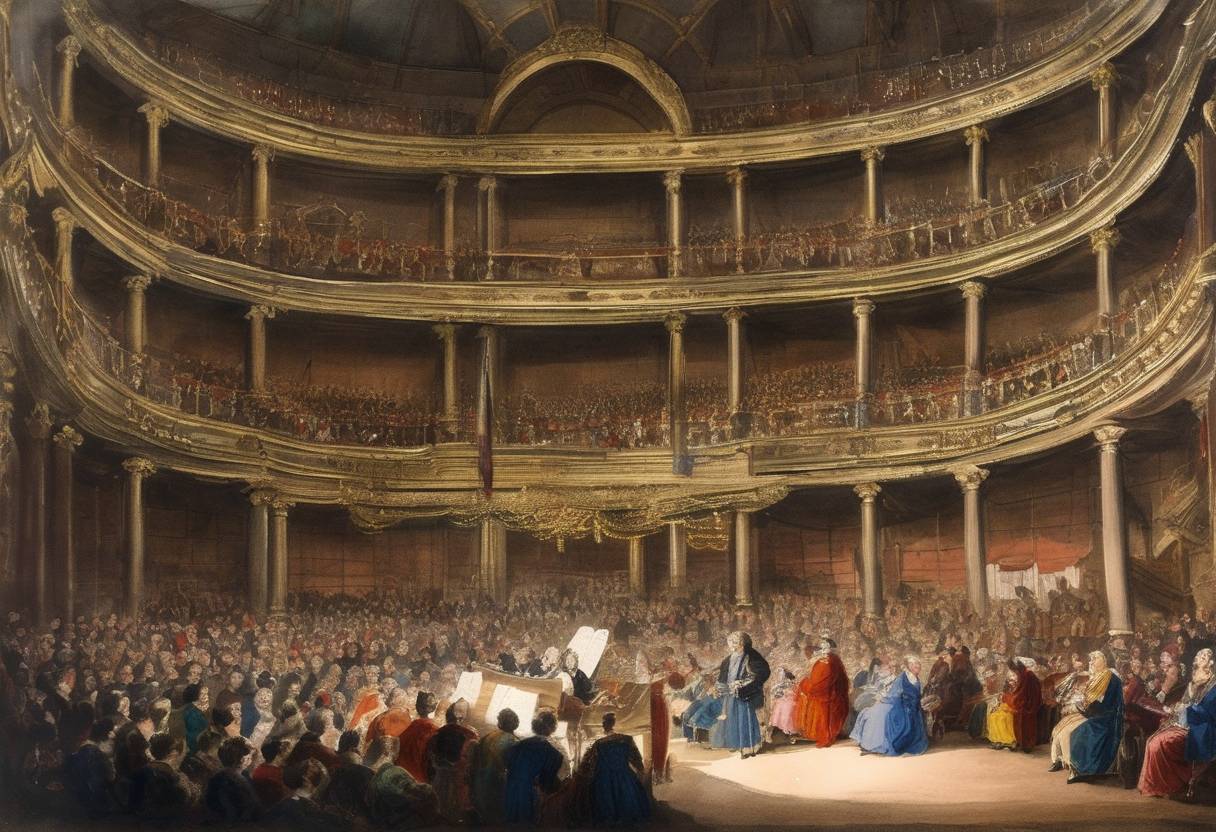
Handel Completes the Oratorio ‘Messiah’
On September 14, 1741, German-born composer George Frideric Handel completed the score of his monumental oratorio, “Messiah,” in London. This event marked the culmination of an intense burst of creative energy during which Handel composed the oratorio in just 24 days, starting on August 22, 1741.
Background
George Frideric Handel, a Baroque composer, was renowned for his operas, oratorios, and concertos. By 1741, he was seeking to reinvigorate his career which had faced difficulties due to declining public interest in his Italian operas. “Messiah” was part of a new wave of English-language oratorios that Handel began to focus on, aiming to appeal to a broader audience.
Composition Process
The text for “Messiah” was compiled by Charles Jennens, a literary scholar and friend of Handel. Jennens structured the libretto using selections from the King James Bible, focusing on the prophecy, birth, passion, resurrection, and eternal life of Jesus Christ. Handel was inspired by the libretto’s religious themes and crafted a powerful musical score that blended profound spiritual expression with artistic elegance.
Significance
The oratorio “Messiah” is noted for its complex yet harmonious choruses, arias, and recitatives, the most famous being the “Hallelujah” chorus. Its completion on this date signifies the birth of a work that would become one of the most celebrated pieces in Western choral literature.
Although initially conceived for passiontide (Easter), “Messiah” has become more associated with Christmastime performances, a tradition that started several decades later.
Legacy
Following its completion, Handel premiered “Messiah” on April 13, 1742, in Dublin, where it received an enthusiastic reception. This success contributed to its enduring legacy as a consistently performed choral masterpiece. Today, “Messiah” stands as a cornerstone of classical music repertoire, cherished by audiences worldwide and celebrated for its emotional depth and masterful composition.