The Carnation Revolution: April 25, 1974
1974 · Lisbon, Portugal
The Carnation Revolution took place in Portugal, a nearly bloodless coup that led to the fall of the Estado Novo regime and the establishment of a democratic government.
October 5, 1910
The Portuguese monarchy was overthrown, and Portugal became a republic following the 1910 Republican revolution.
Lisbon, Portugal | Portuguese Republican Party
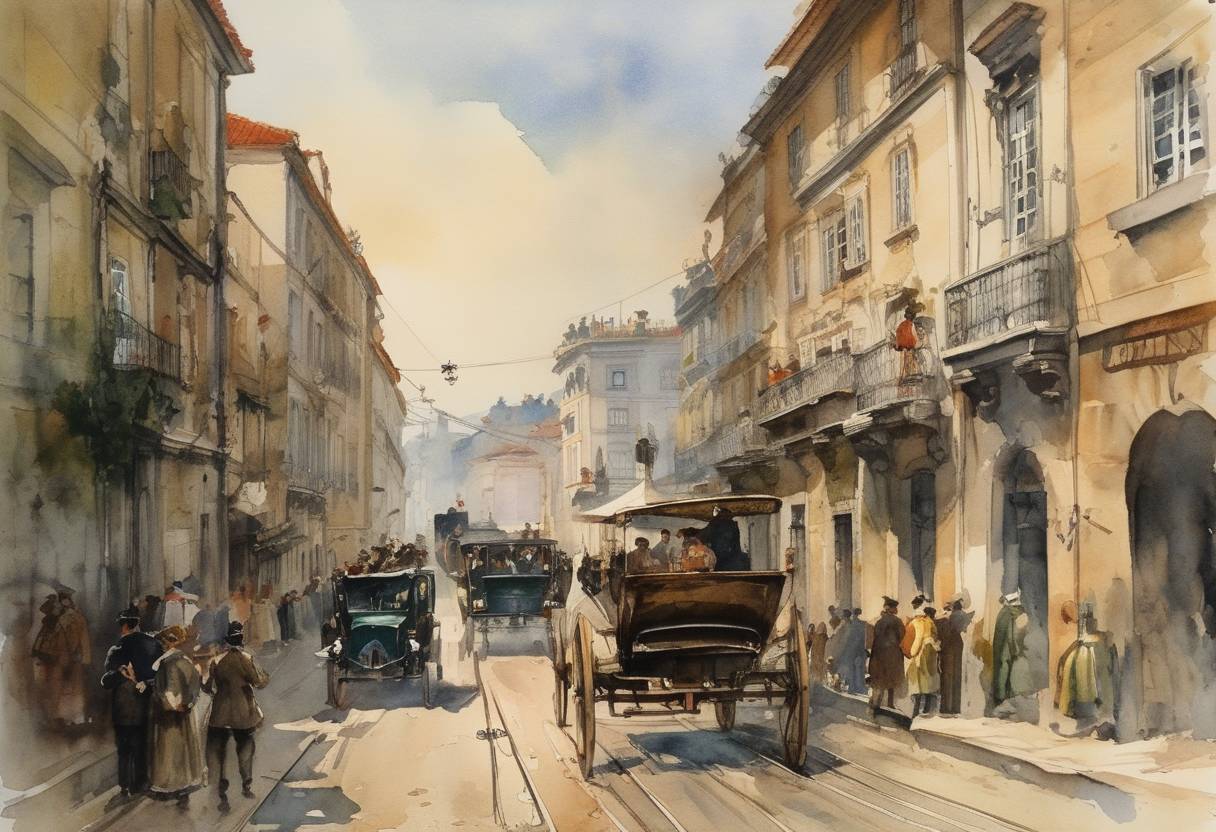
On October 5, 1910, Portugal underwent a seismic political shift as the monarchy was overthrown, and the country was declared a republic. This event marked the culmination of growing discontent with the Portuguese monarchy, long characterized by economic instability, social unrest, and political corruption.
In the late 19th and early 20th centuries, Portugal faced significant challenges, including economic hardship, colonial disputes, and political instability. King Carlos I, who ascended to the throne in 1889, faced immense criticism for his handling of the nation’s affairs. His decision to appoint João Franco, a controversial and authoritarian figure, as Prime Minister in 1906 further alienated many Portuguese citizens. Franco’s governance style led to increased repression, censorship, and political exile, exacerbating popular resentment.
The assassination of King Carlos I and his heir, Luís Filipe, in 1908 by republican radicals heightened tensions. Manuel II, the last king of Portugal, ascended to the throne but struggled to pacify the competing political factions and unrest that simmered throughout the country.
By 1910, the momentum for change was impelled by a burgeoning republican movement. On October 3rd, an uprising began in Lisbon, initiated by both military officers and civilian supporters of the Republican Party. The revolts spread rapidly, finding support in urban centers and among military ranks dissatisfied with the monarchy.
On the morning of October 5th, the revolutionaries took strategic positions across Lisbon, including key installations such as the Mint (Casa da Moeda) and São Jorge Castle. The naval vessel, Adamastor, played a pivotal role by supporting the coup against the monarchy.
The revolution faced minimal resistance from royalist forces. By mid-afternoon, the Republican Party leader, Teófilo Braga, declared the establishment of the Portuguese Republic from the Lisbon City Hall balcony. This declaration was met with widespread celebration and was officially recognized almost immediately without substantial bloodshed.
The transition from monarchy to republic marked a significant turning point in Portuguese history. The new provisional government, led by Teófilo Braga, sought to implement a series of reforms to modernize the country, focusing on education, secularization, and improving civil liberties.
The shift to a republic catalyzed socio-political changes, although it also ushered in a period of instability characterized by frequent governmental changes and political turbulence. The republican regime faced challenges, including monarchist counterrevolutions and ideological divisions within its ranks.
Despite these hurdles, the 1910 revolution stands as a pivotal event in Portuguese history, signaling the end of centuries of monarchical rule and the beginning of a republican era. It reshaped Portugal’s political landscape and set the stage for subsequent developments in the 20th century.
Source: www.britannica.com