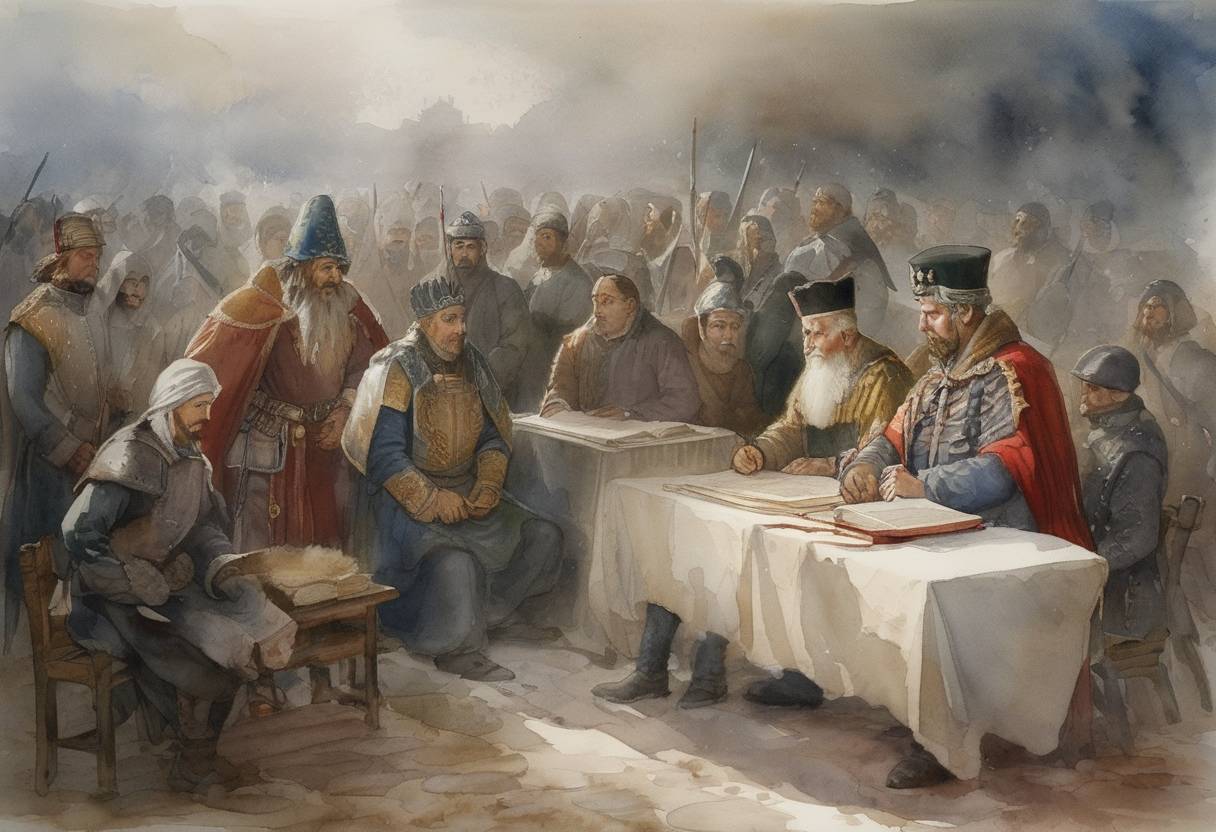
Treaty of Novgorod
Background
The Treaty of Novgorod, signed on August 12, 1326, was a crucial diplomatic agreement between the Kingdom of Norway and the Republic of Novgorod. This treaty marked the end of hostilities in what is commonly referred to as the Norwegian-Novgorodian Wars. These conflicts were largely characterized by intermittent skirmishes and disputes over territorial dominion in the border regions, primarily around present-day Scandinavia and Northwest Russia.
Details of the Treaty
The treaty was instrumental in demarcating the territorial boundaries between Norway and Novgorod, aiming to establish a clear and mutually recognized border. This primarily involved the areas around Finnmark and the regions surrounding the northern part of the Scandinavian Peninsula—areas that were strategic for both parties due to their resources and trade routes.
Key Agreements
Border Establishment: The treaty laid out specific geographical boundaries which both nations agreed to respect. This arrangement helped in stabilizing the frequently contested lands and facilitating a period of peace.
Ceasefire and Hostilities: The signing of the treaty effectively brought an end to ongoing conflicts and hostilities between the two powers. It was a measure designed to prevent future disputes and encourage a cooperative relationship.
Trade and Economic Relations: By establishing peace, the treaty indirectly fostered increased trade and economic exchanges between Norway and Novgorod. These interactions were crucial in building wealth and alliances in the Northern European region.
Historical Impact
The Treaty of Novgorod is historically significant as it not only ended a series of disputes but also set a precedent for resolving territorial conflicts diplomatically in the region. The defined borders maintained relative peace and stability, which was beneficial for the prosperity and political relationships of both entities during this period. The agreement is also notable for its role in shaping the medieval political landscape of Northern Europe, contributing to the eventual formation of states and national boundaries that would evolve in subsequent centuries.