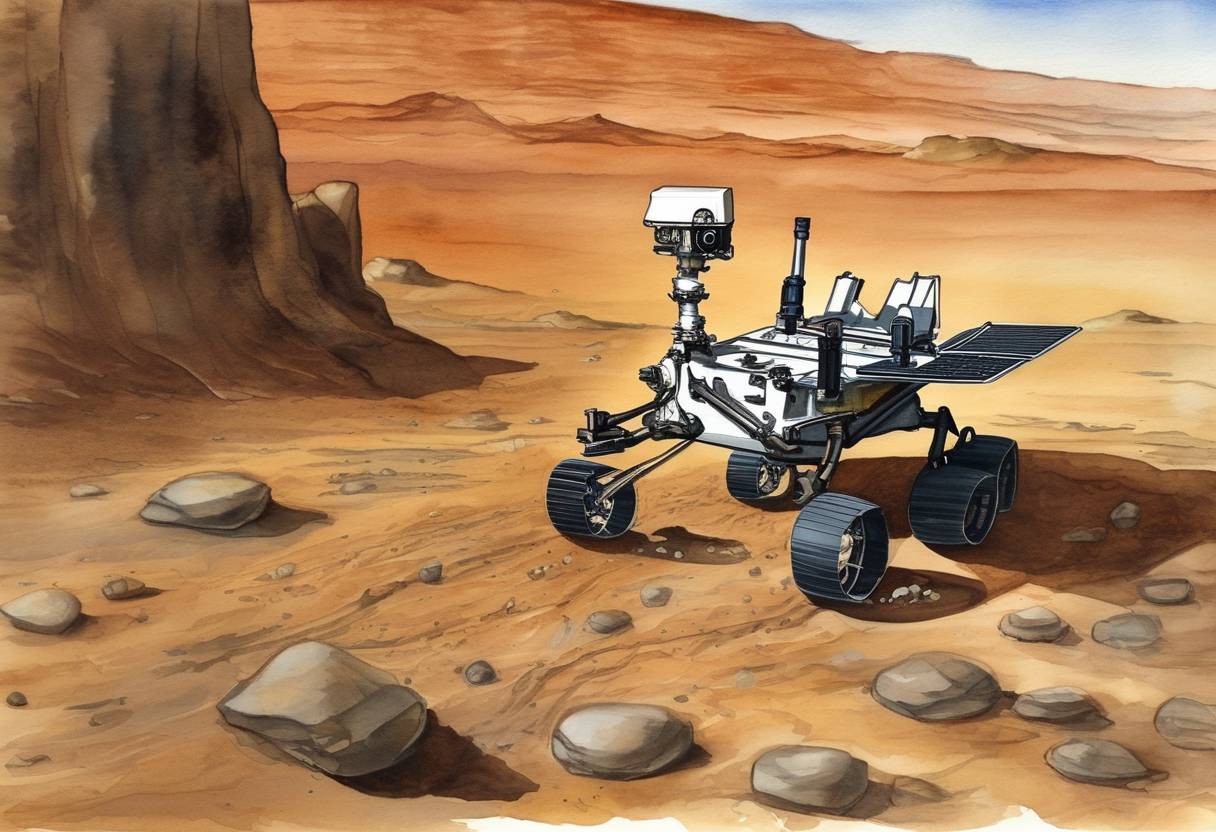
Mars Rover Curiosity’s Discovery on December 4, 2012
On December 4, 2012, NASA’s Mars rover Curiosity made a significant discovery that captivated the scientific community and the public alike. Curiosity detected simple organic compounds in the Martian soil, specifically at a location known as “Rocknest” in Gale Crater. The discovery marked a pivotal moment in the search for potential past life-supporting conditions on Mars.
Key Findings
Presence of Organic Compounds: Curiosity’s on-board Sample Analysis at Mars (SAM) instrument detected traces of organic molecules. These compounds included carbon, hydrogen, oxygen, and nitrogen, essential building blocks for life as we know it.
Implications for Habitability: The presence of these elements, while not direct evidence of life, suggested that the fundamental ingredients for life could have existed on Mars in the past. This finding supported the hypothesis that Mars once had conditions capable of supporting microbial life.
Investigation Process: The SAM instrument conducted a series of analyses using gas chromatography and mass spectrometry to identify the chemical composition of the Martian soil samples. This allowed scientists to detect and measure the complex mix of chemicals in the soil.
Context and Significance
Gale Crater: Chosen for its rich geological history, Gale Crater was believed to have once contained liquid water, a key factor in assessing Mars’ habitability.
Mars Exploration Program: The discovery underscored the success of NASA’s ongoing Mars exploration efforts, which aim to assess Mars’ past and present ability to sustain life.
Long-Term Impact: These findings spurred continued exploration and research on Mars, influencing subsequent missions and guiding the scientific community in the quest to better understand Mars’ climate history and geological evolution.
Aftermath
While these findings did not confirm the existence of life on Mars, they reinforced the importance of continued exploration. Subsequent missions have built upon these findings, refining our understanding of Mars and directing future exploration strategies. The discovery was a landmark moment in planetary science, highlighting both the potential for life beyond Earth and the technological capabilities of modern space exploration.