Election of Dag Hammarskjöld as UN Secretary-General
1953 · New York City, United States
Dag Hammarskjöld is elected as the Secretary-General of the United Nations.
December 11, 1964
Che Guevara addresses the United Nations General Assembly in New York.
New York City, United States | United Nations
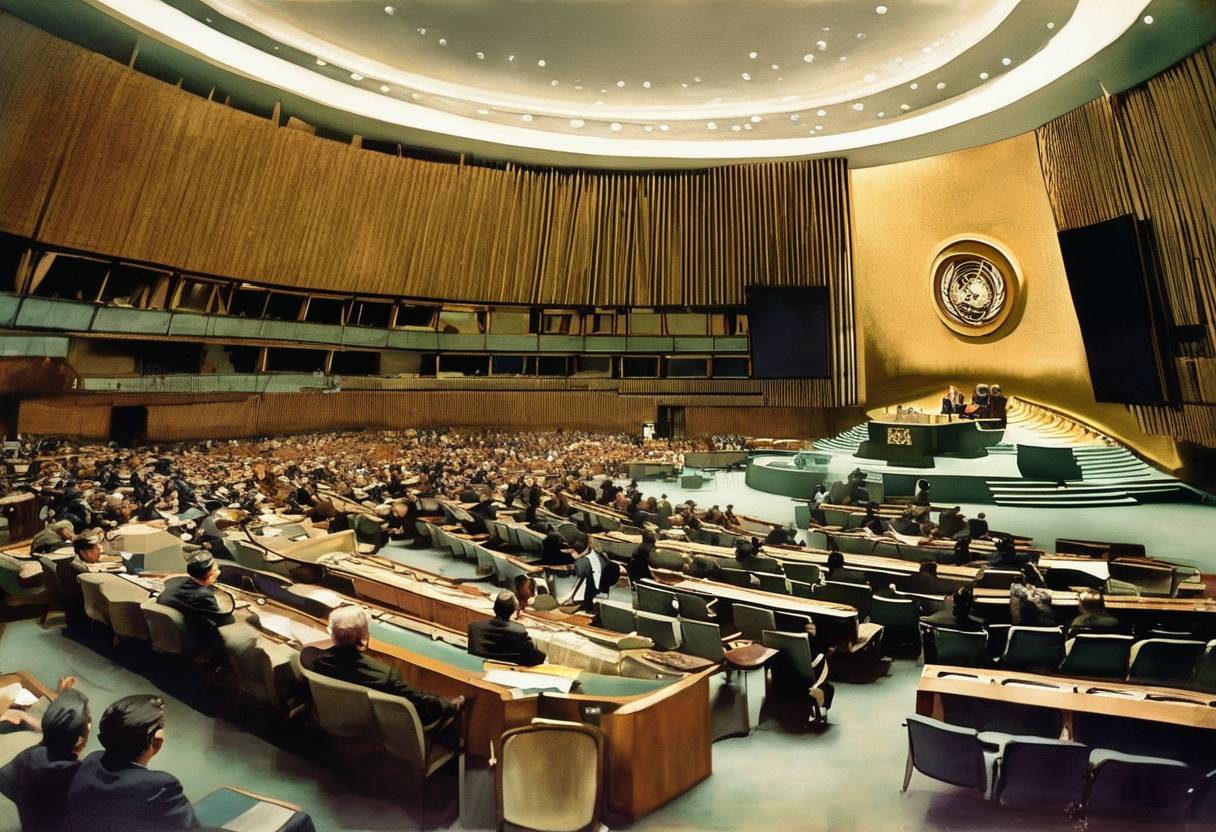
On December 11, 1964, Ernesto “Che” Guevara addressed the United Nations General Assembly in New York. This event marked a significant moment during the Cold War, as Guevara represented the revolutionary Cuban government at a major international forum.
Che Guevara, an Argentine Marxist revolutionary and key figure in the Cuban Revolution, was serving as the Minister of Industries for Cuba at the time. The speech at the UN came during a period of heightened tensions between the United States and Cuba, following the Cuban Missile Crisis in 1962. Guevara’s appearance at the UN was part of Cuba’s broader strategy to gain international recognition and support amidst its contentious relationship with the U.S.
In his speech, Guevara:
Guevara’s address was met with mixed reactions. Supporters of Cuba and anti-imperialist movements lauded his stance, while critics, particularly the United States and its allies, viewed the speech as inflammatory. The address underscored the ideological divide of the Cold War era and highlighted Cuba’s role as a vocal adversary of U.S. foreign policy in the Western Hemisphere.
Guevara’s appearance at the UN reinforced his position as a charismatic spokesperson for revolutionary socialism, further cementing his legacy as an iconic figure in global revolutionary movements.
Source: www.un.org