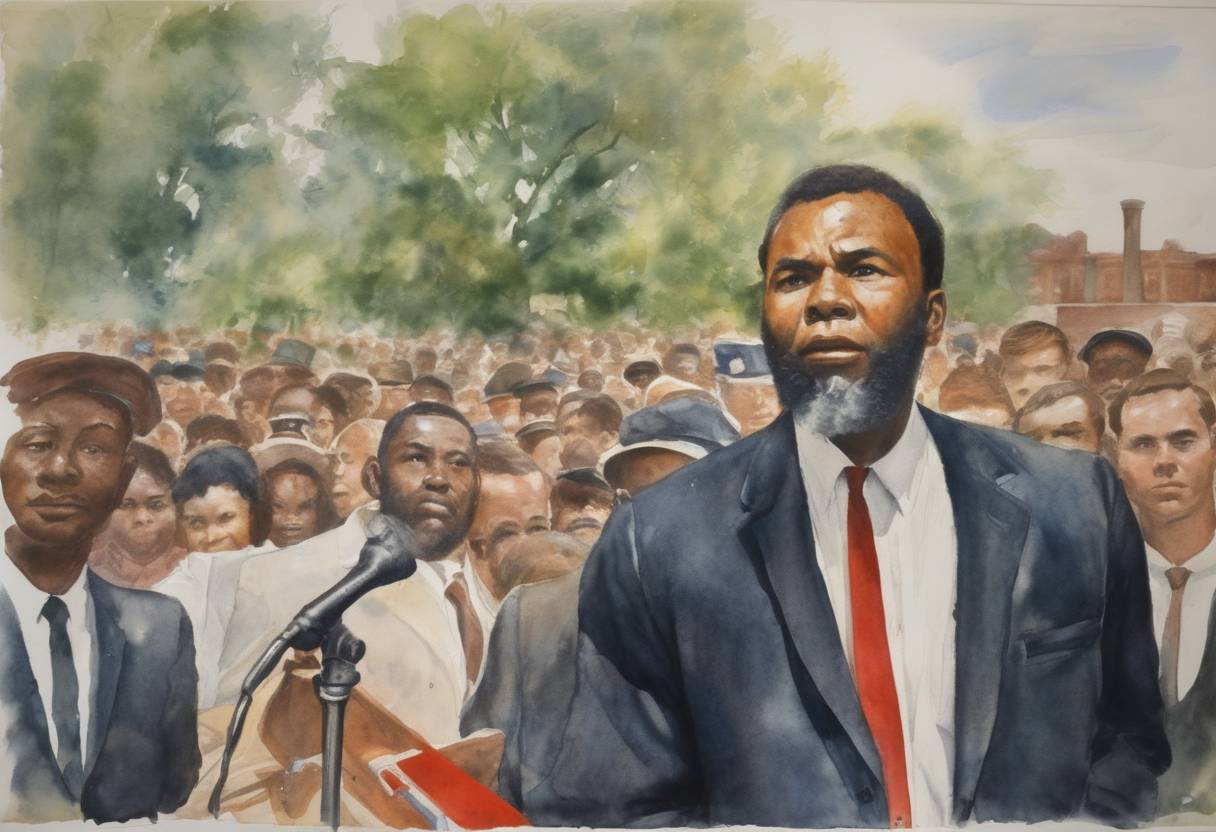
James Meredith’s Attempt to Enroll at the University of Mississippi
On September 20, 1962, James Meredith, an African-American Air Force veteran, attempted to desegregate the University of Mississippi, also known as “Ole Miss,” by enrolling as a student. This event became a significant flashpoint in the American Civil Rights Movement, highlighting intense racial tensions and the struggle for civil rights in the United States.
Background
James Meredith was motivated by a desire to challenge the systemic racial segregation prevalent in public institutions throughout the Southern United States. Encouraged by the momentum of the Civil Rights Movement and backed by the support of the National Association for the Advancement of Colored People (NAACP), Meredith sought to apply to Ole Miss, which, like many Southern universities at the time, exclusively admitted white students.
Legal Battle
Meredith’s application to Ole Miss was denied multiple times on racially discriminatory grounds. He subsequently filed a lawsuit, and the case eventually reached the U.S. Supreme Court. In a landmark decision, the court ruled in Meredith’s favor, ordering the university to admit him. The ruling not only underscored federal mandates regarding integration but also tested the federal government’s willingness to enforce civil rights laws.
September 20, 1962: The Confrontation
When Meredith attempted to enroll on September 20, Mississippi’s staunchly segregationist governor, Ross Barnett, personally intervened. Barnett physically blocked Meredith’s entry to the university, defying the court order. Barnett’s actions were part of a larger strategy employed by state officials to resist desegregation, and they underscored the deep-seated opposition to integration among Southern states.
Federal Intervention
The confrontation at Ole Miss set the stage for a major constitutional crisis, pitting state sovereignty against federal authority. President John F. Kennedy and Attorney General Robert F. Kennedy responded by publicly asserting the federal government’s commitment to enforcing civil rights laws. The Kennedy administration engaged in tense negotiations with Governor Barnett and prepared to use federal marshals to enforce the Supreme Court’s decision if necessary.
Aftermath and Significance
The events of September 20 were a prelude to the standoff that would occur later that month when Meredith finally enrolled at the university, a move prompting violent riots. The successful integration of Ole Miss became a pivotal moment in the American Civil Rights Movement, illustrating both the challenges and the indispensable role of federal intervention in advancing civil rights. The episode significantly contributed to the passage of future civil rights legislation, serving as a catalyst for more robust federal civil rights protections.