Nobel Peace Prize Awarded to the United Nations and Kofi Annan
2001 · Oslo, Norway
The Nobel Peace Prize was awarded to the United Nations and its Secretary-General, Kofi Annan, for their work for a better organized and more peaceful world.
October 15, 1993
Nelson Mandela and F.W. de Klerk are awarded the Nobel Peace Prize for their efforts in ending apartheid in South Africa.
Oslo, Norway | Nobel Committee
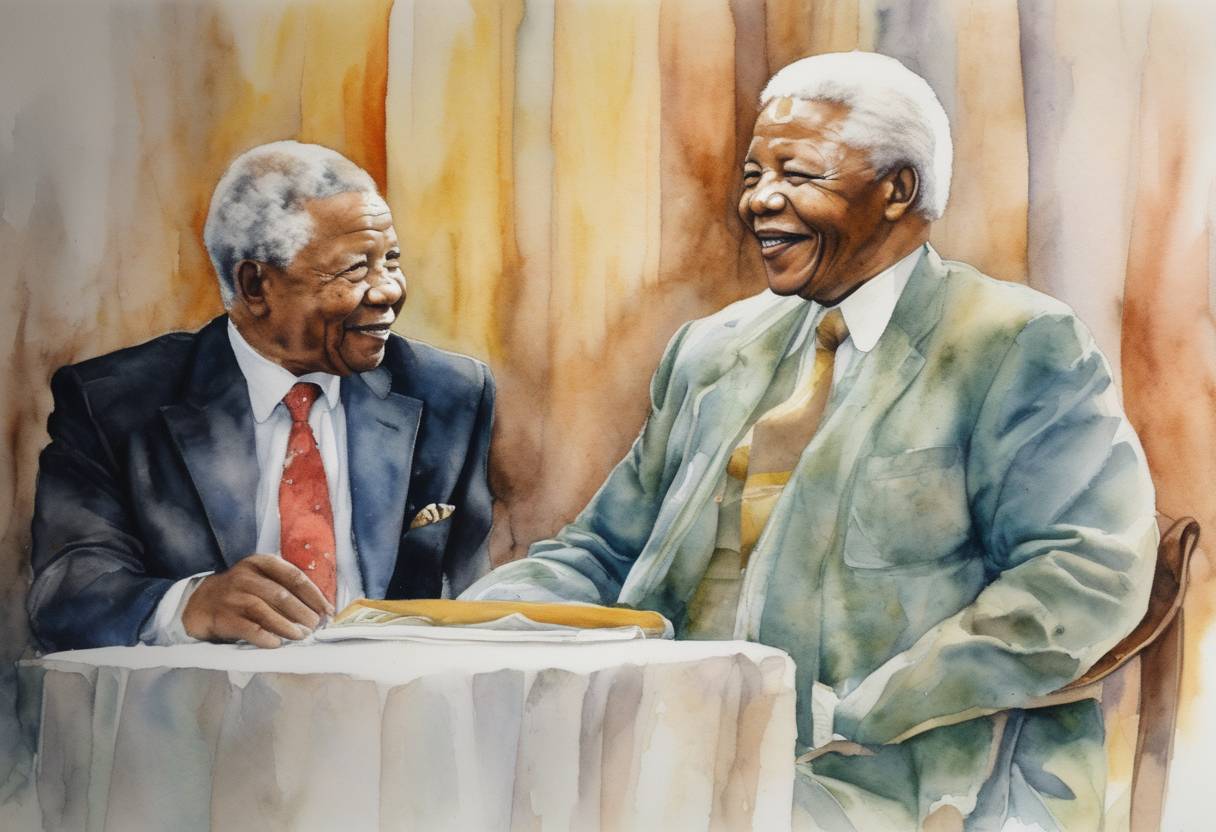
On October 15, 1993, South African leaders Nelson Mandela and Frederik Willem de Klerk were jointly awarded the Nobel Peace Prize for their significant roles in the peaceful termination of the apartheid regime and the laying of the foundations for a new democratic South Africa.
Apartheid was a system of institutionalized racial segregation and discrimination in South Africa that had been in place since 1948. Under this regime, the country was deeply divided along racial lines, with a white minority government imposing severe restrictions on the majority black population, denying them basic civil rights and economic opportunities.
Nelson Mandela: A key figure in the fight against apartheid, Mandela was imprisoned for 27 years due to his leadership role in anti-apartheid activities with the African National Congress (ANC). He was released in 1990, after which he played a critical role in negotiating the end of apartheid.
F.W. de Klerk: As the last State President of apartheid-era South Africa, de Klerk initiated and oversaw the dismantling of the apartheid system. He lifted the ban on the ANC and released Mandela from prison, effectively setting the stage for negotiations towards a democratic South Africa.
Negotiations and Reforms: Together, Mandela and de Klerk engaged in complex negotiations that led to the abolition of apartheid laws. They worked to ease tensions between various racial groups and paved the way for the country’s first multiracial elections in 1994.
The awarding of the Nobel Peace Prize recognized the extraordinary leadership and perseverance of Mandela and de Klerk in achieving a peaceful resolution to one of the most entrenched racial conflicts of the 20th century. Their collaboration marked a turning point in South African history and served as an example of reconciliation and peace-building that resonated globally.
Democratic Transition: The efforts of Mandela and de Klerk culminated in the establishment of a democratic South Africa. In April 1994, the nation held its first free and fair elections, resulting in Mandela becoming its first black president.
Legacy: The legacy of their joint efforts continues to influence movements for racial equality and justice worldwide. The successful transition from apartheid underscored the potential for peaceful resolution in seemingly intractable conflicts through dialogue and cooperation.
Together, Mandela and de Klerk’s commitment to peace and democracy left an indelible mark on both South African society and the broader global community, symbolizing the power of reconciliation and visionary leadership.
Source: en.wikipedia.org