Michelangelo Begins Work on the Statue of David
1501 · Florence, Italy
Michelangelo began work on his statue of David, which would become one of the most famous sculptures in the world.
September 5, 1504
Michelangelo's statue of David is unveiled in Florence's Piazza della Signoria.
Florence, Italy | City of Florence
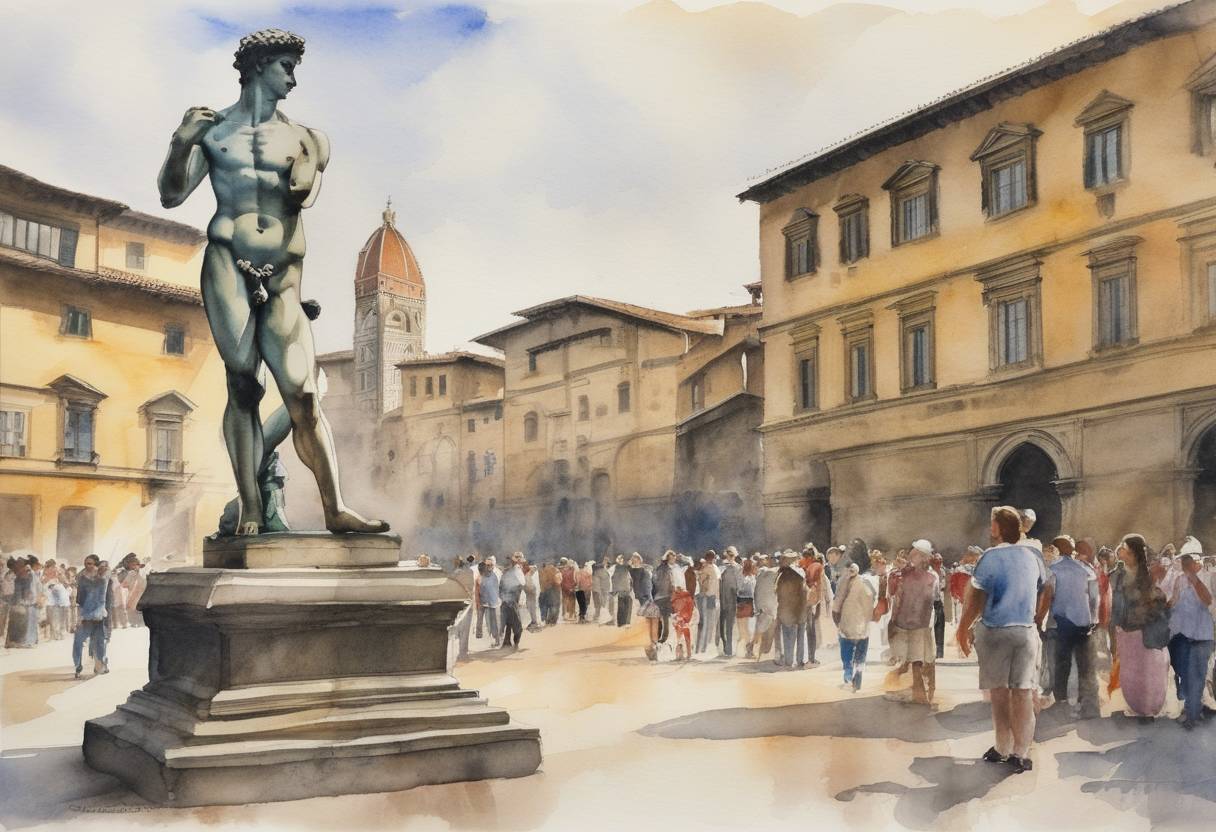
On September 8, 1504, one of the most iconic masterpieces of Renaissance sculpture, Michelangelo’s statue of David, was officially unveiled in Florence, Italy. This grand occasion marked the culmination of a project that had commenced several years prior, ultimately producing a work that symbolized both artistic excellence and the civic ideals of Florence.
The statue of David was commissioned in 1501 by the Opera del Duomo, the committee responsible for the maintenance and decoration of the Cathedral of Florence. Initially intended to adorn one of the buttresses of the cathedral, the project was eventually redirected due to the statue’s immense size and artistic significance.
Michelangelo Buonarroti, a young and already renowned artist, was tasked with transforming a massive block of Carrara marble that had been abandoned after previous sculptors had deemed it unusable. Over the course of three years, Michelangelo painstakingly sculpted what would become a paragon of Renaissance art.
Michelangelo’s David represented more than just the biblical hero who defeated Goliath. In the context of early 16th-century Florence, a city-state frequently threatened by powerful neighbors, David symbolized the strength and independence of the Florentine Republic. His confident pose, expressive of both tension and poise, captured the spirit of the city and its belief in human potential and civic pride.
Originally set for placement on the cathedral, a group of prominent citizens and artists, including Leonardo da Vinci and Sandro Botticelli, decided to install the David in front of the Palazzo Vecchio, the seat of Florence’s civic government in Piazza della Signoria. This strategic location underscored the statue’s political symbolism.
The unveiling on September 8, 1504, captivated the people of Florence and quickly established the David as a symbol of Renaissance artistry. It displayed Michelangelo’s expertise in anatomy and proportion, with the statue standing at 17 feet (approximately 5.17 meters), showcasing a meticulous attention to detail.
Michelangelo’s David remains one of the most celebrated and studied sculptures in art history. It set a new standard for the depiction of the human form in sculpture, and its influence was felt throughout the Renaissance and beyond. Today, it continues to attract millions of admirers from around the world, standing as a testament to the enduring legacy of Michelangelo’s genius and the cultural vibrancy of Renaissance Florence.
Source: en.wikipedia.org