Christopher Columbus' Second Voyage: Departure on September 24, 1493
1493 · Cádiz, Spain
Christopher Columbus embarked on his second voyage to the New World, departing from Cádiz, Spain, with a fleet of 17 ships.
October 28, 1492
Christopher Columbus lands in Cuba during his first voyage to the New World.
Cuba, Spain | Spanish Crown
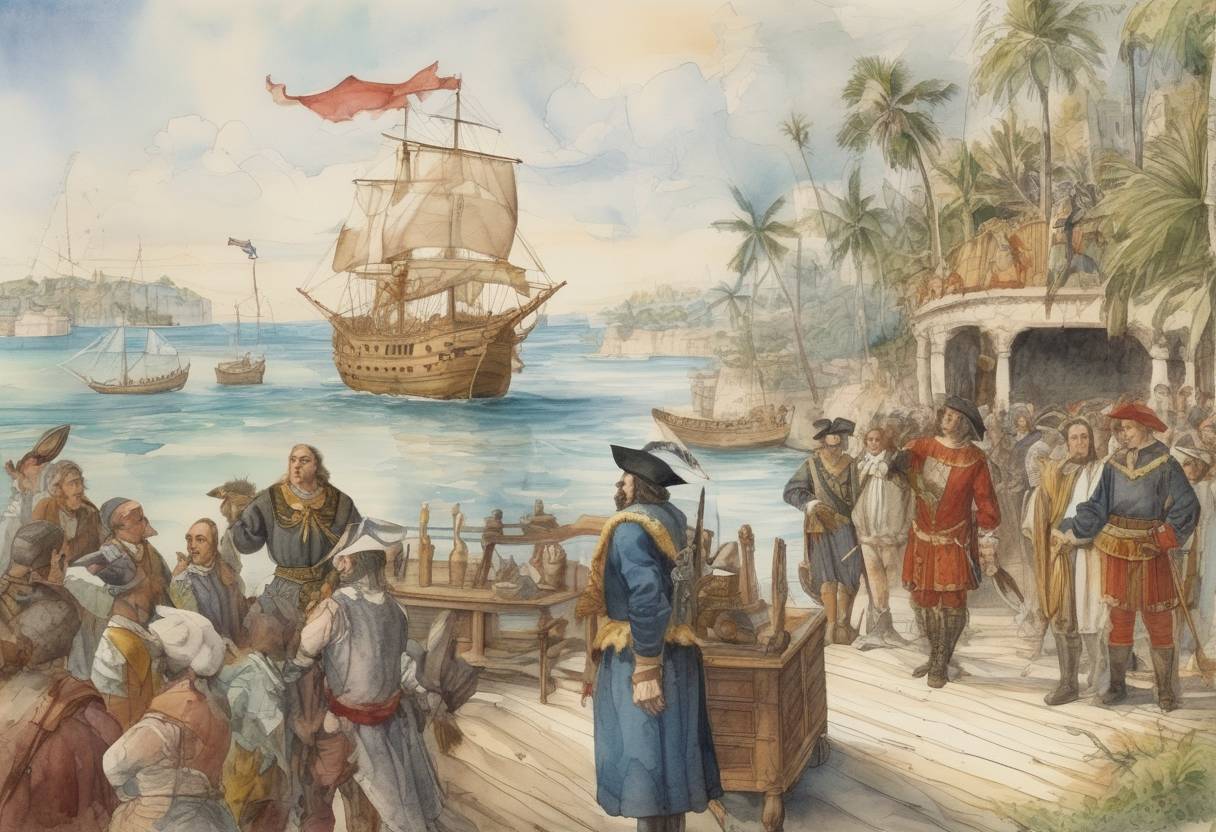
On October 28, 1492, during his first voyage to the New World, Christopher Columbus landed on the northeastern coast of Cuba. This event marked a significant moment in the Age of Exploration, as Columbus continued his journey through the Caribbean, believing he was nearing Asia.
The First Voyage: Columbus set sail on August 3, 1492, under the sponsorship of the Catholic Monarchs of Spain, King Ferdinand II and Queen Isabella I. His goal was to find a westward sea passage to the East Indies, aiming to establish a more direct trade route for spices and other valuable goods.
Discovery of the Bahamas: Columbus first made landfall in the New World on October 12, 1492, on an island he named San Salvador, in what is today the Bahamas. He continued exploring the region, moving southward.
Arrival: On October 28, 1492, Columbus and his crew arrived on the coast of Cuba, which he initially believed to be part of the Asian continent. He named the island “Juana” in honor of Prince Juan, the son of the Spanish monarchs.
Exploration: Columbus and his crew explored the coastline, noting the lush landscape and the potential for valuable resources. They encountered indigenous Taíno people, who were part of the Arawak language group, and observed their way of life.
Misidentification: Columbus’s belief that he had reached Asia persisted throughout his voyage. This misidentification influenced European maps and understanding of the world for years to come.
Cultural Exchange: The landing in Cuba marked the beginning of significant cultural exchanges—albeit often detrimental to indigenous populations—between Europe and the Americas. This included the introduction of new crops, animals, and technologies, as well as diseases that had devastating effects on native peoples.
Colonial Ambitions: Columbus’s voyages paved the way for subsequent Spanish expeditions and the eventual colonization of large parts of the Americas. Cuba would become a crucial part of the Spanish Empire, serving as a strategic location for further exploration and conquest.
Further Exploration: Columbus continued his journey, exploring other parts of the Caribbean, including Hispaniola (modern-day Haiti and the Dominican Republic). He returned to Spain in March 1493, bringing news of his discoveries, which sparked further interest and investment in transatlantic exploration.
Legacy: Columbus’s voyages are often credited with opening the Americas to European exploration and colonization, leading to profound and lasting changes in global history. However, they also initiated a period of conquest and colonization that had severe consequences for indigenous populations.
In summary, Columbus’s landing in Cuba on October 28, 1492, was a pivotal moment in his first voyage, contributing to the broader narrative of European exploration and the eventual transformation of the Americas.
Source: en.wikipedia.org